

Citizen Science
Citizen Scientist volunteers monitor wildlife and contribute to increased scientific knowledge of plant and animal species. Visiting our conservation lands with another trained partner, Citizen Scientists conduct their surveys on a schedule that works for them, and contribute to conservation in meaningful ways.
EALT offers Citizen Science activities in Amphibian Monitoring, Bat Box Monitoring, and Field Ornithology. Scroll down to read about each opportunity. For more information about EALT and this program please email Meghan at meghan.jacklin@ealt.ca.
Applications now open until April 15
Click the button above to join the EALT Volunteer Team.
Check your email. After the first form, you will receive an email with a link to complete the next part of the application specifically to Citizen Science.
Participants must complete mandatory online program and safety training.
Please note that Citizen Scientists must go out in pairs; we strongly recommend signing up with a partner. For your safety, we do not assign partners, but we can connect you to other volunteers in the program.
Amphibian Monitoring
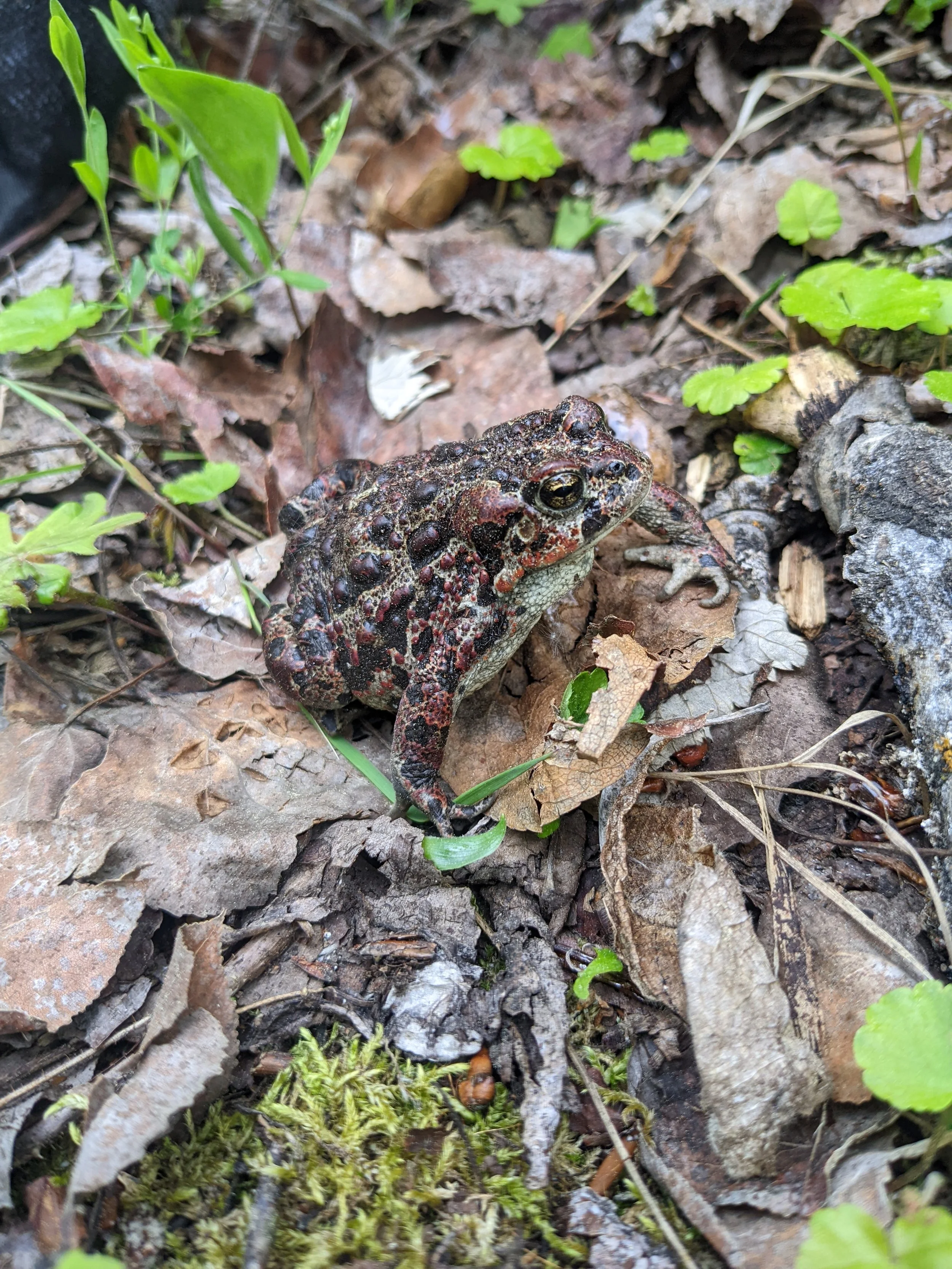
Boreal toad (Photo: EALT)
As cold blooded animals that rely on their environment to control their body temperature, amphibians face unique challenges to surviving in our northern climate. Their porous skin makes them vulnerable to contaminants in their environments, which also makes them good indicator species for environmental health. An environment where amphibians can survive and reproduce is generally a healthy one.
There are 10 species of amphibians found in Alberta, five of which may be found in the Edmonton region. These five are the tiger salamander, boreal chorus frog, wood frog, boreal toad, and Canadian toad. Of these, the Canadian toad and the boreal toad are listed species under Alberta General Status. EALT lands frequently contain wetlands and small waterbodies that have the potential to support amphibian life cycles.
What does the program involve?
You will visit the site with a partner three times during the period of April 25 to June 30, and will record data on amphibian presence or absence, numbers of adults, larvae, and eggs. There will be two types of surveys that occur at different times. Two audio surveys will occur after dark, during which you will visit 4 points near wetlands for calling amphibians for 5 minutes each. The third survey will be a daytime visual survey, where you will visit the same 4 points near wetlands searching for amphibians of various ages.
Total commitment is approximately 1.5 hours per visit (excluding driving time).
The information you collect will not only help EALT in our monitoring and management decisions, but will also be submitted to the Fisheries and Wildlife Management Information System (FWMIS) to monitor amphibian populations across the province.
By monitoring amphibians at Glory Hills, Golden Ranches, the Lu Carbyn Nature Sanctuary, JBJ McDonald, and the Smith Blackburn Homestead, you can help make a lasting impact on amphibian conservation.
Bat Box Monitoring
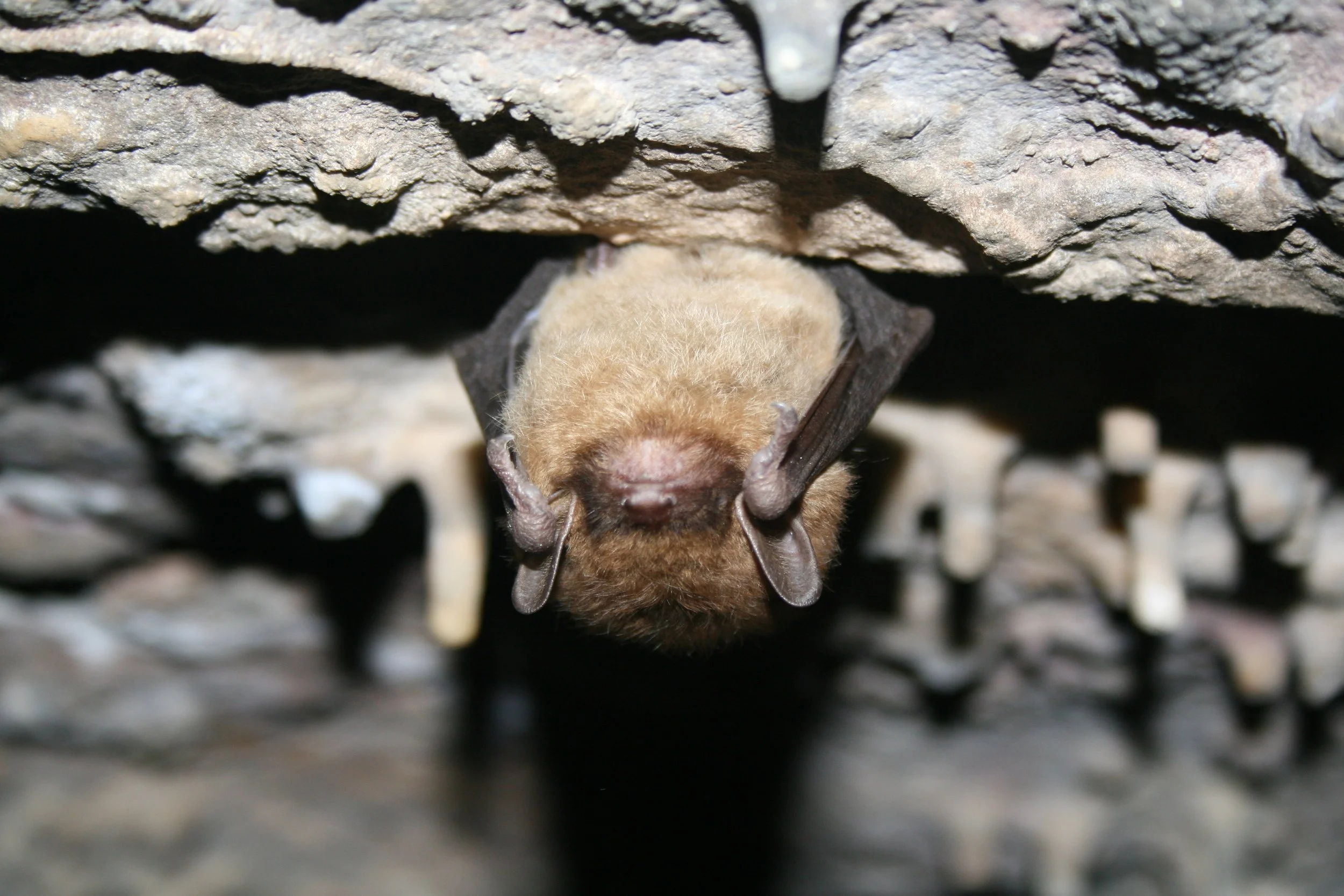
Little brown bat (Photo: USFWS)
Of Alberta’s nine bat species, over half are of conservation concern and two are federally endangered. Bat populations in Alberta and throughout Canada are threatened by the loss of roosting and foraging habitats and white nose syndrome. White-nose syndrome is caused by a fungus that disturbs bats during hibernation and causes them to die early from starvation and dehydration, and the fungus that causes this syndrome has recently been detected for the first time in Alberta. White-nose syndrome is spreading rapidly through North America with devastating impacts on bat populations.
What does the program involve?
EALT has installed bat boxes on our conservation lands to provide additional roosting habitat for bats, primarily the little brown bat.
At nighttime site visits, you will conduct exit surveys with a partner to count the number of bats that exit the bat boxes, beginning 15 minutes before sunset for a total of 1 hour. Total commitment is approximately 1.5 hours per visit (excluding driving time). Two visits must occur between June 1 and July 15 and two more between July 15 and August 15.
In order to collect valuable data on the spread of white-nose syndrome, there may be the opportunity to collect bat guano as part of this activity. Guano may be tested for the fungus that causes white-nose syndrome, diet analysis, or DNA analysis.
The information you collect will not only help EALT in our monitoring and management decisions, but will also be submitted to the Alberta Community Bat Program to track bat populations across the province.
By monitoring the bat boxes at Boisvert’s GreenWoods, Bunchberry Meadows, Glory Hills, Golden Ranches, Hicks, Larch Sanctuary, Pipestone Creek, or the Smith Blackburn Homestead, you can help make a lasting impact on bat conservation.
Field Ornithology
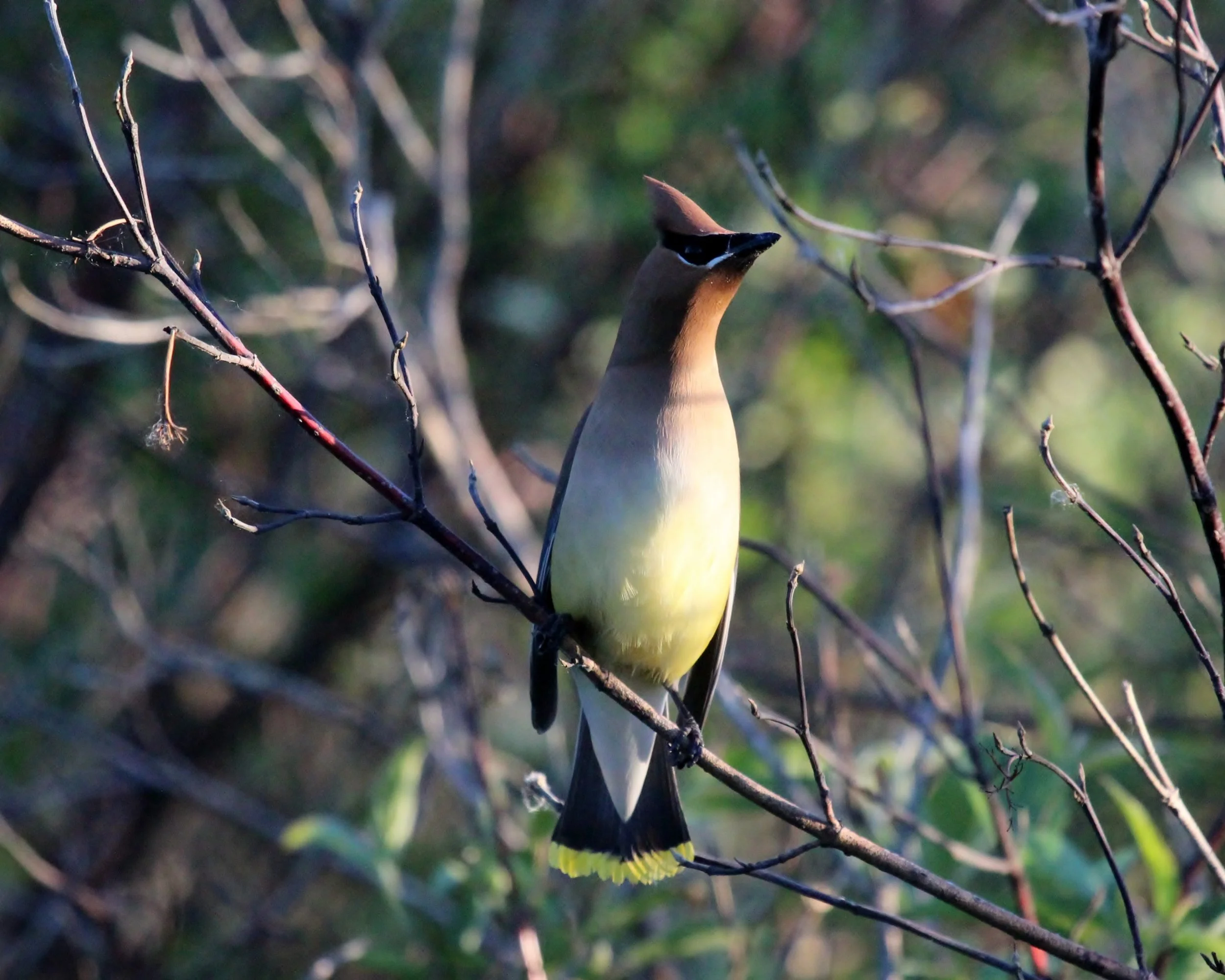
Cedar waxwing (Photo: Dorothy Monteith)
Many songbird species have been in decline for decades. There are numerous reasons associated with their population declines, but because many songbirds are migratory, it can be hard to pinpoint reasons for decline in individual species. Field Ornithology is one way to study the reasons for population decline and collect that valuable information. EALT’s Monitoring Avian Productivity and Survivorship (MAPS) station collects data about local breeding birds and can reveal issues in the breeding territory at Bunchberry Meadows Conservation Area. The station is known as the Devonian Parkland Banding Station (DPBS). The Field Ornithology program also involves avian-territory mapping and point counts.
What does the program involve?
For the in-hand portion of the program (“banding”), the station manager arranges six banding days in June to August, led by a permitted Bander-in-Charge. Nets are set up the afternoon prior to each banding day and taken down immediately after banding. Each day starts approximately one hour before sunrise and lasts up to eight hours in total.
For the avian-territory mapping, the station manager arranges for several census days in late May to early August. Each survey is led by a skilled volunteer, and up to two other volunteers may provide support as well. Experience with birding by ear is a definite asset. Surveys start at sunrise and last approximately four hours; off-trail trekking, sometimes in poor weather conditions, is to be expected.
Point counts consist of the systematic census of birds within a certain distance of pre-selected locations (“points”), by sight and by ear. These usually take place on five days between late May and early August; each day starts at sunrise and continues for a few hours.
The information you collect will not only help EALT in our monitoring and management decisions, but will also be submitted to the Institute for Bird Populations and the Canadian Bird Banding Office so that researchers may access it for further studies.
By assisting with the field-ornithology component of the Citizen Science program, you help make a lasting impact on bird conservation and on the better management of EALT’s lands.
Other Citizen Science
Check out the Citizen Science Hub to find Citizen Science opportunities with organizations across Alberta.
Submit your bird observations on eBird, and share your list from EALT lands with us (share with: EALT User)
Help With Identification
Not sure what species you have found? We have several Identification Guides that you can use to identify your sightings, plus suggestions for useful apps for reporting and identifying your nature finds.