
As spring spreads across the Parkland region of Alberta, all sorts of animals are returning and becoming active. But among the mammals, plants, and birds, how often do you notice the caterpillars? In this blog, we’ll talk about what makes these invertebrates invaluable to the natural world.
Grubs as Bird Grub
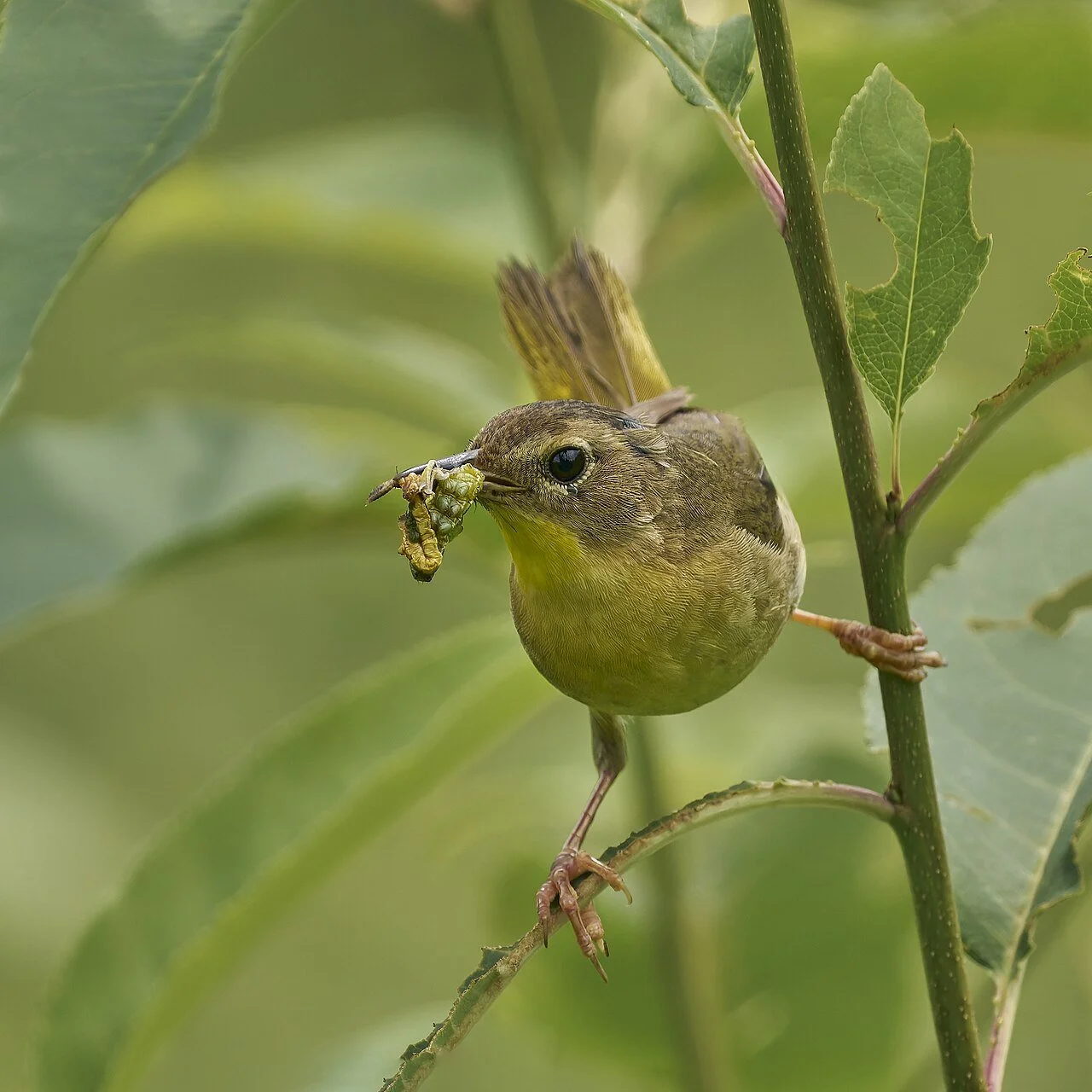
Common yellowthroat with caterpillars. Photo credit: Paul Danese, CC BY-SA 4.0 <https://creativecommons.org/licenses/by-sa/4.0>, via Wikimedia Commons
Caterpillars are an essential source of sustenance for wild birds. While many wild birds eat seeds and berries as adults, 96% of North American birds feed their young insects and spiders. Caterpillars dominate the menu for young hatchlings, and they make for particularly good eating. Unique benefits of caterpillar consumption are:
Nutrition
Caterpillars contain more than twice as much carotenoids as most alternatives. Carotenoids give birds their feather colours and keep mucous membranes moist which is critical for eye health
Digestion
Caterpillars are easier to digest than ones with hard exoskeletons like beetles.
Transportation
Caterpillars are more efficient, based on calories per trip, to carry to nests than smaller prey like ants
Ecosystem Integrity
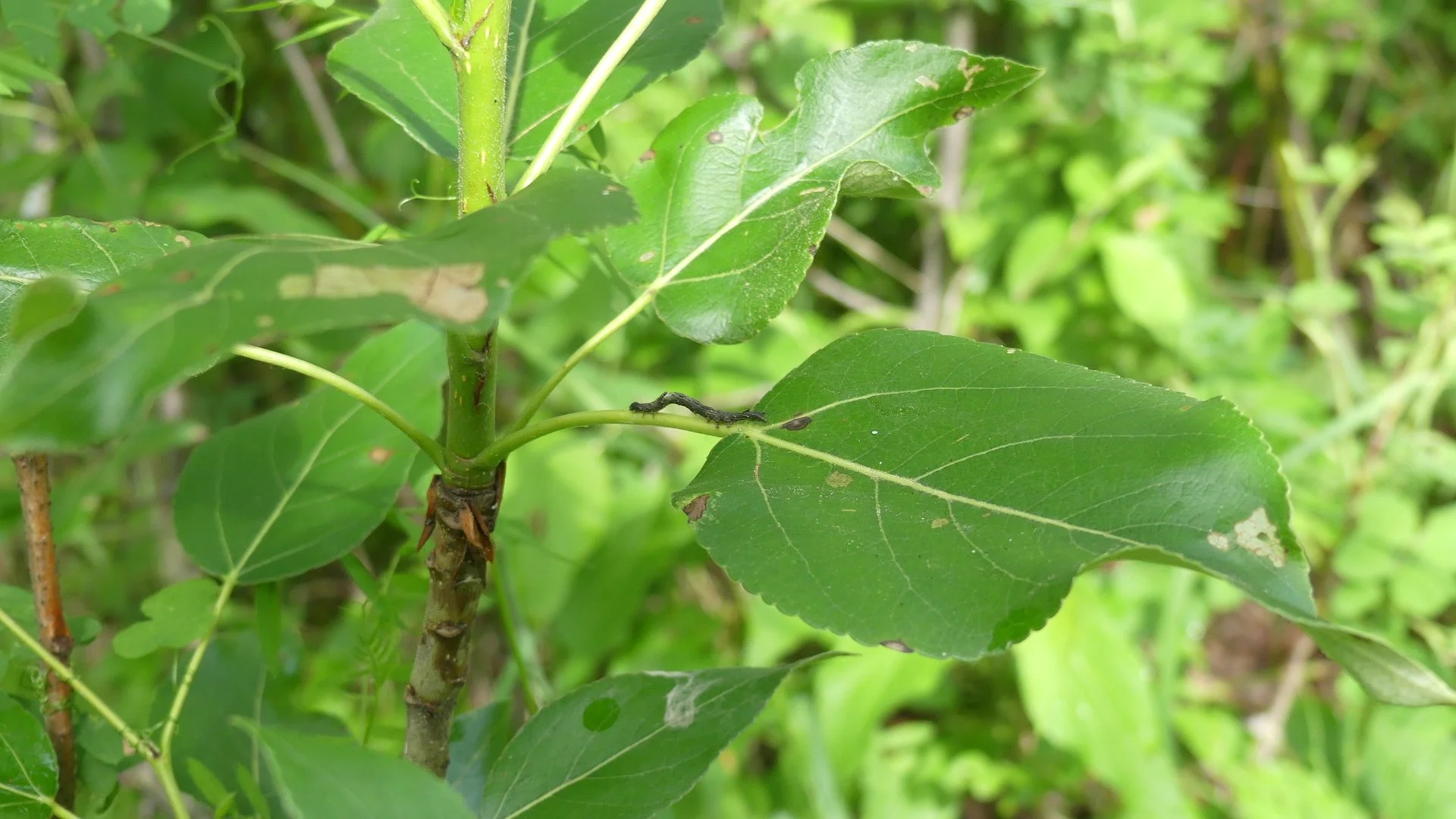
A caterpillar on a young poplar tree at JBJ McDonald Conservation Land.
Plants that support large numbers of caterpillars and pollinators are referred to as “keystone plants”. In our ecoregion, Aspen and Poplar trees serve this role for caterpillars, as they are fantastic habitat.
You may think, “Caterpillars eat all the leaves, they must be terrible for the trees!” While it’s true that caterpillar feeding habits can, at times, entirely defoliate trees, that process progresses the bigger picture of what nature is up to.
Trophic Triumphs
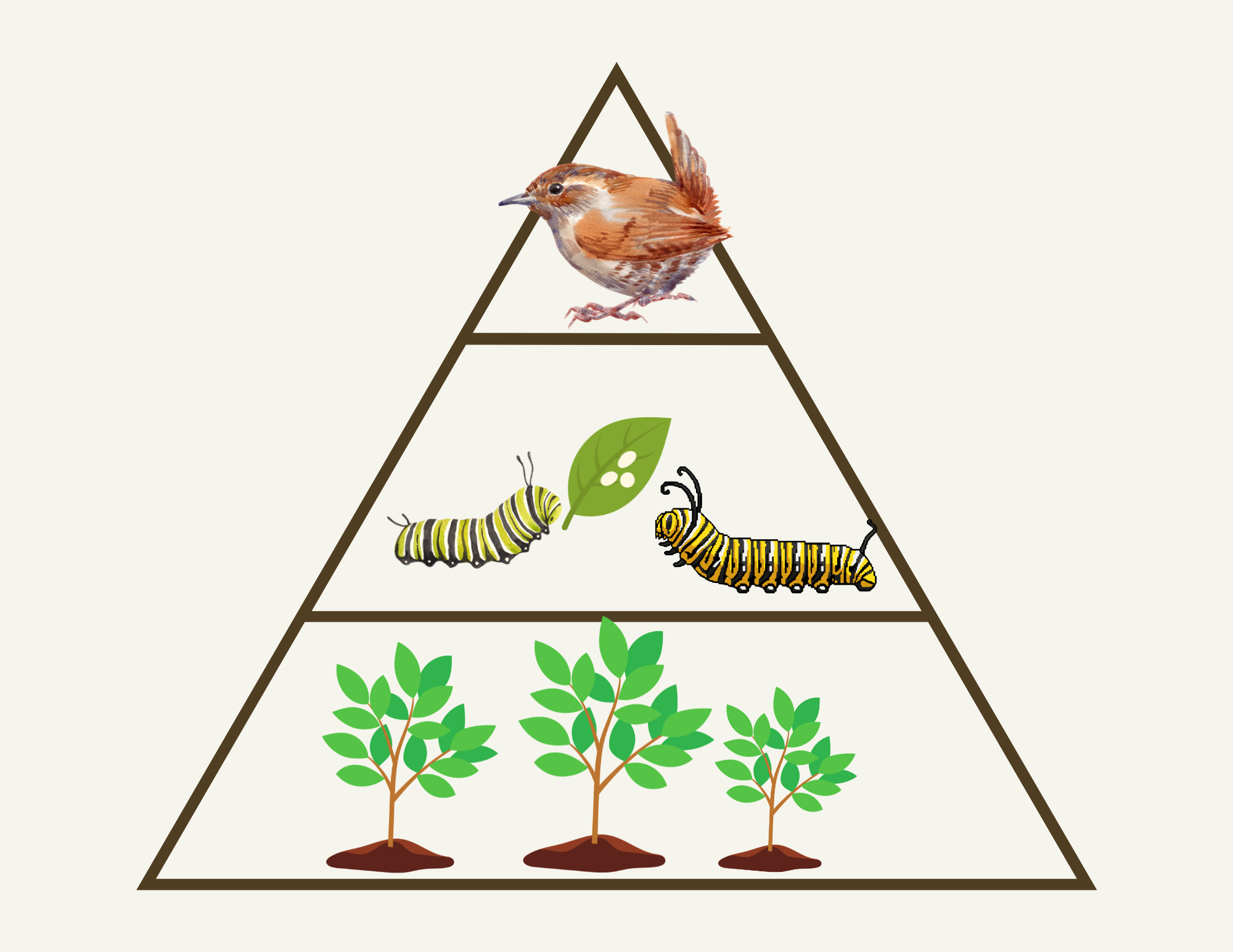
A very basic diagram that illustrates how caterpillars support Aspen parkland ecosystems.
Trophic levels are the position and organism occupies on the food web. Caterpillars may be small, but shockingly, they are responsible for more conversion of energy from plants to predators than all other herbivores combined.
This concept illustrates the energy cycle in an ecosystem, which may be familiar from one of your science classes: plants photosynthesize energy from the sun, turning it into energy that herbivores consume. Predators feed on the herbivores, and the cycle of energy continues.
Native Plants are the Heroes
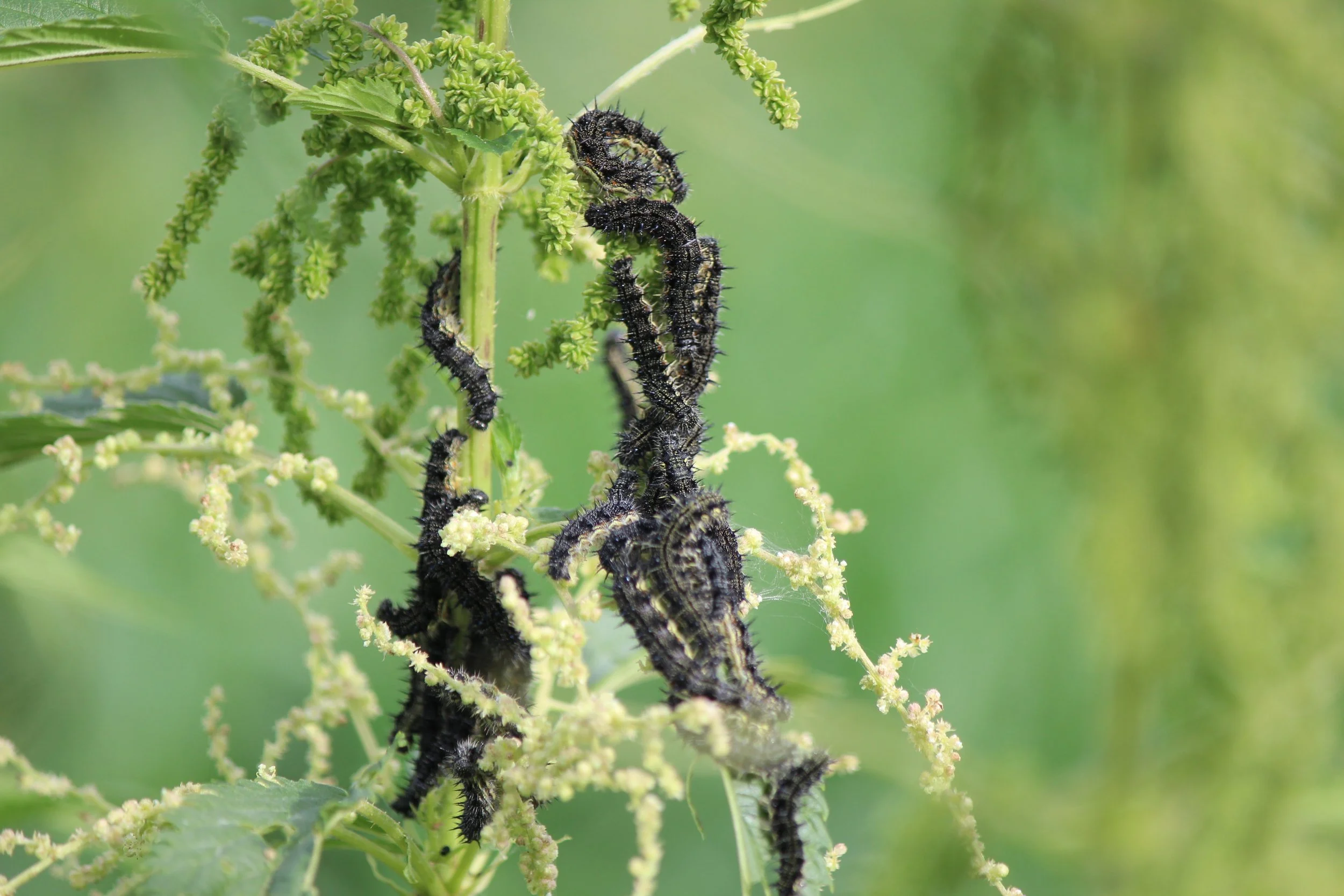
Caterpillars on stinging nettle at Smith Blackburn Homestead.
One may think that all plants are created equal as potential caterpillar hosts. After all, who hasn’t caught a glimpse of a caterpillar happily munching away at one of your shrubs or trees? But this is not the case. In another surprising fact, just 14% of local plant genera support 90% of caterpillars.
Introduced plants (plants not native to this ecosystem) can use chemical defenses to deter feeding. Since native caterpillars have not evolved alongside these introduced plants, there are limited feeding options available.
In the context of a yard, that’s bad news for birds. Bird feeders are a common fixture in urban yards, particularly in Edmonton, but as we’ve learned, seeds don’t provide much food value for hatchlings. Birds dwelling in areas dominated by non-native plants have 1.5 fewer eggs per clutch.
The moral of the story is: if you want birds in your yard, you need bugs! Source native plants from the Edmonton area that help support the crawling critters that birds love.
Making your own little green space wildlife-friendly is a simple step anybody can take to help nature flourish, even in urban settings. In areas that are human-dominated, any little bit of habitat can help, particularly for urban birds. This spring, make an effort to consider nature as you spend time outdoors: Leave Your Leaves, and maybe find a native plant seedling to introduce to your growing spaces. You might be surprised by the animals that become regulars if you keep at it!
If you don’t have access to a green space like a yard or garden, you can always contribute to organizations like EALT that conserve natural habitat in the Edmonton region. Volunteer, donate, or simply spread the word! Subscribe at the button below to stay tuned to more blogs like this.
This Science Spotlight blog was created by Conservation Outreach Volunteer Rob Cross.
Sources:
1) How Can I Help?: Saving Nature With Your Yard (2025, Douglas W Tallamy)
2) Nature's Best Hope: A New Approach to Conservation that Starts in Your Yard (2020, Douglas W Tallamy)
3) https://ucanr.edu/blog/coastal-gardener/article/gardening-birds-or-it-caterpillars
4) https://www.nature.com/articles/s41467-020-19565-4
5) https://www.nwf.org/Native-Plant-Habitats/Plant-Native/Why-Native/Keystone-Plants-by-Ecoregion
6) https://dmap-prod-oms-edc.s3.us-east-1.amazonaws.com/ORD/Ecoregions/cec_na/NA_LEVEL_I.pdf
7) https://cwf-fcf.org/en/resources/encyclopedias/native-plant-encyclopedia.html
8) https://extension.illinois.edu/blogs/flowers-fruits-and-frass/2015-03-16-how-many-caterpillars-does-chickadee-need?utm_source=chatgpt.com
9) https://blog.nwf.org/2015/04/chickadees-show-why-birds-need-native-trees/
