
If you missed your chance to sign up for the Carbyn Wildlands nature walk this February, check out all of the highlights here! Scroll on to see this event and other events held this winter.
Winter Walk at Carbyn Wildlands
We were joined on February 7 by several enthusiastic participants to explore the winter wonderland at Carbyn Wildlands. We were joined by the land’s namesake, Lu Carbyn, and his wife Jaynne. Some participants donned their snowshoes, and others wore their thick winter boots. Our staff had blazed a rough trail a few days before through the knee depth snow.
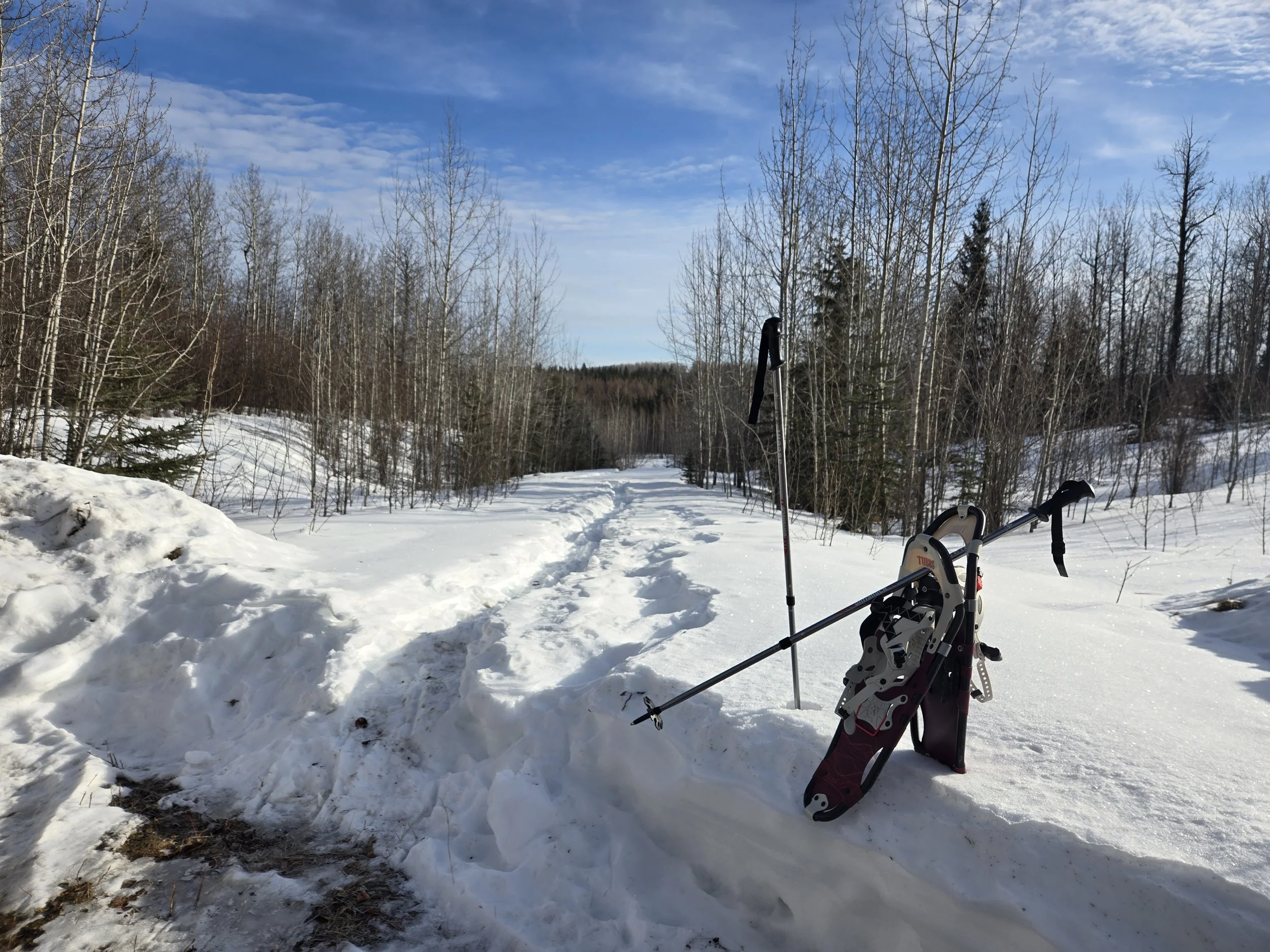
Snowshoes and poles resting on the snow at the trailhead at Carbyn Wildlands. Photo by EALT.
It was a beautiful day, above 0°C despite the deep snow on the ground. Our group began by admiring the many layers of tree species visible across the valley, as the environment changed from lower, water saturated habitat, to higher and drier forest.
Then made our way down the slope towards the wetland/creek complex that runs through the center of Carbyn Wildlands. We passed through a stand of white spruce, black spruce, and tamarack, where we paused. Lu demonstrated the art of “pishing” for us – making a squeaky noise to attract songbirds – and it was a huge success! We were joined shortly by an overhead flock of White-winged Crossbills and a Boreal Chickadee.
We proceeded along the trail until we reached an opening. We had found the creek! This unnamed creek is wide, winding, and resembles a still wetland. It also provides fantastic habitat for many wildlife species – beavers build their lodges along the banks, moose and deer have ample shrubs to browse all winter long along the creek edges, and wildlife cameras have observed a very busy porcupine crossing overtop of the snow.
We had our lunch here, admiring the bright, snow-covered scene. Lu went on a short adventure, walking over the snow covered creek as we watched.
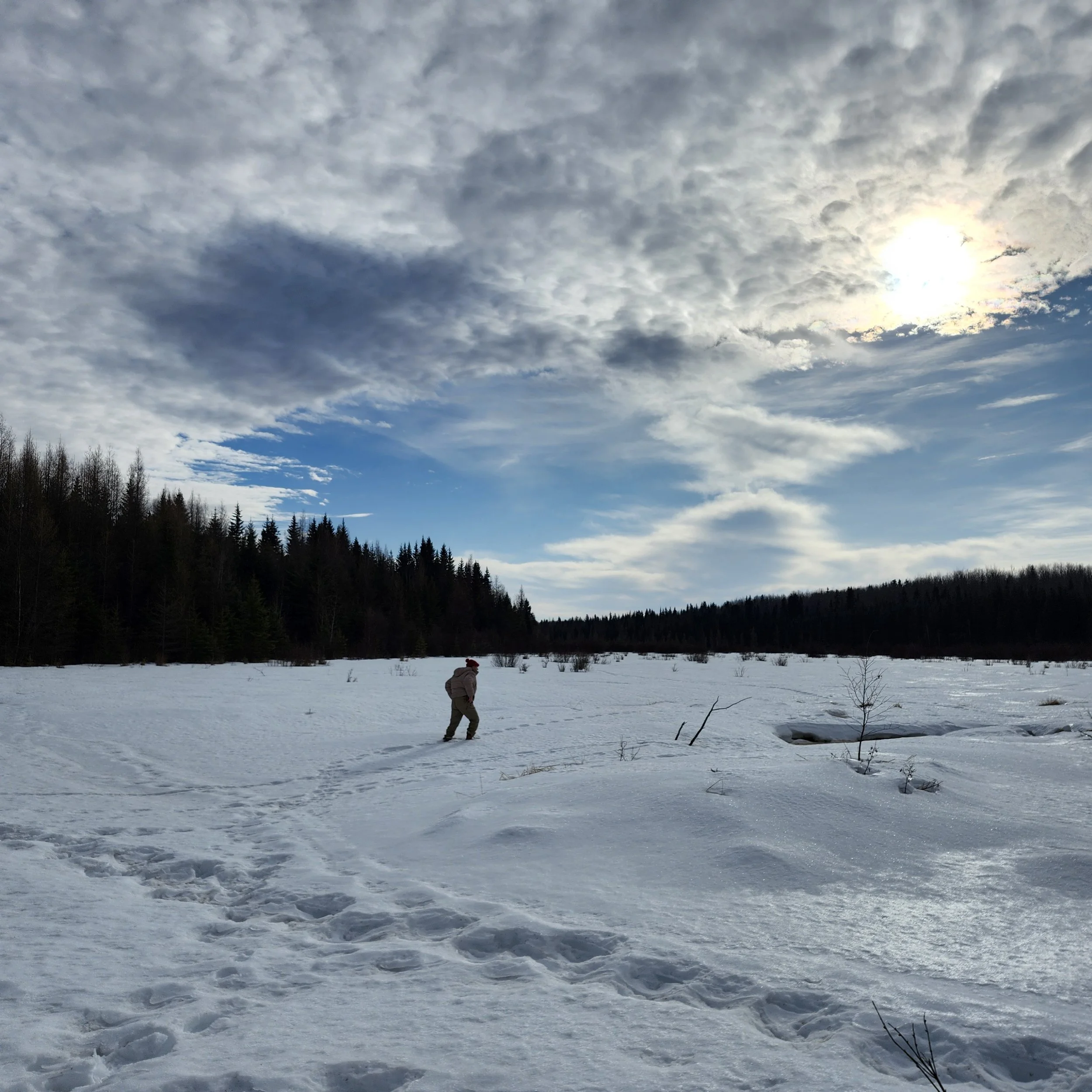
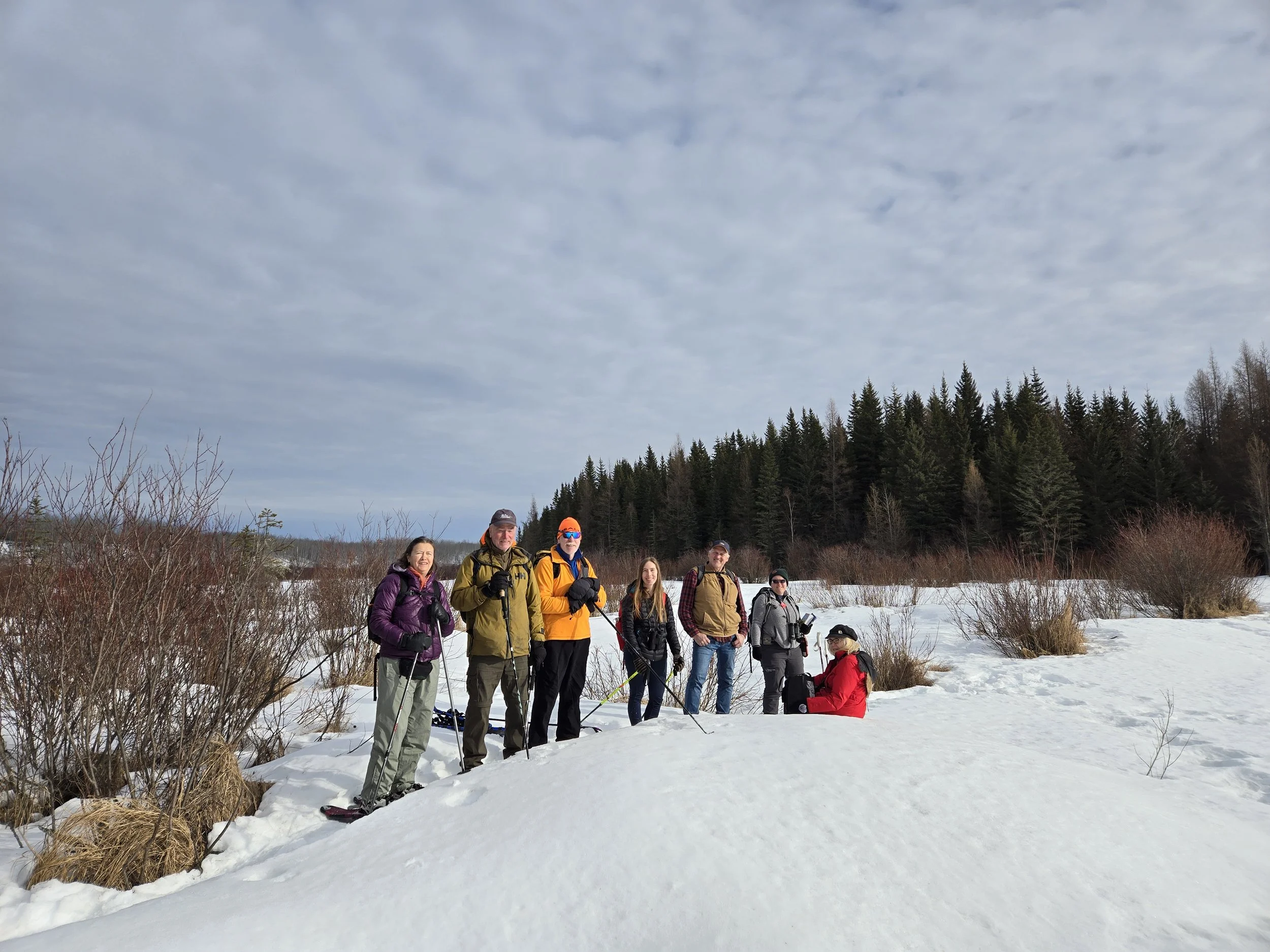
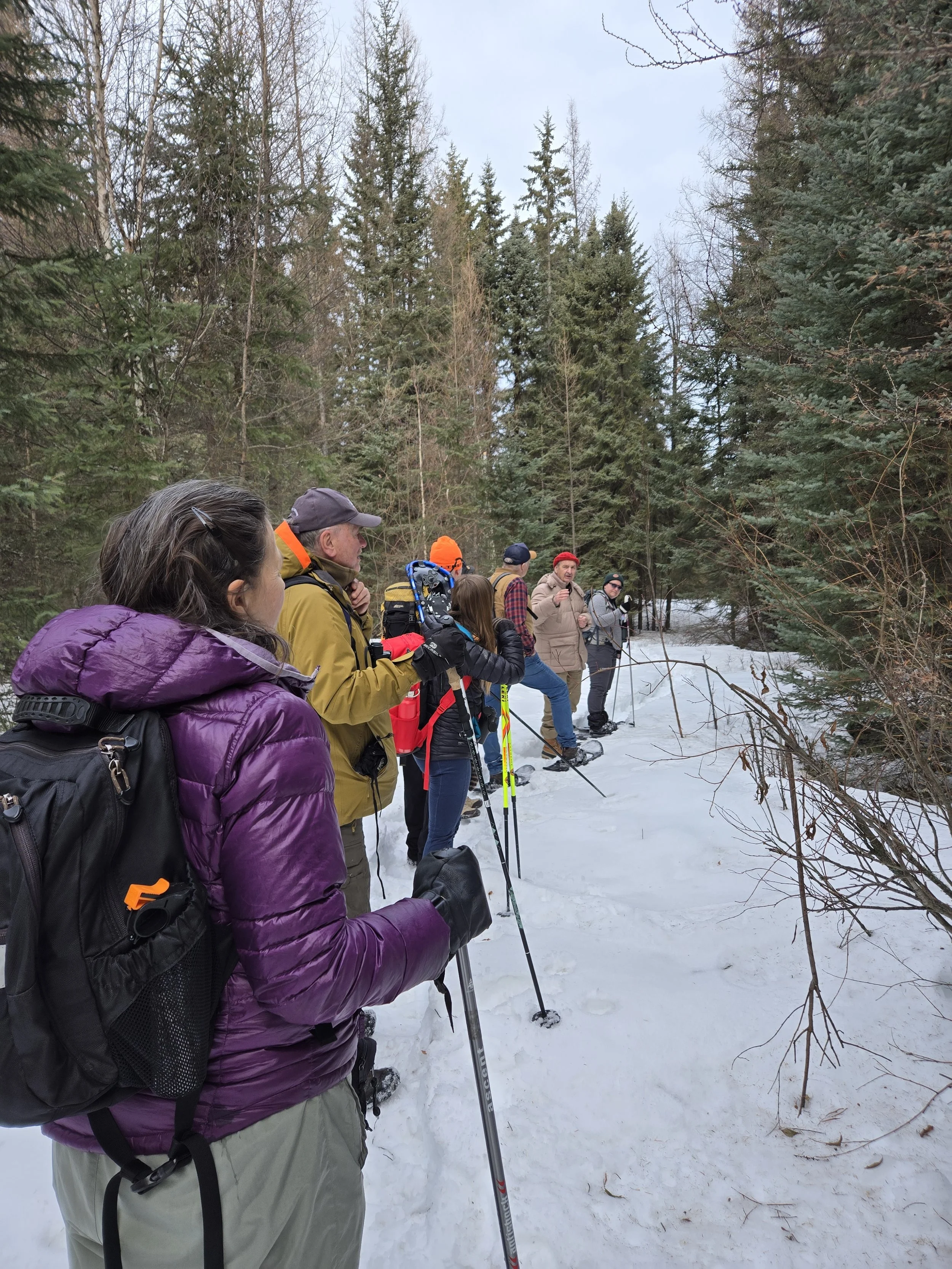
Once lunch was finished, there was still lots to explore! We walked through a semi open grassy meadow before making our way back out of the valley. On our way back up, we found several interesting things.
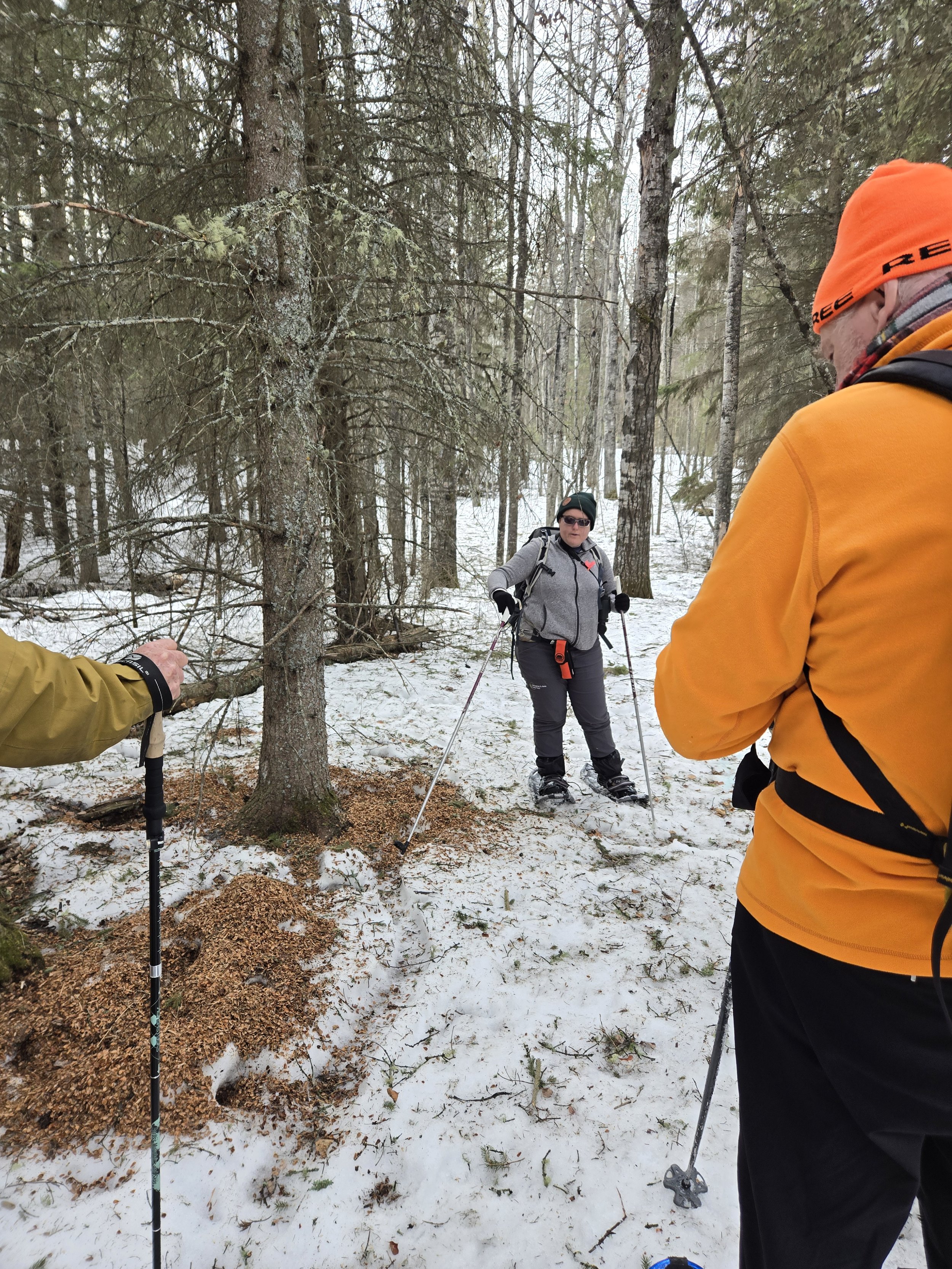
The first was the hidden landscape of squirrels, being uncovered by the melting snow. As the snow melted in a section of white spruce forest, it was uncovering the top of a squirrel midden. The midden itself is a stash of spruce seeds and other food items that squirrels have stored under the ground so they can survive the winter. However, the access to these middens is on the ground, so the squirrels develop tunnels under the thick snowfall. This allows them to access tunnels from trees where they are safe from predators, to their caches where their food is stored for the winter. In the half-melted conditions, we could clearly see these squirrel sized tunnels!
This strategy is a common way for small rodents to survive the winter months. We call this area the “subnivean zone” or, the area under the snow where rodents tunnel to travel around. Learn all about the subnivean zone in our blog, “there’s snow way”.
We then moved on a little further, and found something else interesting. At a trail intersection, partway up the slope on the north portion of the property, is an old spring. Although it no longer produces substantial water, a small piece of a decaying wooden structure remains, indicating that it was once an important source of water for people living in the area.
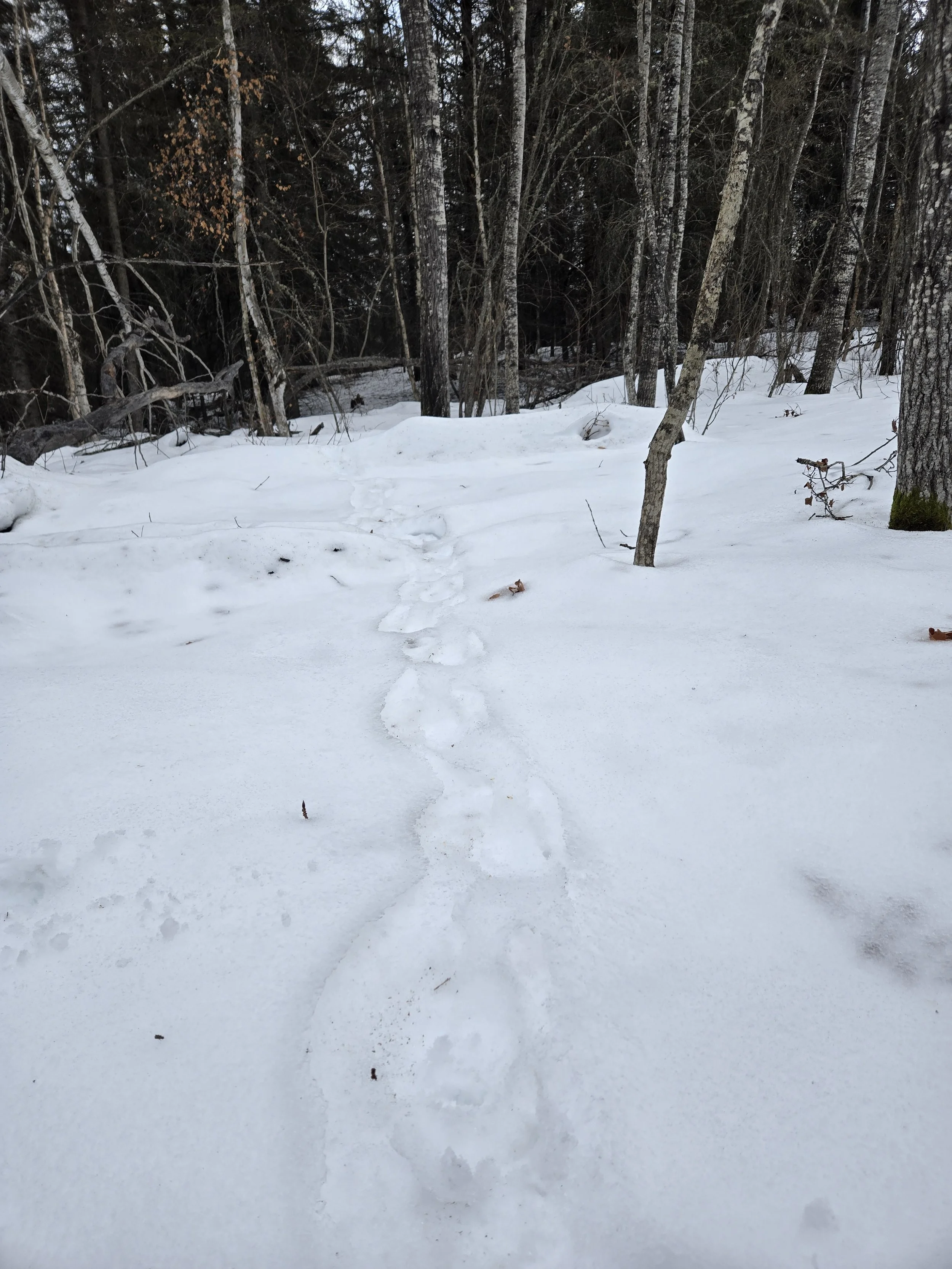
As we continued walking through the forest paths, we found some porcupine tracks! Porcupine are active year round, walking from tree to tree until they find one suitable to chew the bark for food.
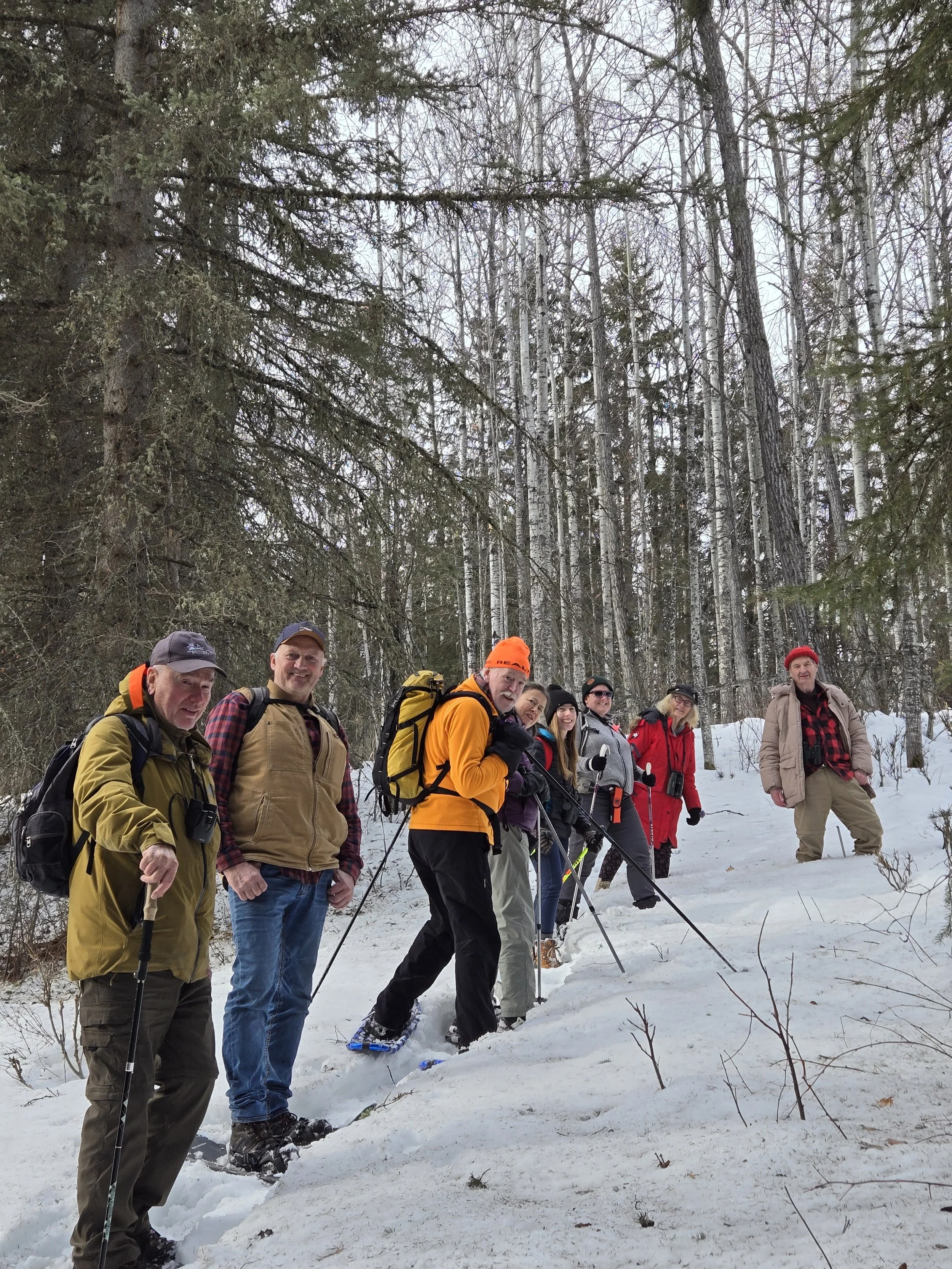
That concluded our exploration of this remote and beautiful site. We gathered once more at the entrance to the land, before dispersing to head home.
If you would like to visit this beautiful site, check out our Conservation Land page, or our blog about the land opening in 2024. Happy exploring!
This event was supported by the Westlock Community Foundation. We welcome future opportunities for residents in Westlock county to connect with us. We provide presentations and workshops (dependent on supplies), and can connect individuals with volunteering opportunities. Get involved in nature near you!
Stewardship Events
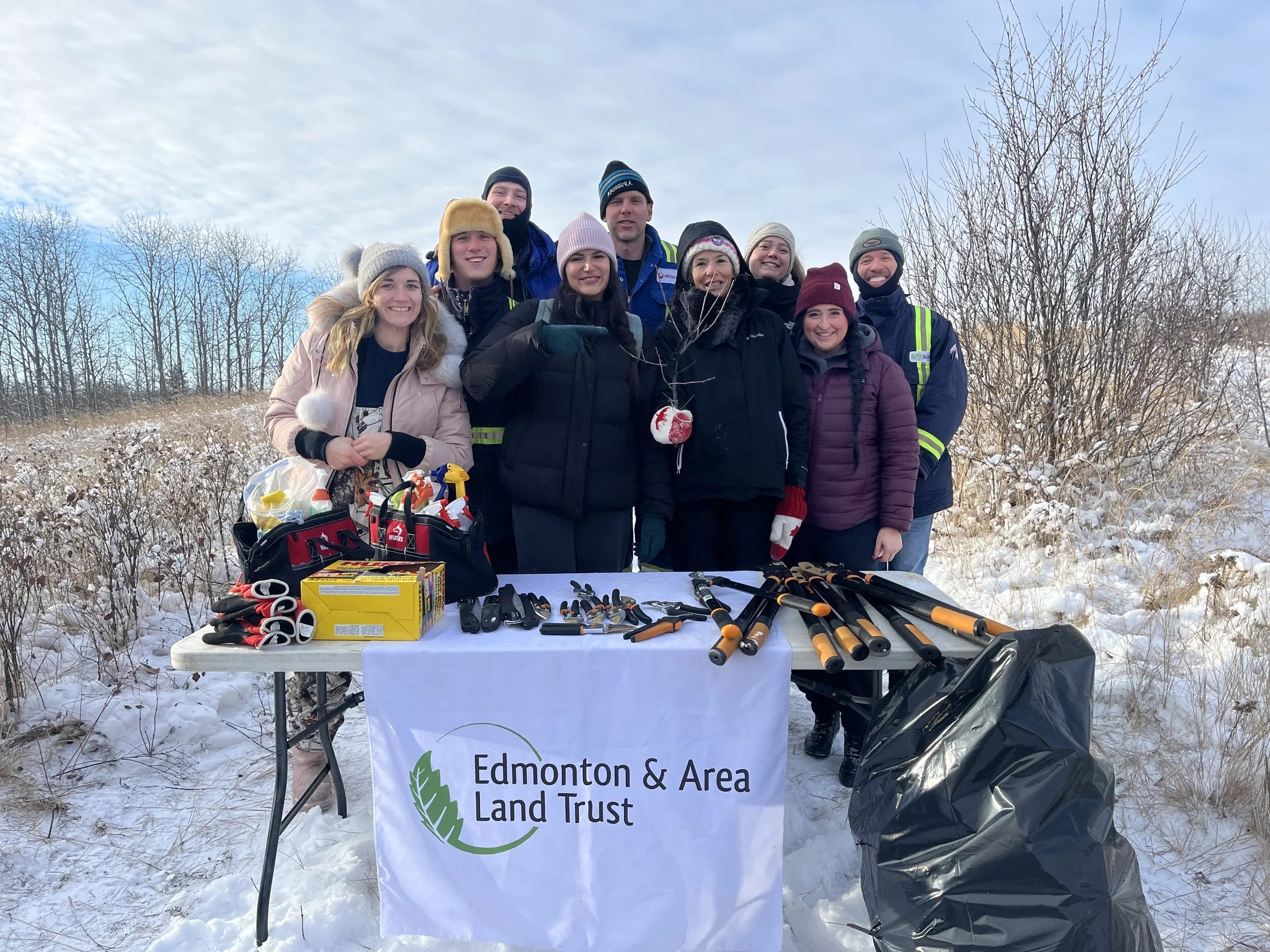
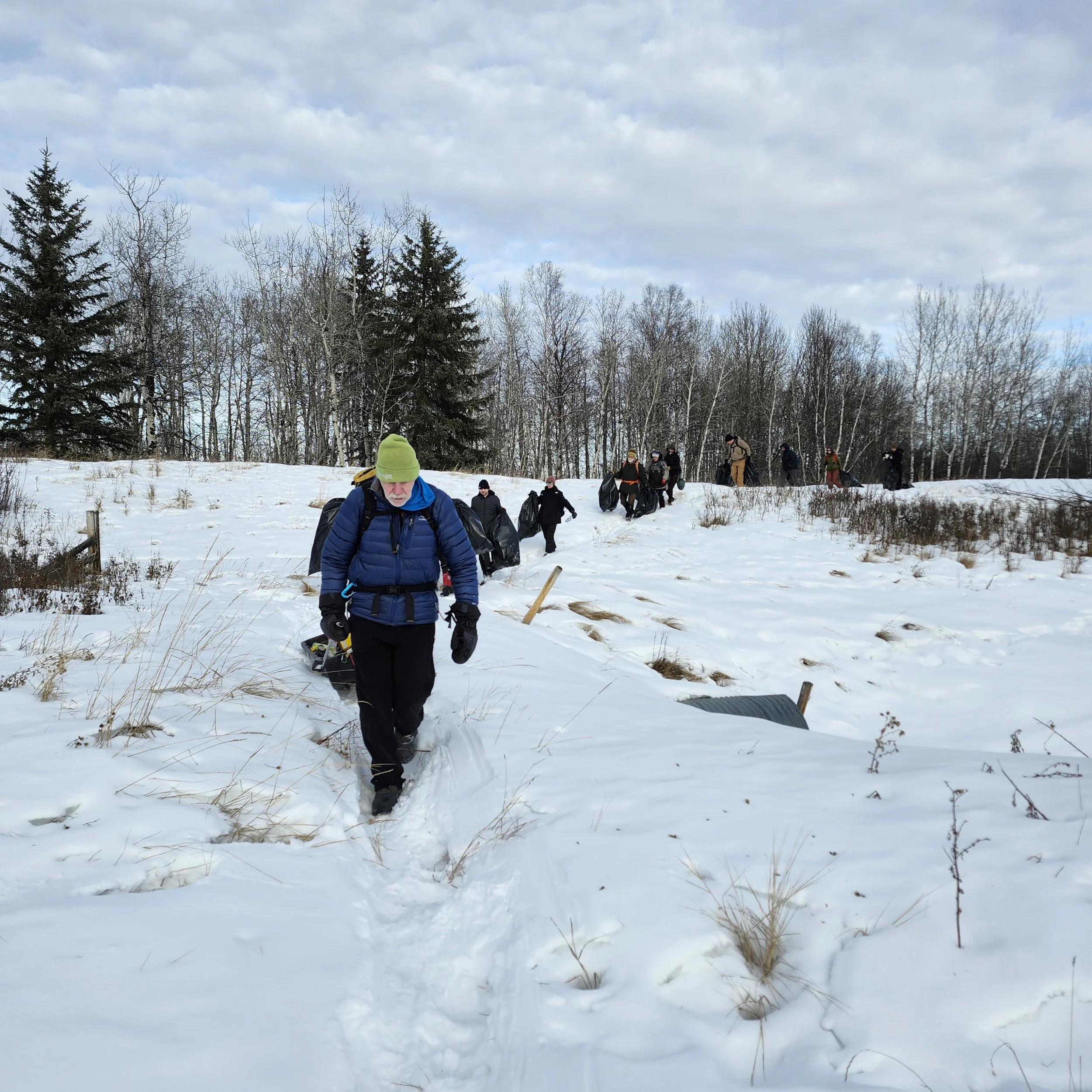
We held a few black knot removal events this winter at Bunchberry Meadows and Glory Hills maskihkîy meskanaw. Read more about why we remove black knot on our Science Spotlight blog.
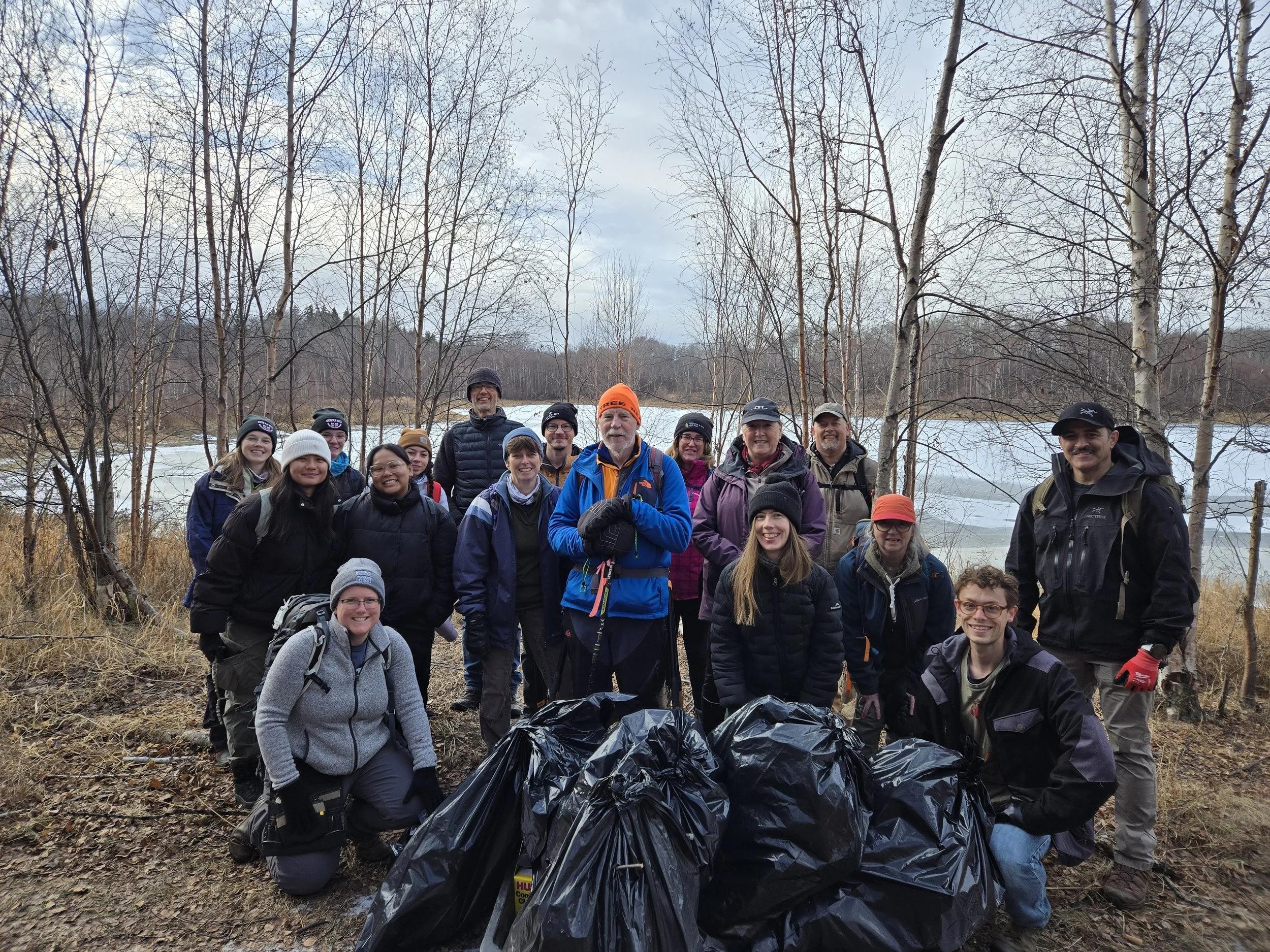
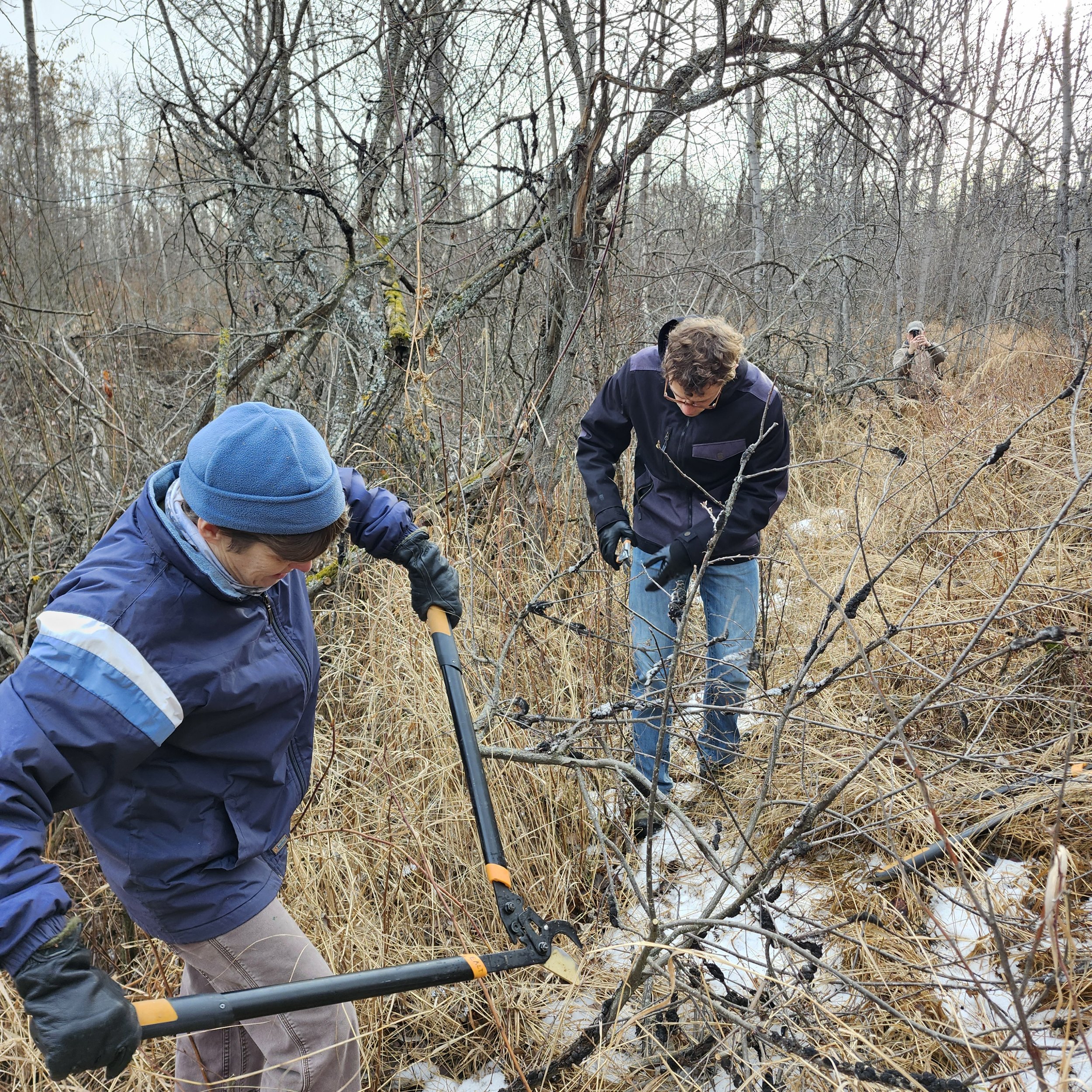
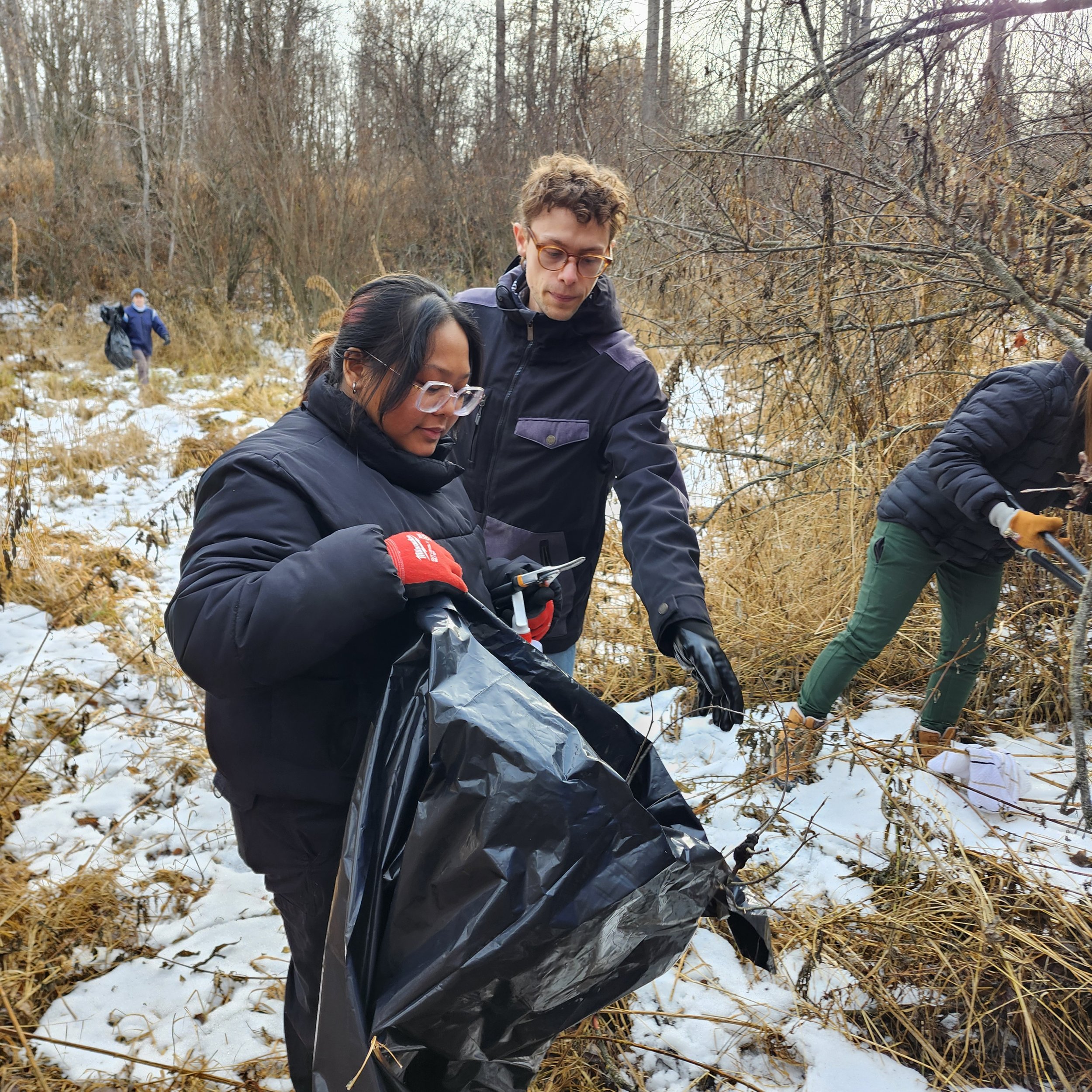
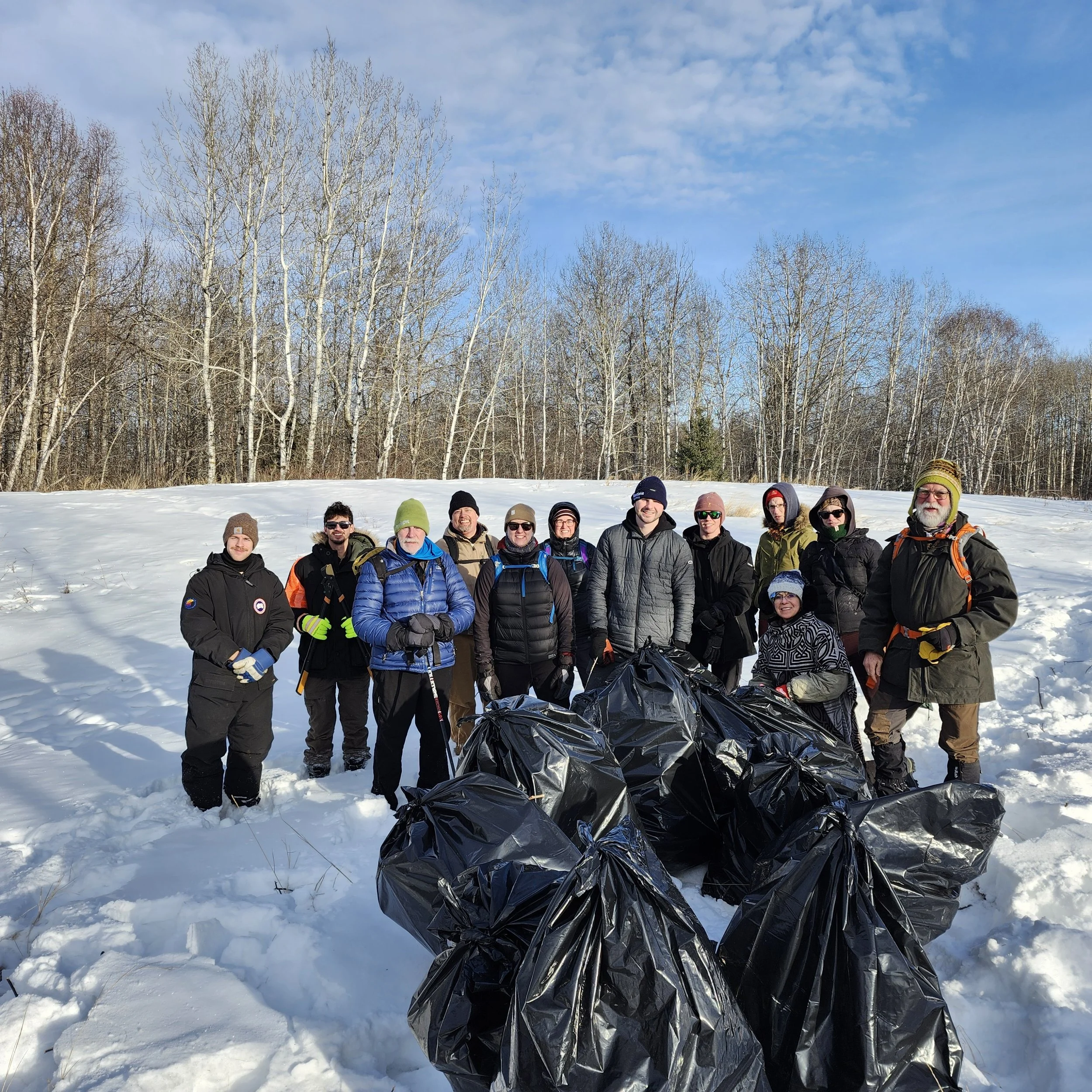
We look forward to an exciting year ahead for connecting people to our conservation lands. Stay tuned to more events like these by subscribing to our newsletter. Click the button below!
