
The darker half of the year is here, and with it comes the full spectrum of winter weather. In recent years, typical winter weather patterns have been disrupted by climate change, often making it hard to know which jacket, sweater, or pants to don when you’re headed outdoors.
In this blog, we’ll be sharing tips for what to wear and how to prepare!
Base Layers
Depending on how your body responds to the cold and what else you’re wearing, this layer level is optional. Layers that go under other clothes are typically called thermal underwear or long underwear (sometimes called long johns), and they look like thin leggings and long-sleeved T shirts.
For this layer, fabric material matters, as they’re meant to help wick sweat away from your skin so that it doesn’t make you too cold. For this purpose, wool is still the best material to maintain its heat-preserving qualities even if it gets damp. Polyester and nylon fabric are also used.
Middle Layers
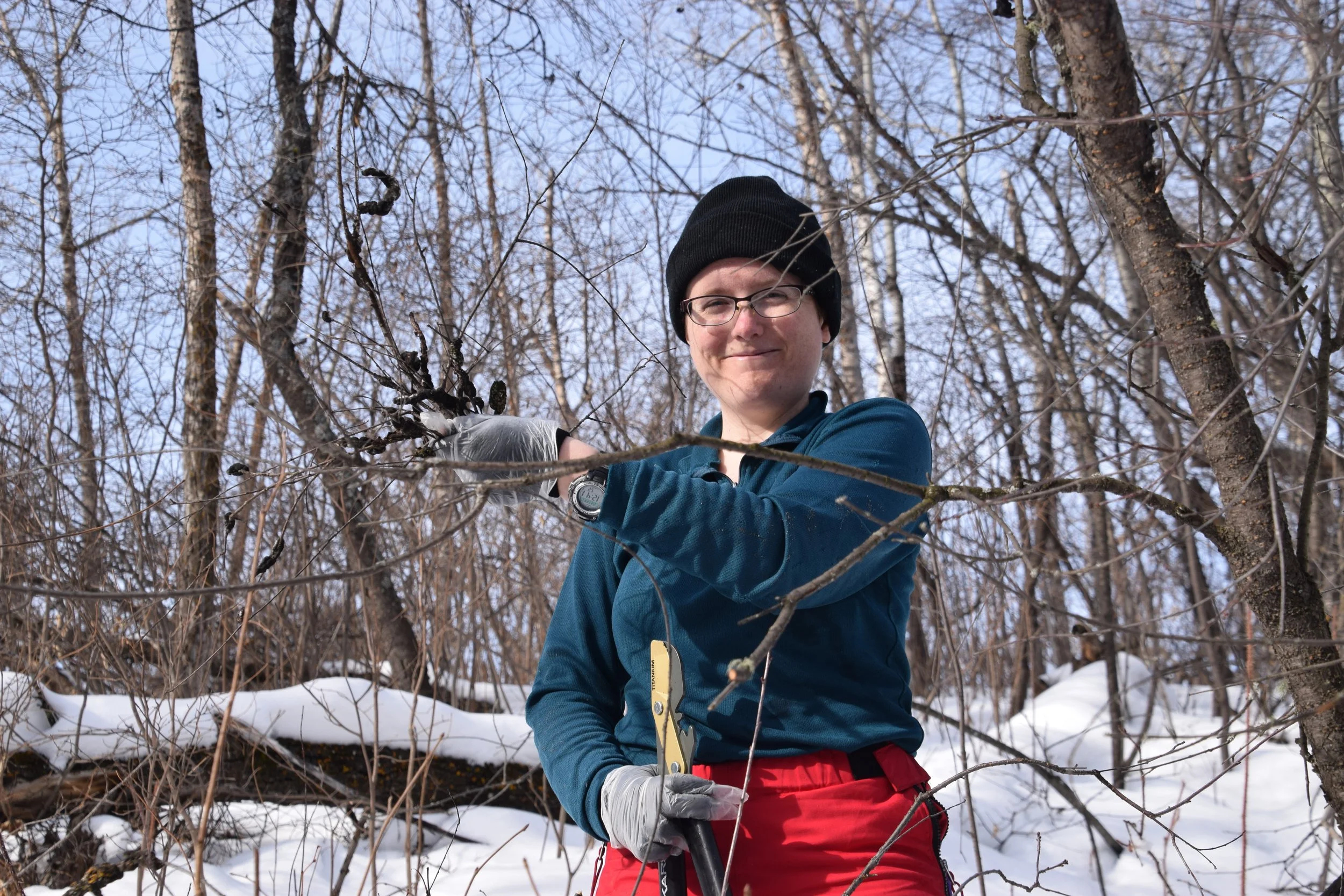
Conservation Team Lead Meghan Jacklin wearing an example of a middle layer.
This layer level is important regardless of if you’re wearing thermal underwear or not. It refers to the layers you wear between your base layers and outer layers, and often consists of a sweater or fleece of some kind, and “normal” pants.
For your top half, it can be a benefit to decide whether a hood makes sense for your middle layer. If you don’t want a hood tucked into your outer jacket, hoodless fleeces and sweaters work great. Fleece is great because it traps heat effectively, and wool is also a good choice for the previously discussed reasons. If you don’t have either, a hoodie is also a good choice.
Outer Layers
This is the most important part! When the weather gets cold, an effective outer layer is the minimum requirement. Even if the rest of your gear isn’t in order, your outer layer protects you from wind, water, and sub-zero temperatures.
The basic features of an outer layer should include some degree of water resistance, with a dense weave to protect against windchill. Inside the coat should be insulated, and a hood with a fluffy trim can be an asset in snowstorm conditions.
Other Essentials

Did you know that the oft-repeated adage that you lose 40-45% of your body heat through your head is false? This was likely based on information from an old U.S. Army Field Manual, though the exact origin of this “wisdom” is unclear.
Additional gear that is needed in the winter cover the hands, head, and feet. Toques are important for keeping your head warm, as well as layers for your hands, and good winter boots for your feet. It’s all about coverage – the more exposed skin is covered, the warmer you’ll be.
On that note, scarves also help a lot, particularly if your other layers don’t have a collar that extends up your neck. You can also use neck gaiters and buffs in place of scarves if you’re not big on dangling clothing.
Speaking of gaiters, if you have shorter winter boots that don’t extend up your calf, these are a great piece of gear to help ensure you don’t get snow into your boots. Gaiters should have a hook at the front of them which you can hook onto a loop at the front of your winter boot, or onto a lace to make sure it doesn’t shift as you move.
As for your hands, gloves or mitts are important, and which one you choose will depend on what you plan on doing outdoors. If you need dexterity, gloves are a better choice, but mitts generally tend to be warmer. Hand-wear with outer shells similar to winter jackets will be warmer, while knitted or fleece gloves will be less warm.
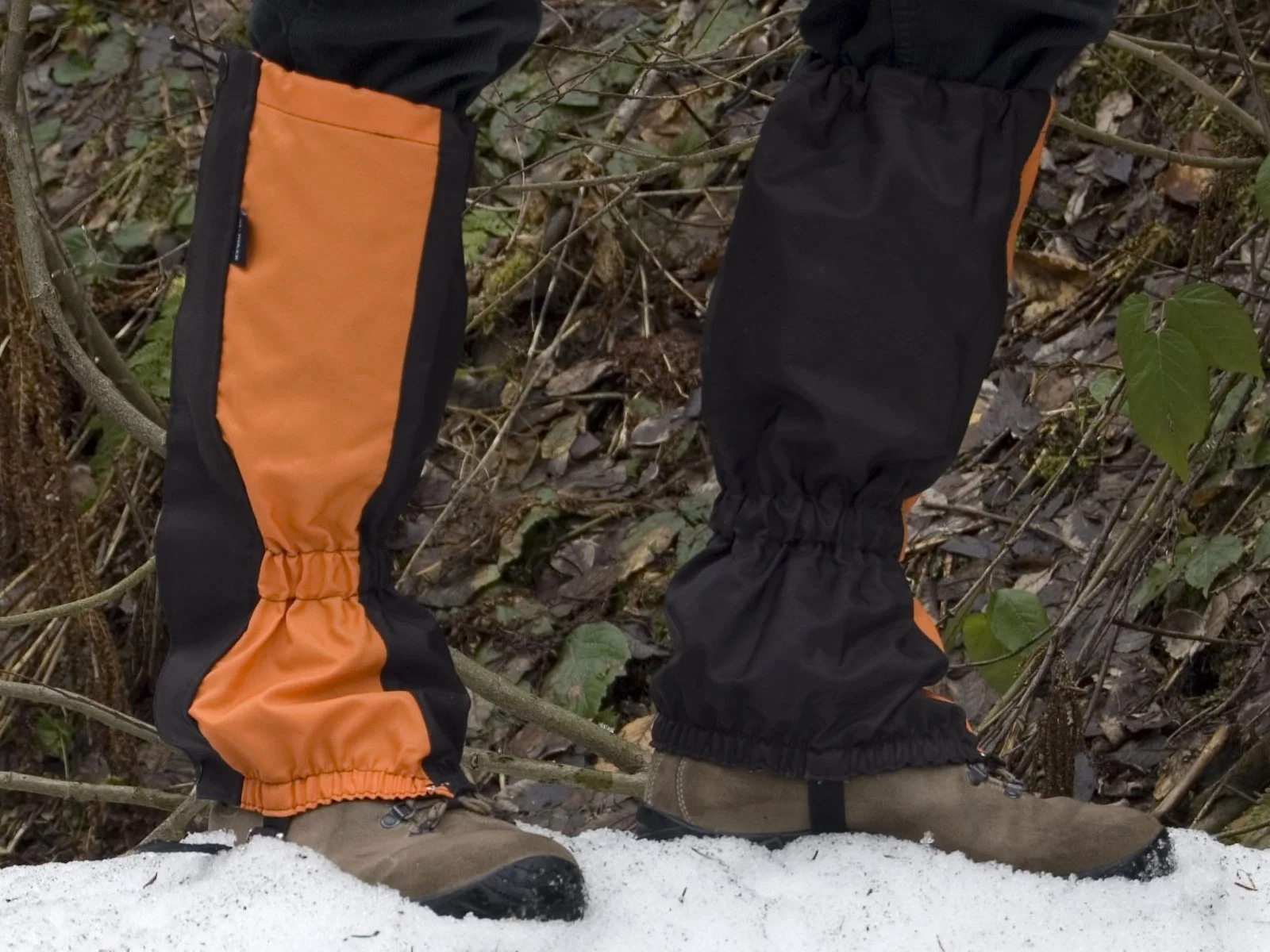
Gaiters like these ones eliminate the problem of snow getting into short boots or shoes. Picture: Carivaldi, CC BY-SA 3.0, via Wikimedia Commons
Stay Dry, Stay Warm!
Whatever you’re doing in the winter outside, the name of the game is always to keep as dry as possible. Humans are unique among animals in our ability to sweat, and while this is a huge advantage in warm climates, this benefit is turned against us in the cold. This is why having moisture-wicking clothing is important, as this ensures that sweat doesn’t stay close to your skin and make you colder. This is especially important to keep in mind if you’ll be doing something active.
Dressing for winters made unpredictable by climate change can be an added challenge, especially given new obstacles such as winter rain, as most typical winter coats are only water-resistant rather than waterproof. Dressing in layers is best due to how much you can modify your attire as needed – if you hit the trails fully dressed up but find you get too warm, it’s great to have the option to take off the middle layers to get more comfortable.
Outdoor gear can be expensive if you buy it new, but thrift stores often have a good selection of used attire that you can integrate into your wardrobe.
Winter has a lot to offer, and we hope this blog has empowered you to feel confident while making the most of the season!
You can see more nature-related articles by subscribing to our Nature Notes blog.
