As an organization, the Edmonton and Area Land Trust protects land to conserve biodiversity and connect people to nature. This is our mission statement, and to accomplish this, we focus on three main categories of work: Securement, Stewardship, and Outreach. We focus a lot on our Stewardship and Securement work here on our blog, but today we’d like to share what’s new and exciting with our Outreach efforts!
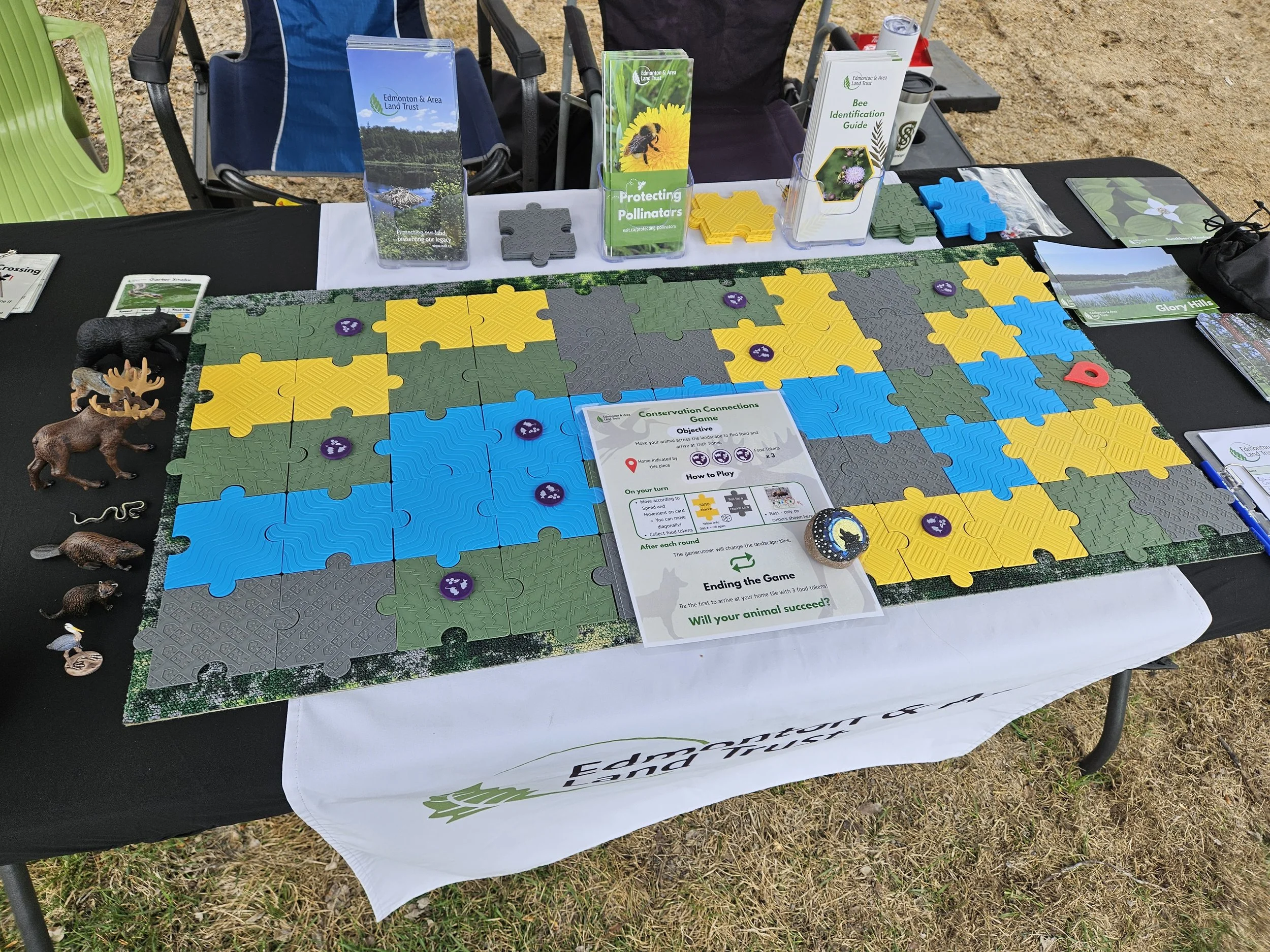
This year, we launched a new outreach tool in the form of a board game. If you’ve been out to our information booths, or visited us at events, you may have already tried it, but if not, this blog will introduce you.
The Idea
EALT attends an average of 25 outreach events per year, which may take the shape of presentations, nature walks, or most often, information booths at community events.
Our typical setup has, in the past, been exclusive to handouts and information pamphlets, which provide a great resource to people just passing by who are curious about our work. However, while conversations and reading material are a great way to engage, sometimes it helps to have a practical aspect that one can interact with – an experience.
In general, people have a good understanding that modern human activity takes a toll on the land and its wildlife. Very often, we see nature near our homes as “lesser”, and take it for granted.
So how could we effectively emphasize the importance of the smaller patches of habitat in the context of the Central Parkland Natural Region?
In thinking about the question, our answer was revealed: make a game where the player is an animal!
Building the Game
To make the idea a reality, we had a session of brainstorming where we each brought in board games we especially liked, and noted the design elements that made them appealing.
When we had finished highlighting our objectives, preferences, and messages, we combined everything to land on something unique and purpose-built.
Gameplay
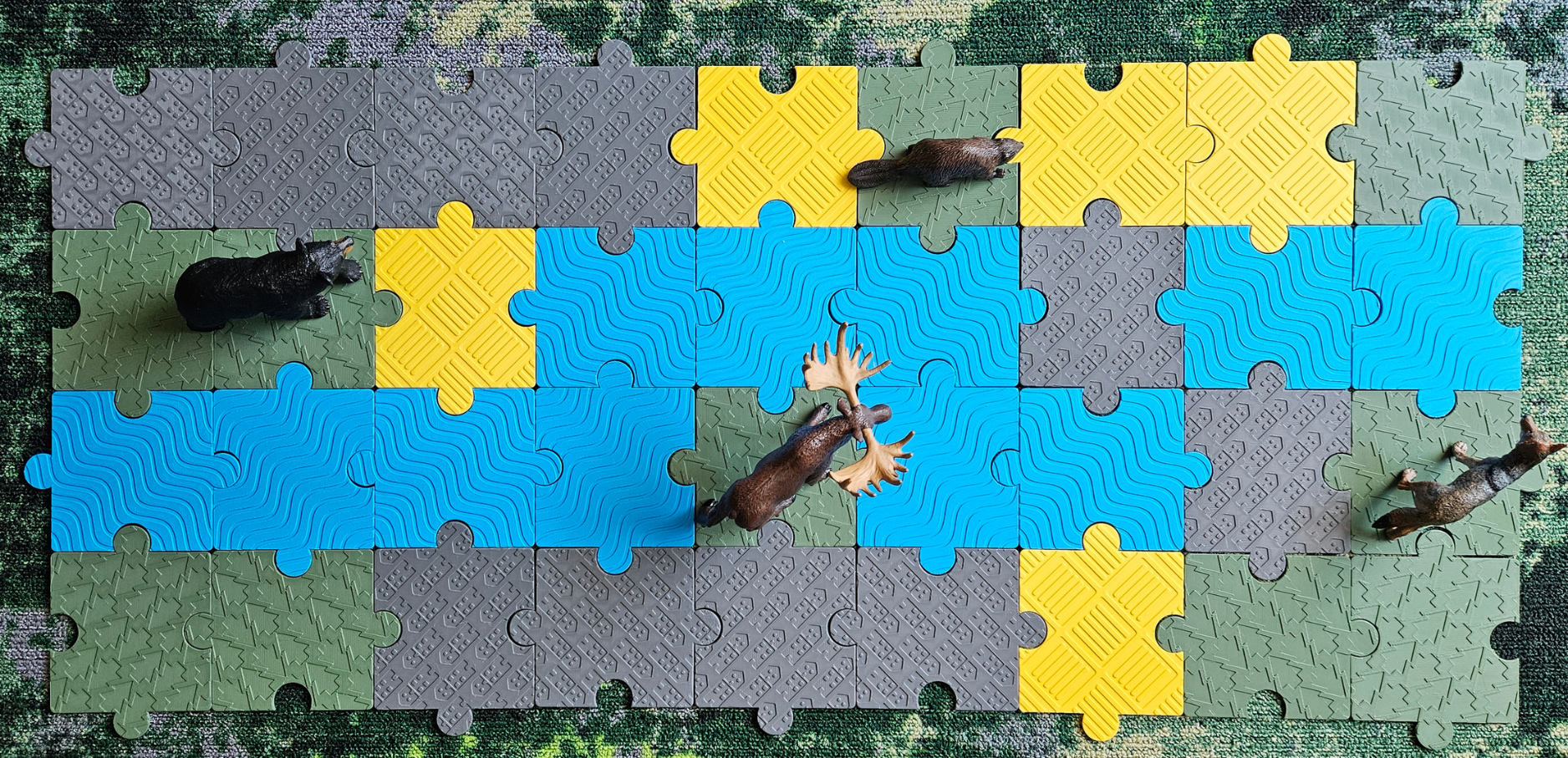
A top view of the game board. Blue pieces represent rivers, lakes, and wetlands, yellow represents agriculture or grassland habitats, green is forested areas, and gray is urban or city landscapes.
After the player makes their animal move towards their target habitat piece, one of the 55 game pieces changes into a different kind of habitat, usually urban. That may not sound like much, but depending on what your animal is, all it takes is one piece to change to cut off your entire corridor to your objective.
Construction
In order to properly illustrate the concepts of habitat fragmentation, we knew we needed a completely modulable “board”.
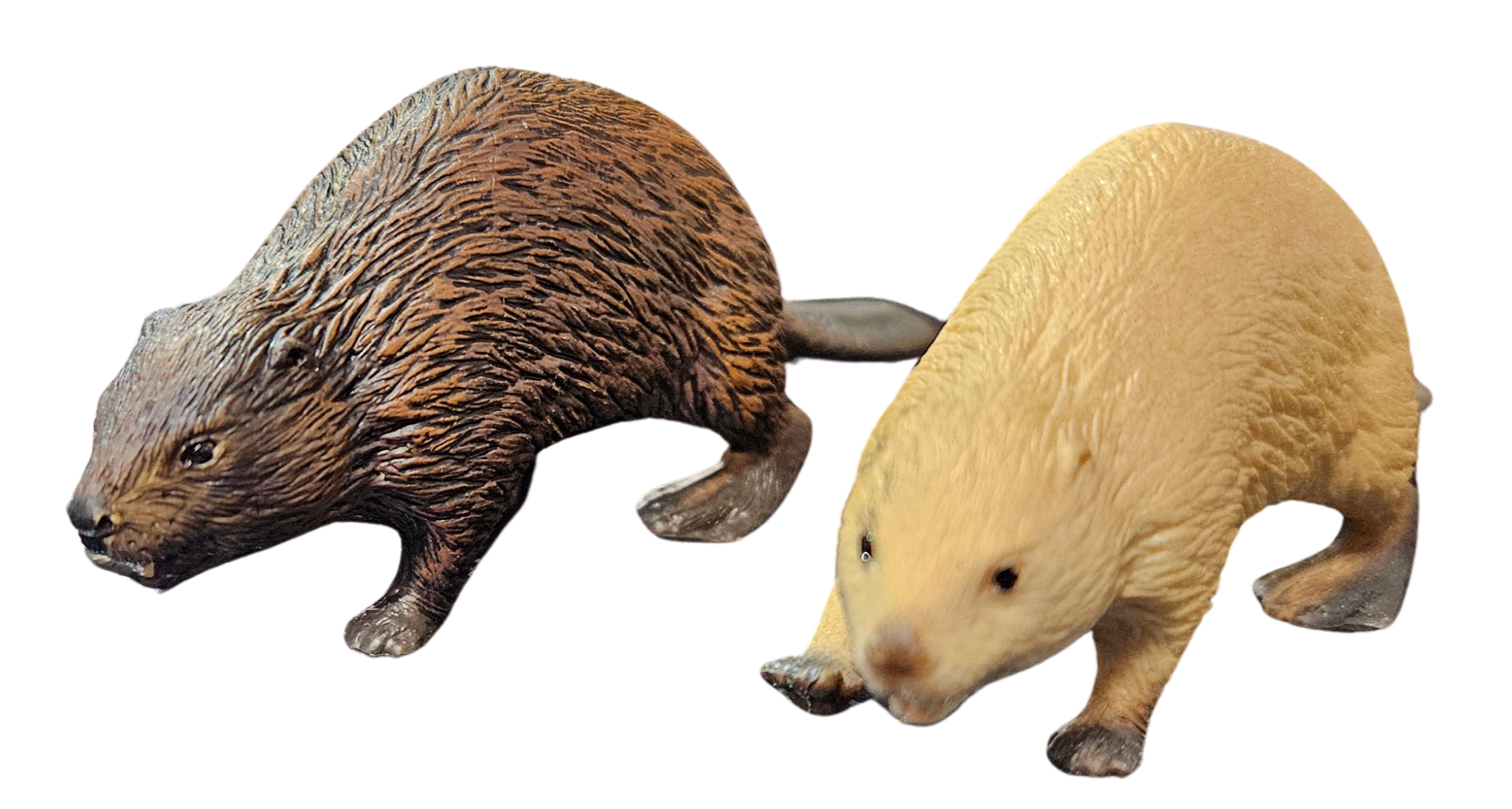
On the right is the original model, on the left is a repainted model. All animal pieces were purchased from a craft store.
Enter some 3D printing magic! While the office doesn’t have a 3D printer, Rebecca, our Conservation Manager, offered the use of her home printer to fabricate the pieces. In addition to that, we picked up some toy animals from a craft store to use as the “player pieces” – after Conservation Coordinator Ciara Fraser added a coat of paint to some of them to make them more realistic.
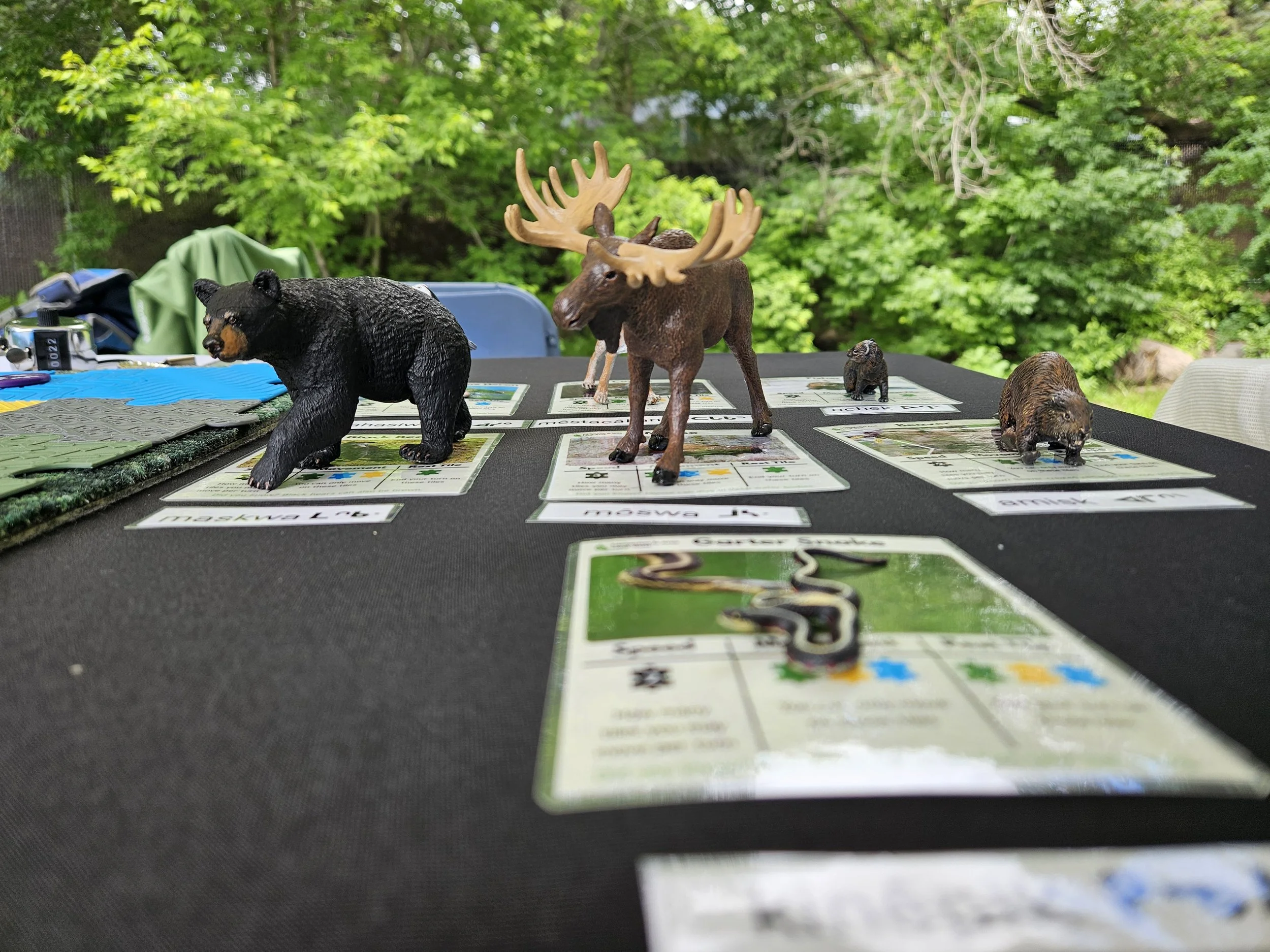
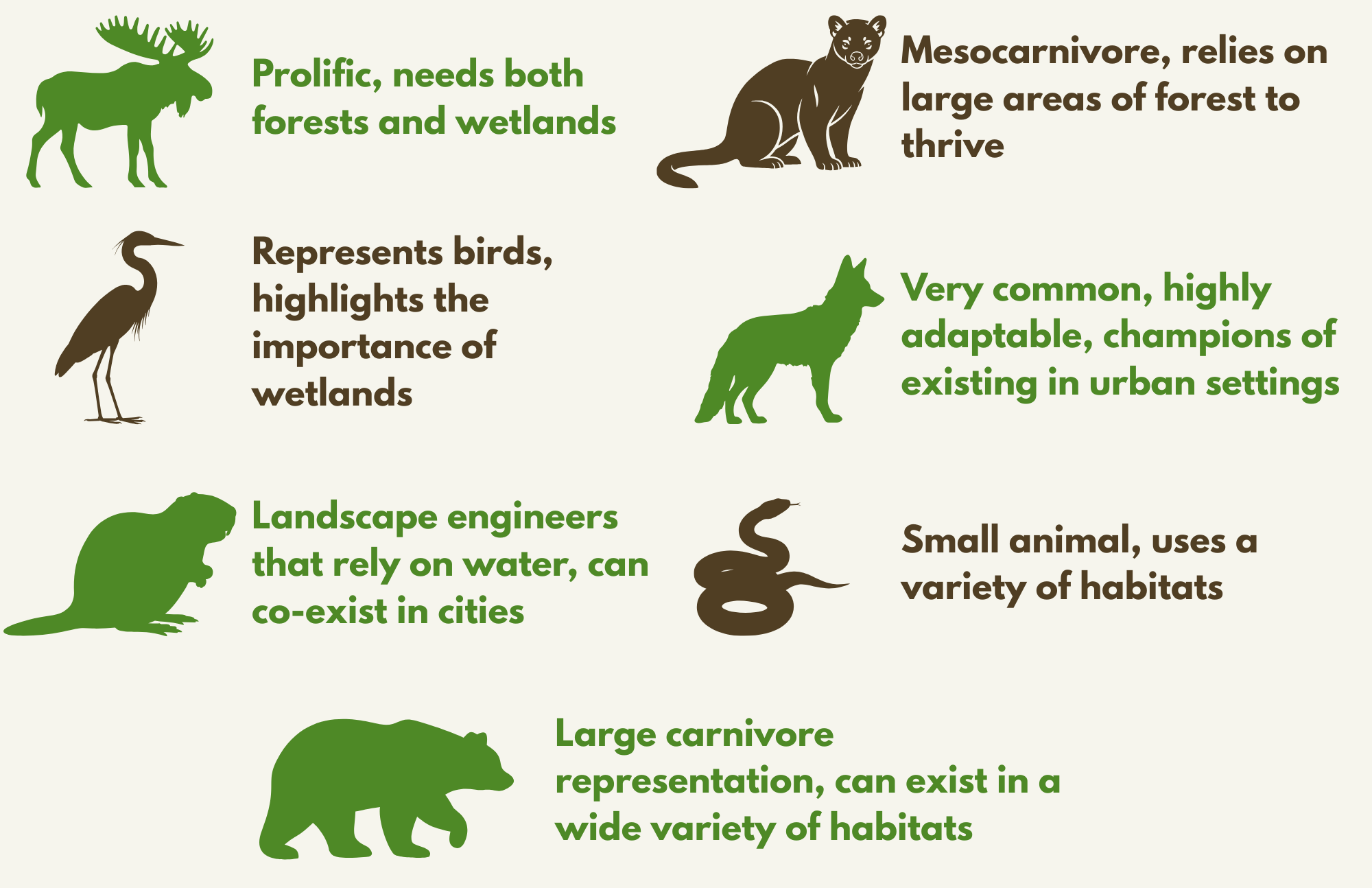
As for the animals selected, we wanted to pick animals that represented different needs from the landscape: Moose, fisher, Great Blue Heron, coyote, beaver, garter snake, and bear. The graphic below explains more about why each animal was chosen.
As mentioned, this game was built as an experience, so it’s best played rather than explained, but you can reference the rule sheet here if you’re curious about how the gameplay works – or better yet, come visit us at an event! You can find out more about when and where we’ll be from our newsletters.
Reception
So far, visitors to the booth have had a very positive experience with the game. Kids are immediately drawn in by the toy animals and brightly coloured board, and often want to play. Adults who enjoy games also ask to play, and we included elements that would make it more challenging and nuanced specifically for players who were up for more of a challenge.
Regardless of whether visitors play or not, the colours on the board draw the eye and invite curiosity, which is a great secondary benefit. The pieces make a great prop to briefly explain the challenges of habitat loss, which always leads to an “aha” moment for those who may not know about habitat fragmentation.
Overall, we’re very proud of this new engagement tool, and we expect to keep it around for years to come.
Did you know you can volunteer to come and help us at our outreach events, like info booths? You can also help us write social media posts, and even blogs! Learn more about our outreach volunteering opportunities on our Conservation Outreach Volunteer page. We accept volunteers for this program year-round.
Thanks for reading this month’s blog!
If you’re an educator or work with a non-profit and would like to adapt this idea to use for educational purposes, please contact outreach@ealt.ca.
