
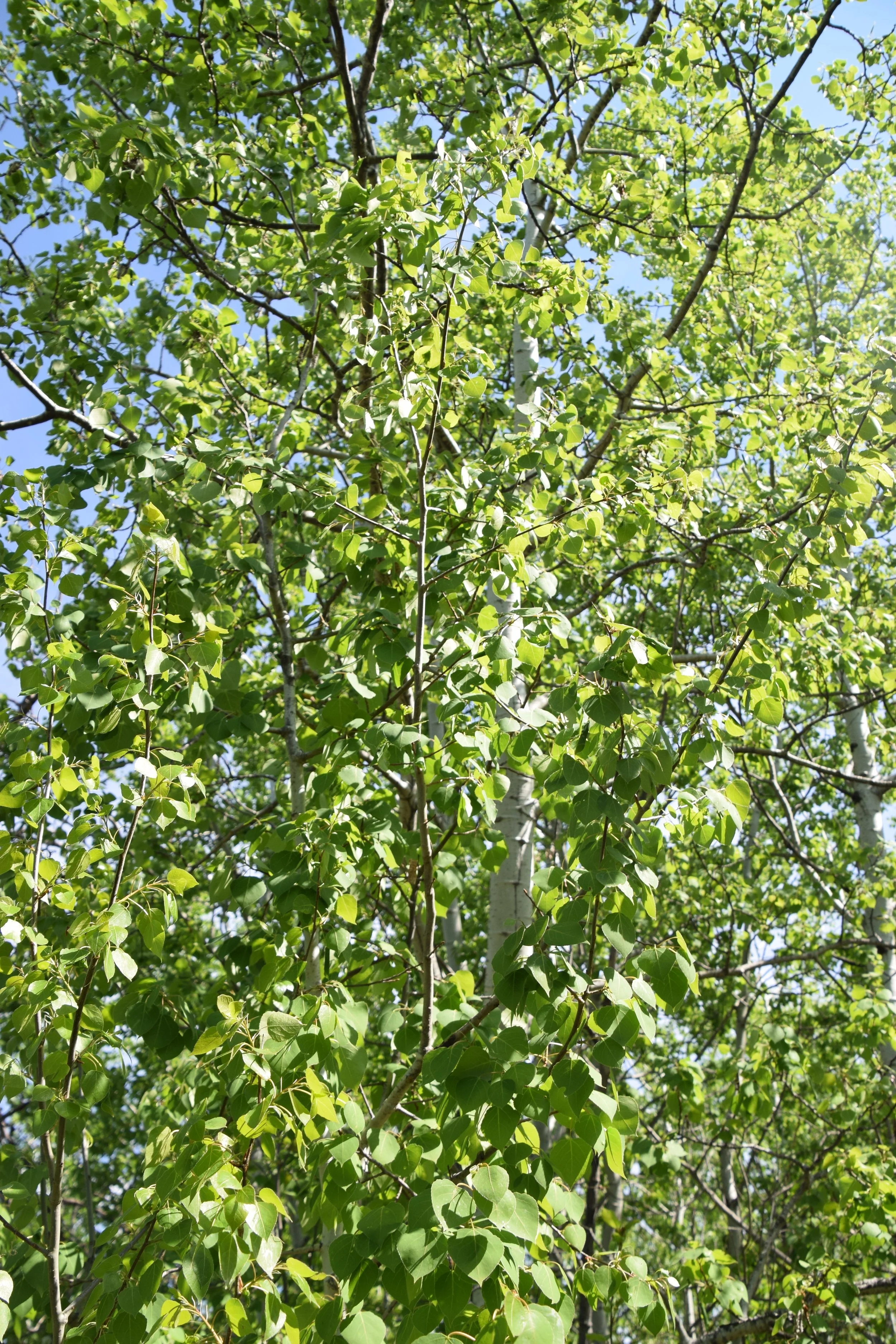
Aspens are one of the most widespread trees in North America. They can be found across much of Canada, United States and Mexico, growing in forests and other natural areas.
Here in Alberta, aspens are a familiar part of the landscape, especially around Edmonton. Since aspen trees are so common, it can be easy to overlook just how important they are. Aspen trees provide food and shelter for wildlife, support biodiversity and play an important role in keeping ecosystems healthy.
In this blog, we will explore how aspens grow, why they matter and what they tell us about the ecosystem around Edmonton.
What is an Aspen?
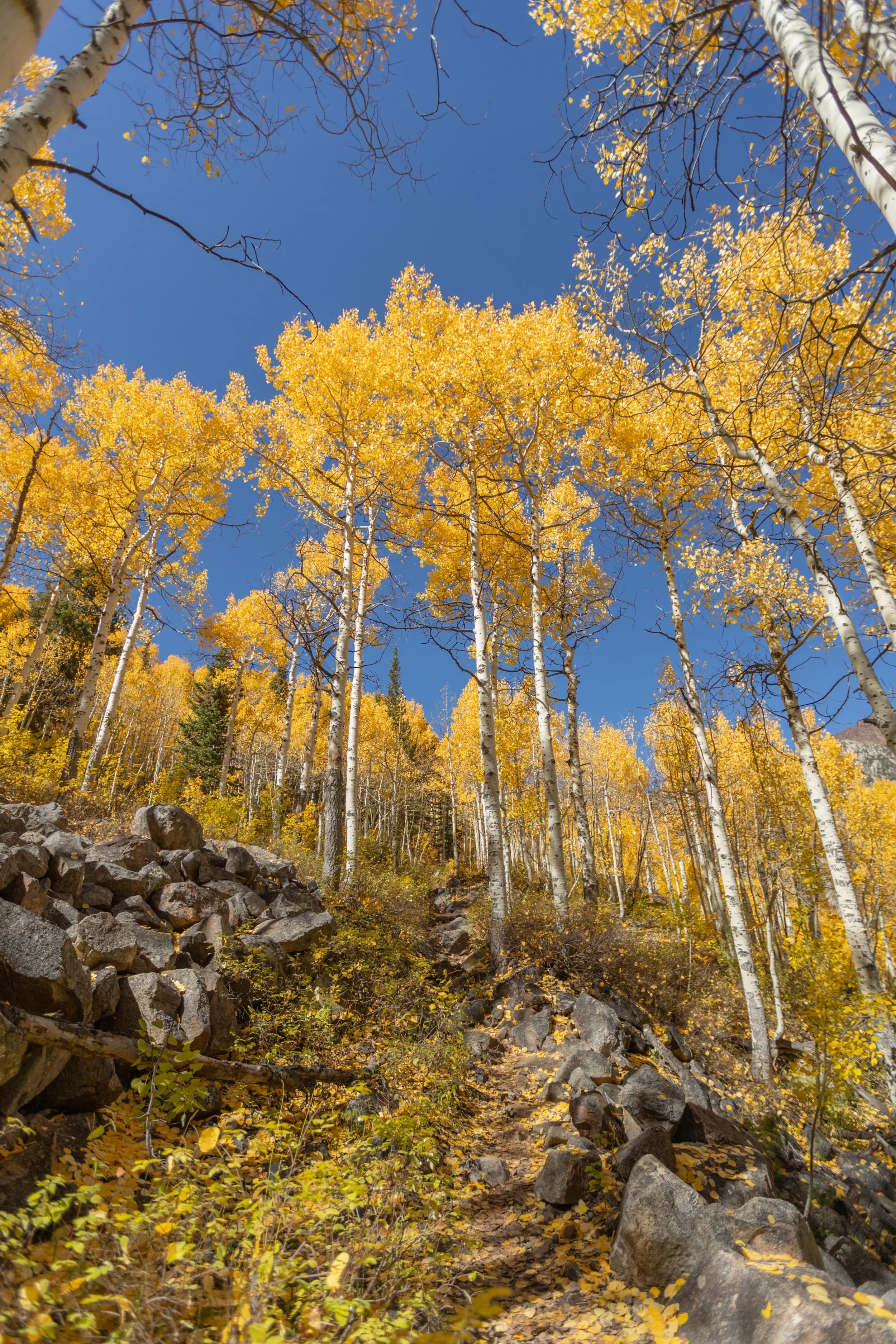
There are several species of aspen found across North America, but the trembling aspen is the most common species in Alberta. It is easy to recognize by its smooth, pale bark and its thin, nearly round leaves that tremble in even a light breeze. The leaves shake because their stems are flattened along their entire length, which makes them move easily in the wind. In the fall, these leaves turn bright yellow and gold, lighting up the forest.
Aspens are medium sized trees, often reaching 20 to 80 feet tall. They can reproduce from seed, but they more commonly spread by sending up new shoots from their roots. This means that many of the trees in a single grove can be connected underground. Ecologists call these groups of genetically identical trees “clones”. All the trees in a clone share the same root system and often look very similar, with comparable leaf shapes, bark patterns and timing of their fall colour.
This underground network is one reason aspens are so good at recovering after disturbance. When a tree dies or when more sunlight reaches the forest floor, the roots respond by sending up new sprouts. Through this process, a clone can live far longer than any single tree. Aspens also grow best in moist soils with plenty of sunlight. They don’t do well in deep shade and often struggle to compete with more shade tolerant conifers.
The Parkland Natural Region
The aspen stands around Edmonton are part of the Parkland Natural Region, a landscape that stretches across Alberta, Saskatchewan and Manitoba. It lies between the open prairie and the boreal forest. The parkland is not one continuous forest. Instead, it is a mix of aspen groves, grasslands, wetlands and open areas. Each of these habitats support different plants and animals, which is why protecting an aspen grove means protecting the land around it too.
However, the Parkland Natural Region has lost much of its natural habitat. A 2020 assessment identified it as one of southern Canada’s “crisis ecoregions” due to both high biodiversity and serious conservation threats.
The assessment found that almost 80% of the Aspen Parkland’s natural cover had been converted to cropland and other land uses. It also reported that only about 4% of the ecoregion was included in conserved or protected areas. These changes affect more than the number of trees. As natural areas become smaller and more isolated, wildlife movement becomes more difficult. Wetlands may be drained, grasslands may be cultivated and remaining aspen stands may become surrounded by roads or development.
Why does it matter?
With so little of the Parkland Natural Region remaining in its natural state, the aspen stands that are still found around Edmonton become especially important. Aspens provide more than just trees on the landscape, they create habitat and resources that many species rely on. They also play an important role in connecting different parts of the ecosystem. An aspen grove does not exist on its own. It interacts with the surrounding grasses, shrubs, wetlands and wildlife, creating a network of habitats that support one another. When these natural areas become smaller and more isolated, these connections become harder to maintain.
This is why protecting aspen habitat is about more than simply keeping individual trees standing. Protecting the surrounding natural areas helps maintain the different habitats that wildlife depend on and keeps them connected. In a landscape where so much natural cover has already been lost, the remaining aspen groves around Edmonton are an important part of preserving biodiversity and maintaining healthy ecosystems.
How you can help
There are many simple ways we can help protect aspen trees and the ecosystems around Edmonton.
When visiting natural areas, stay on marked trails, take your garbage with you and avoid disturbing plants and wildlife. You can also help by planting native trees and plants, volunteering with local conservation groups and supporting efforts to protect natural areas, such as donating to or volunteering for EALT. Learning more about local ecosystems can also help us understand why they are important and how we can protect them.
By taking small actions and caring for the natural areas around us, we can help protect aspen habitats, support wildlife and maintain healthy ecosystems for the future.
That’s it for this blog! Thank you for reading this, and we hoped you learned something new about aspens.