Given the extreme amount of rainfall the region has experienced, this year has seen its share of landscape changes.
The impacts of the extra water can prove disastrous for human infrastructure, but after many years of sustained drought, the huge quantity of water has also had a big impact on ecosystems.
Today, we’ll be talking about how these huge changes in water level impact the species and landscapes around us.
Drought Periods
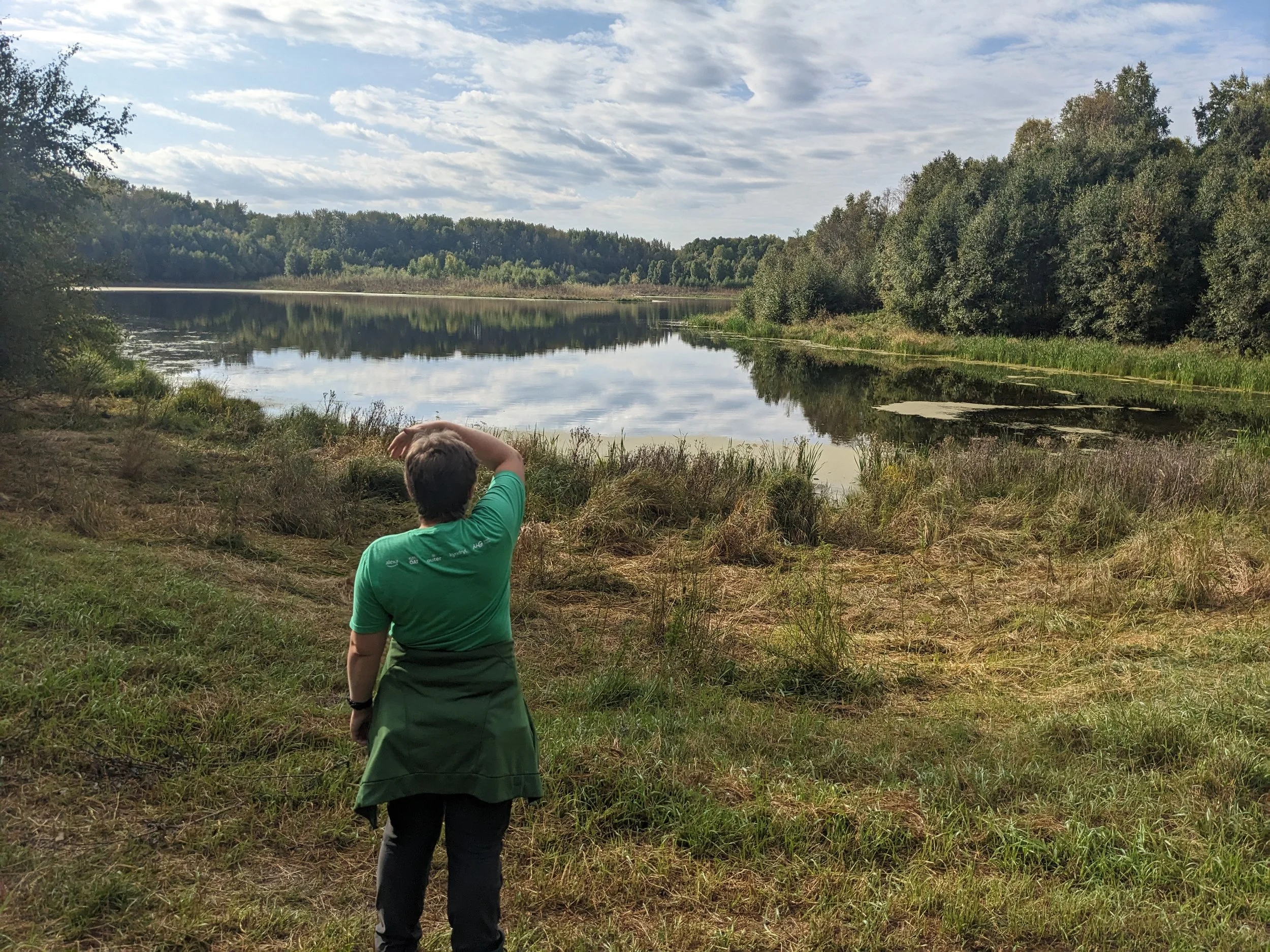
The main lake at maskihkîy meskanaw - Glory Hills. In the past, the lake level has been closer to where the person is standing.
After an extended period of drought, water bodies become stagnant, and rivers have low to no current. Less available water concentrates the nutrients that are present, leading to eutrophic conditions, a term that refers to an over-abundance of nutrients.
Nutrients are essential for ecosystems, but if there’s too much, this leads to an explosion of growth in aquatic plants and other organisms, including a threat you’ve likely heard about: algae. An overabundance of nutrients due to artificial inputs like runoff fertilizer creates the perfect conditions for algae to flourish, including the toxic blue-green algae, or cyanobacteria.
This state causes low-oxygen conditions, elevated pH levels, and ammonium presence, which stresses fish and aquatic animals. This results in stress for wildlife that rely on fish and aquatic animals to survive.
Outside of aquatic ecosystems, drought on the land impacts the ability of plants to grow, and undermines the health of forests and grasslands, and of course makes conditions favourable for huge, devastating wildfires. These impacts are made more severe by the reduced presence of wetlands, since wetlands act as a reservoir and act as a kind of natural insurance against wildfires.
In Comes the Flood!
After a period of drought ends, particularly in a big surge like we had in June, the influx of water has both positive and negative impacts on ecosystems. In the aquatic environment, surges of water can help flush out the lingering toxins, excess nutrients, poorer-quality water and can act as a kind of “reset” for drought-beleaguered waterways and water bodies. This means better conditions for wildlife below the water’s surface.
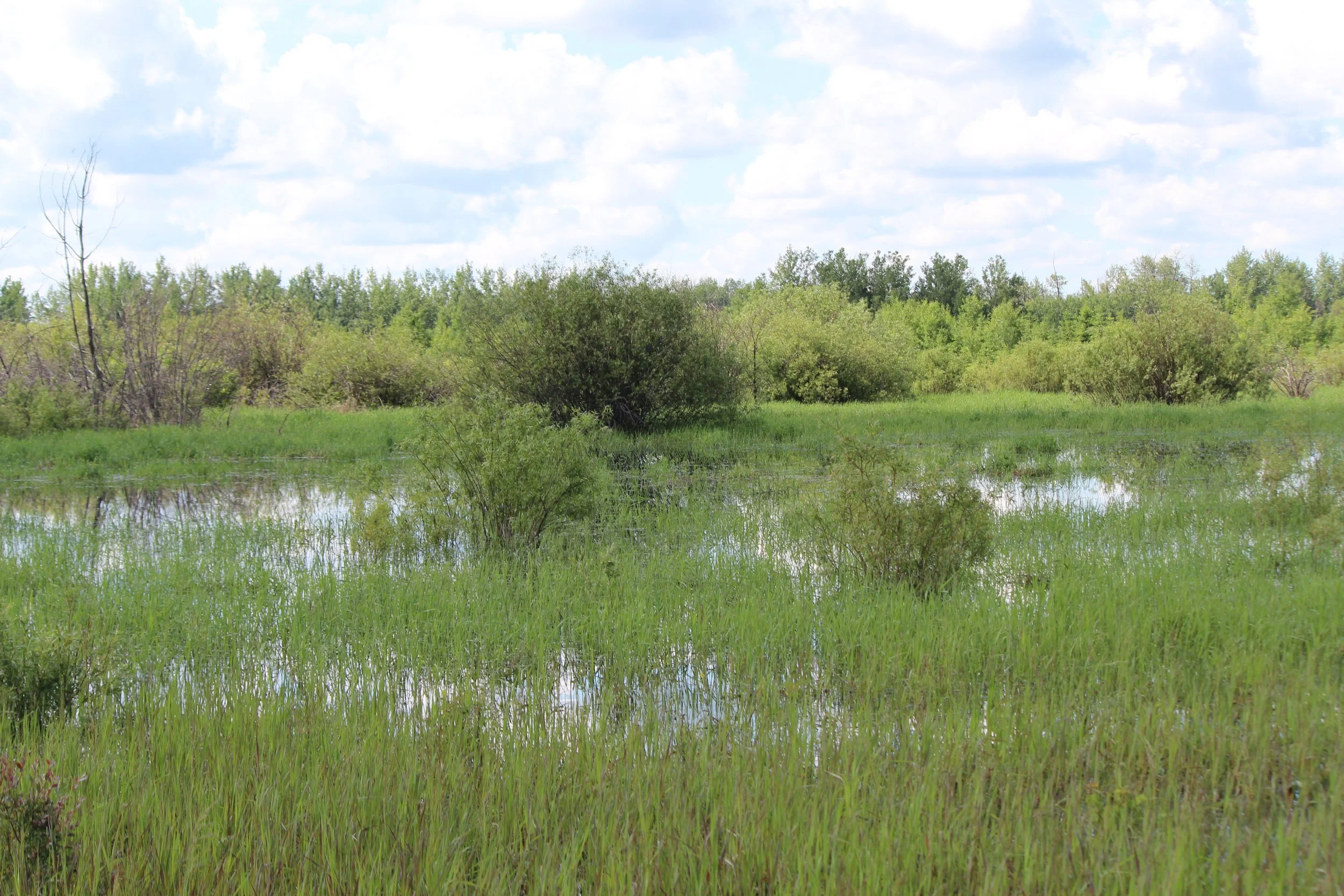
The fields at Golden Ranches are deceptively marshy this year, thanks to extreme rainfall. Typically, the fields are dry and grassy.
However, as water rises, this can potentially spell disaster for waterbirds that rely on dry land being next to open water. With rapidly rising water levels, it’s very possible for nests to become submerged and fail. The extreme rainfall events in June and continuing into July likely caused nests to fail for wetland birds, though it’s hard to know the extent of the impact.
Dabbling ducks tend to nest in covered areas near to the water, and if they weren’t far enough back, nests could easily have been flooded out. For species that nest in cattails and bulrushes, rapidly rising water levels could have also impacted their nest’s success.
On the other hand, expanded wetlands and wet areas meant more habitat availability for species able to try to raise a second clutch of eggs.
Record-Breaking Rains
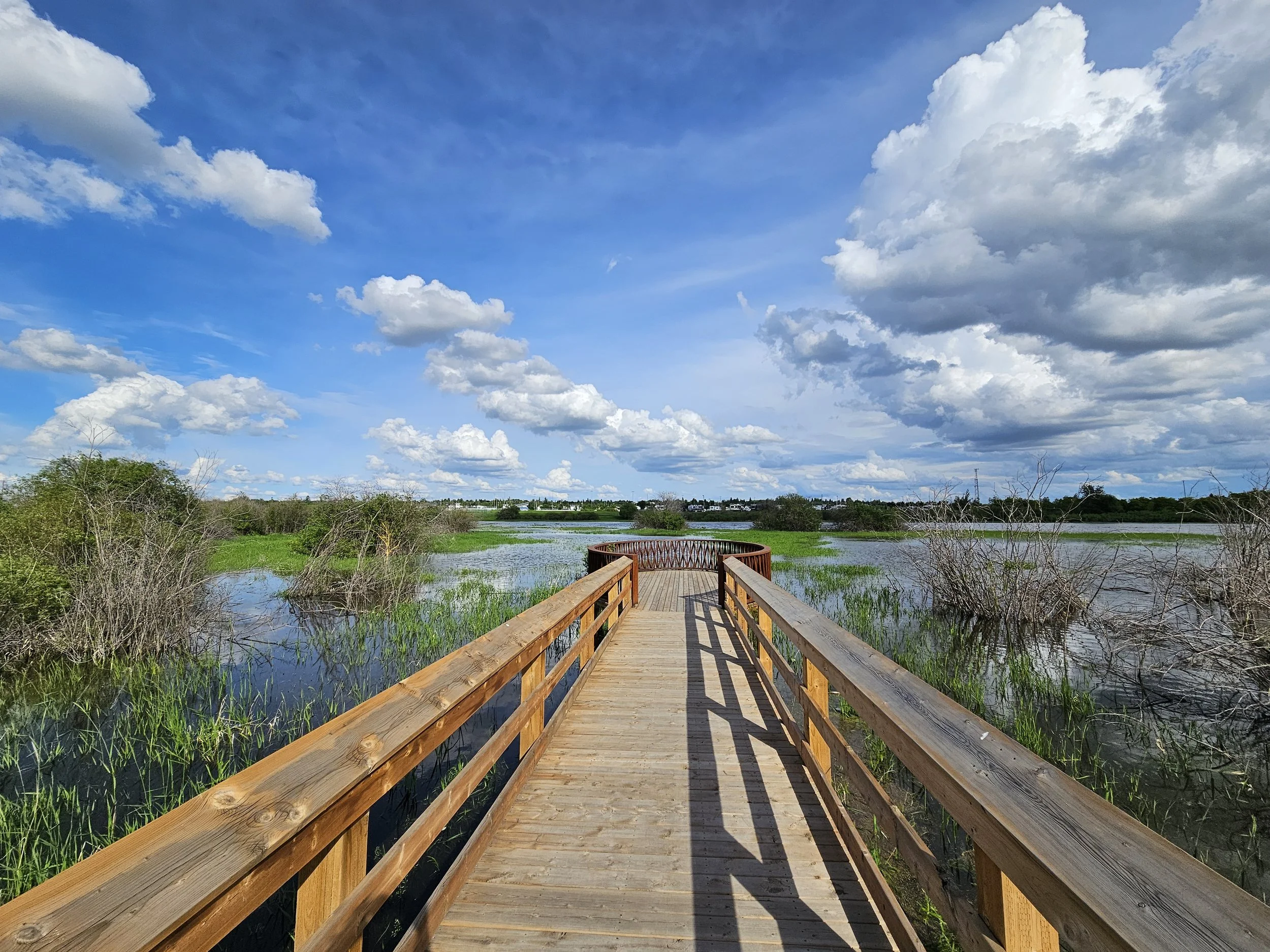
This lookout beside the Sturgeon River in St. Albert in July 2026, showing flooded shrubs that are usually well beyond the water level on the riverbank.
The rainfall we experienced this year hasn’t been seen for the past 100 years. Given that the beginning of spring was extremely dry, many birds will have set up their nests in locations that have been well away from the waterline for decades.
However, water this year has risen even into the shrubs and trees on the banks of lakes and rivers, which may have even impacted the nests of songbirds in shrubs like willows or dogwoods, or birds that nest in grassy areas that got flooded out.
It also posed a challenge for EALT this year – if you’ve noticed our trails with higher-than-normal grass, it’s because we couldn’t get in to mow them. It also resulted in a lot more rubber boot field days than usual!
The Importance of Data
In a time of unpredictable weather, the need for robust data collection and record-keeping is highlighted. We don’t know what we can’t see or track, and as so many things change around us, data helps us act and make stewardship decisions according to the conditions.
If you’d like to help contribute to the databases that organizations like EALT rely on, consider joining our Citizen Science program! Applications open in the spring each year. We provide training to volunteers in the program so they can go out and observe species on our lands, and record data that eventually contributes to national databases.
If you’d like to contribute in a less structured way, iNaturalist and eBird are fantastic tools that empower everyday people to contribute to data about the natural world we’re part of. You can log your observations anywhere, at any time, and make a real difference. You can also keep track of water conditions on select lakes using the Alberta Lake Management Society’s algal bloom tracker here.
Thank you for reading this blog!
