
It’s a wolf! It’s a coyote! It’s a dog! It’s…sometimes hard to tell the difference.
Alberta has canines of all shapes and sizes, and telling them apart can be confusing. Today, we’ll be looking at what you can look for to be able to reliably tell the difference.
Coat Pattern
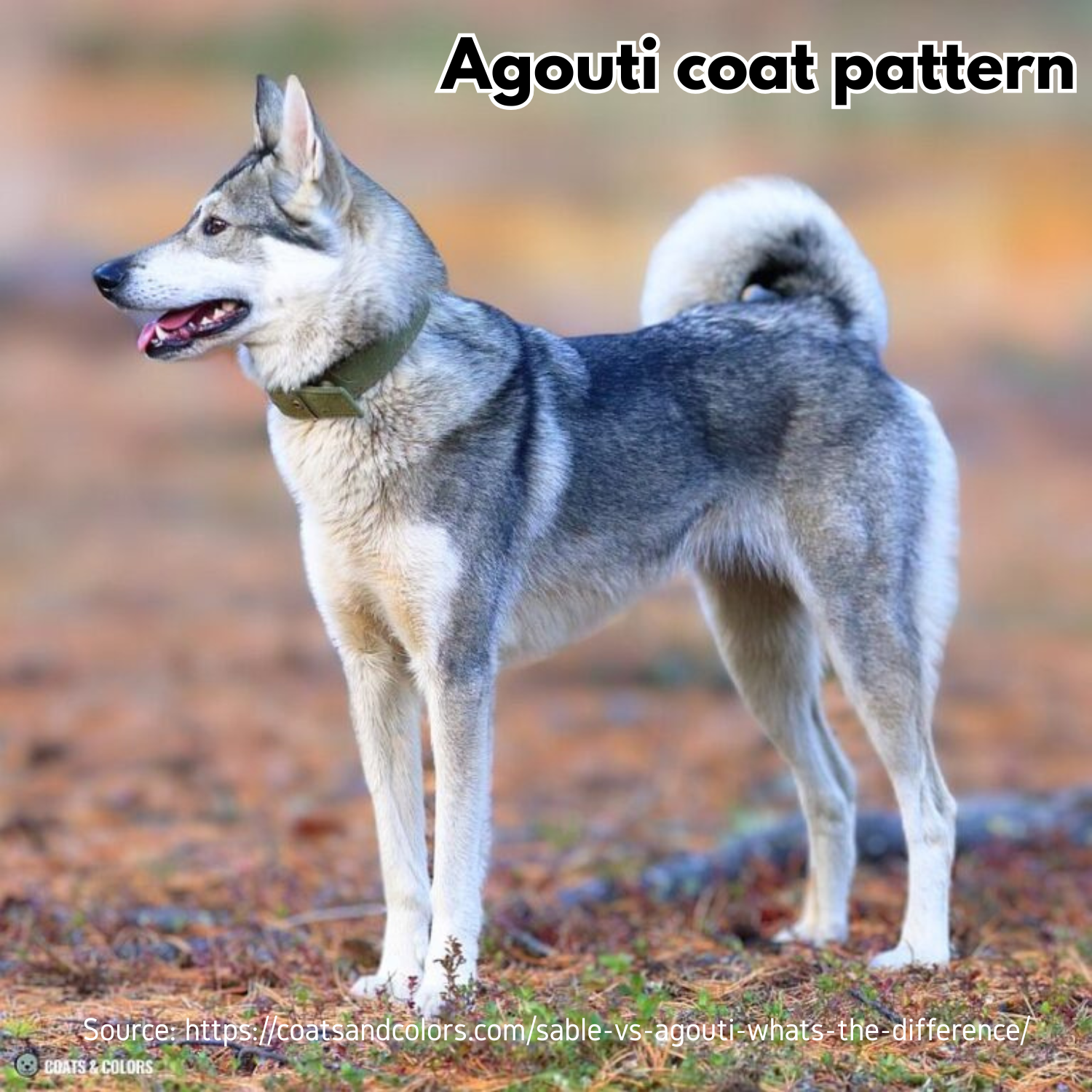
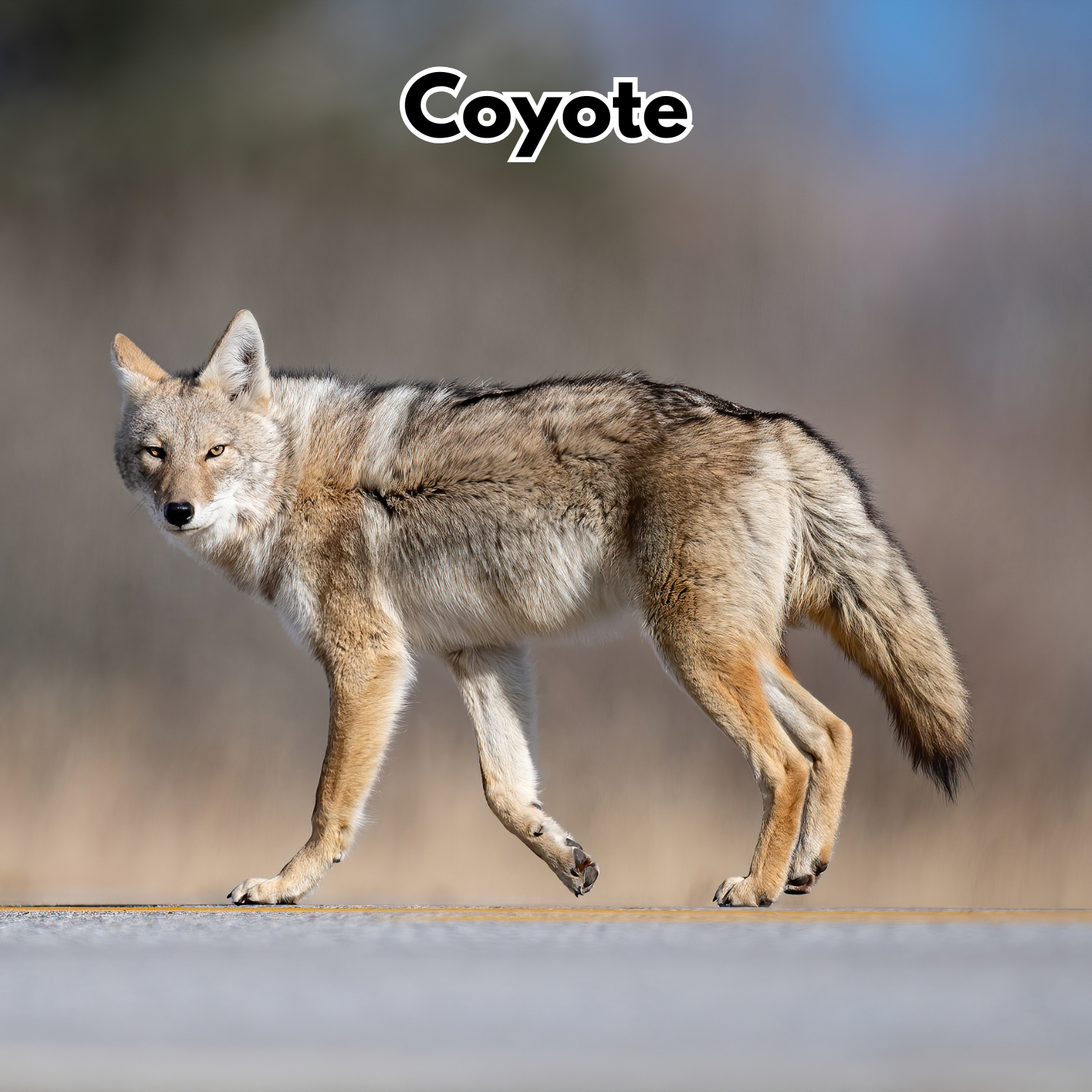
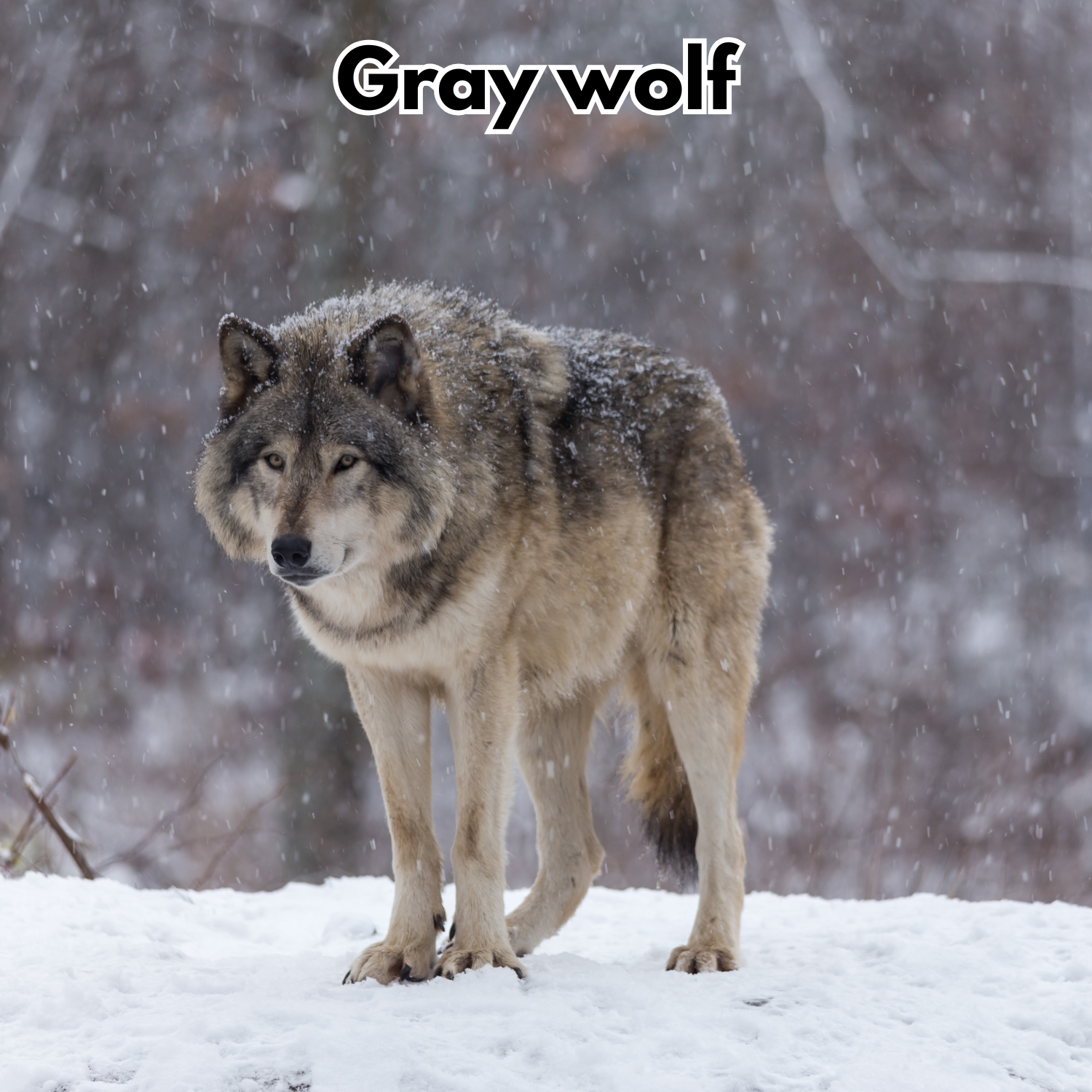
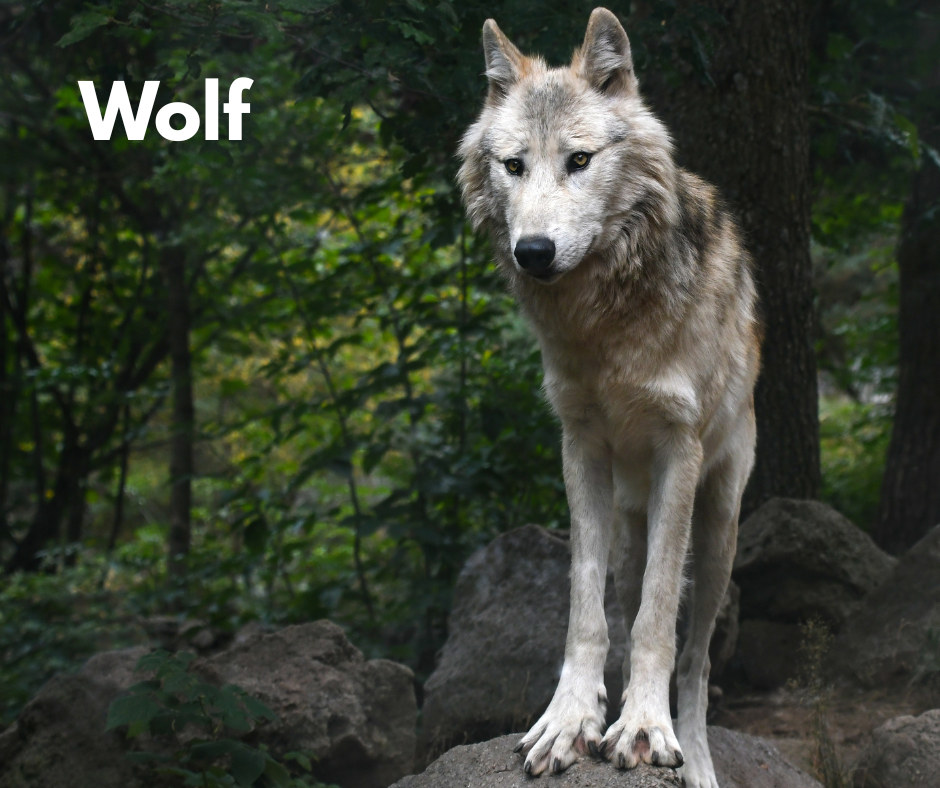
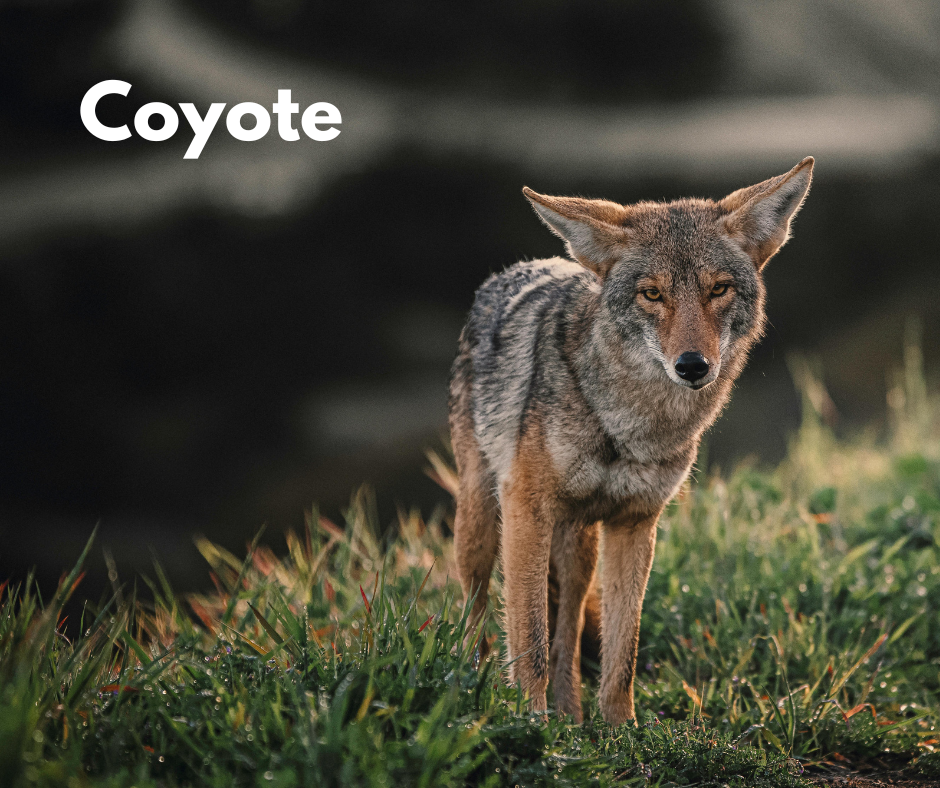
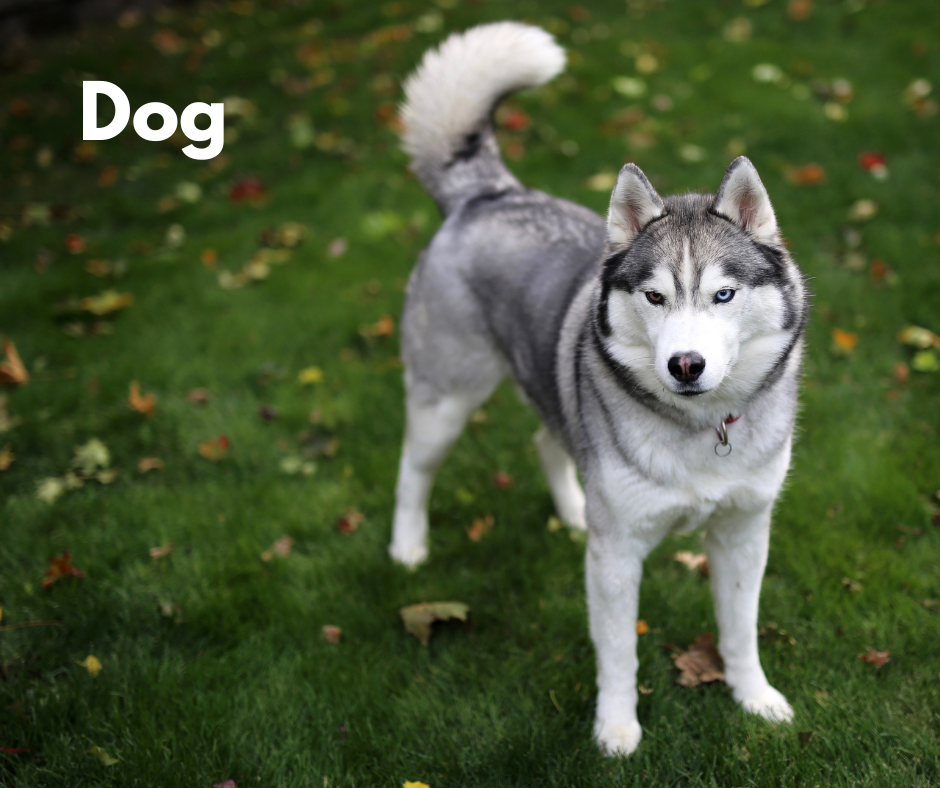
Domestic dogs come in an extremely diverse array of shapes, colours, and sizes, but when it comes to confusing dogs for their wild cousins, coyotes and wolves, the most commonly confused breeds are Northern breeds, such as huskies or Alaskan malamutes. There are also mixed breed dogs that can end up looking much like wild canines due to wild-type (occurring in nature) coat patterns. This pattern is often referred to as “agouti”. Click through the photos below to see a comparison of an agouti-patterned dog, a coyote, and a wolf.
Anatomical Differences
Eyes
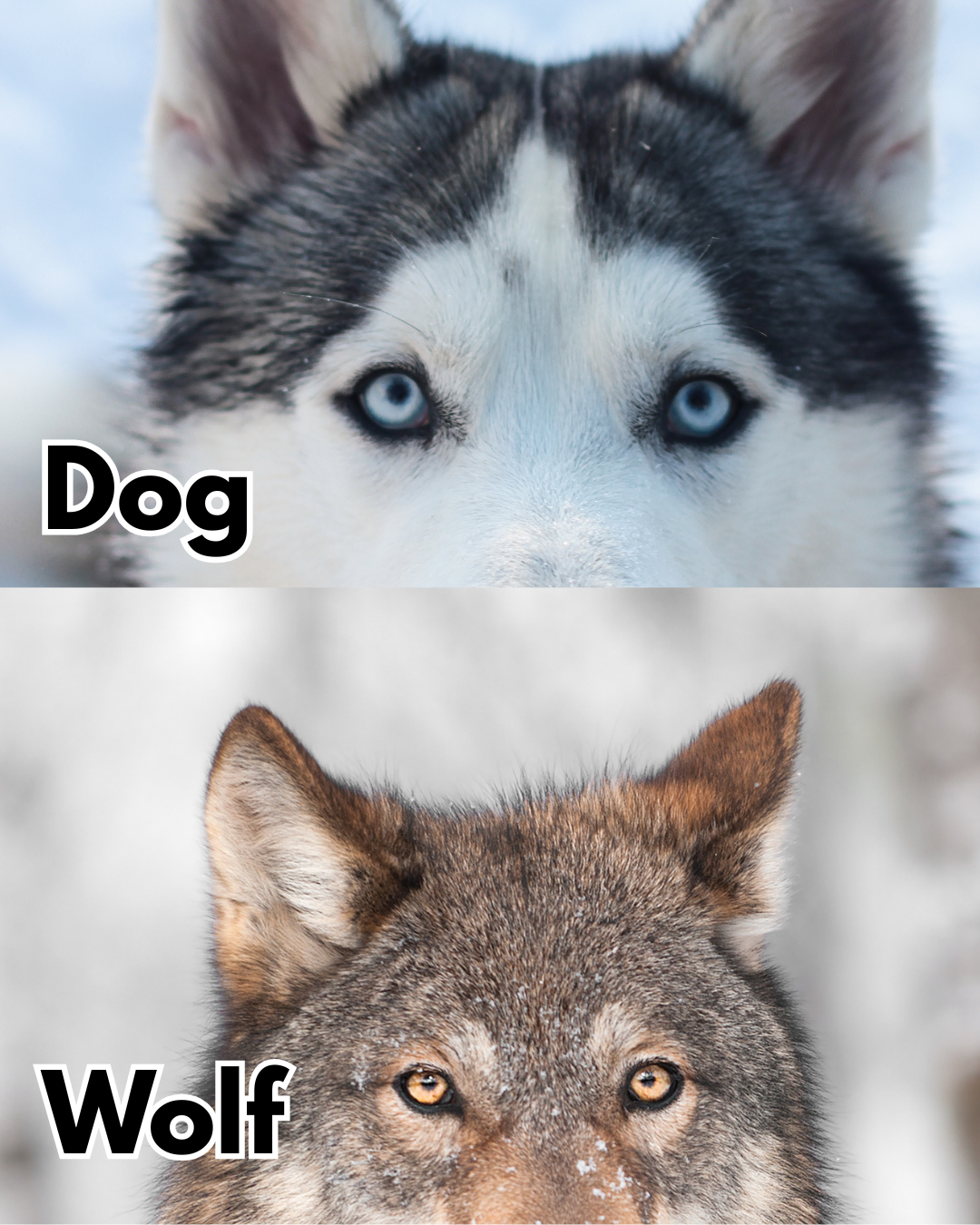
Wolves and coyotes never have blue eyes as adults, except as the result of an extremely rare mutation. They are born with eyes that appear blue as pups, but as they age, their eye colour becomes anything from a faded tan, to amber, to a golden yellow colour. The colour can vary between populations.
If the canine is fully grown and has those piercing blue eyes often seen in movies, then that means they’re a dog. Breeds such as huskies and malamutes are noted for having vivid blue eyes, however, these dogs can also have brown eyes.
Ears
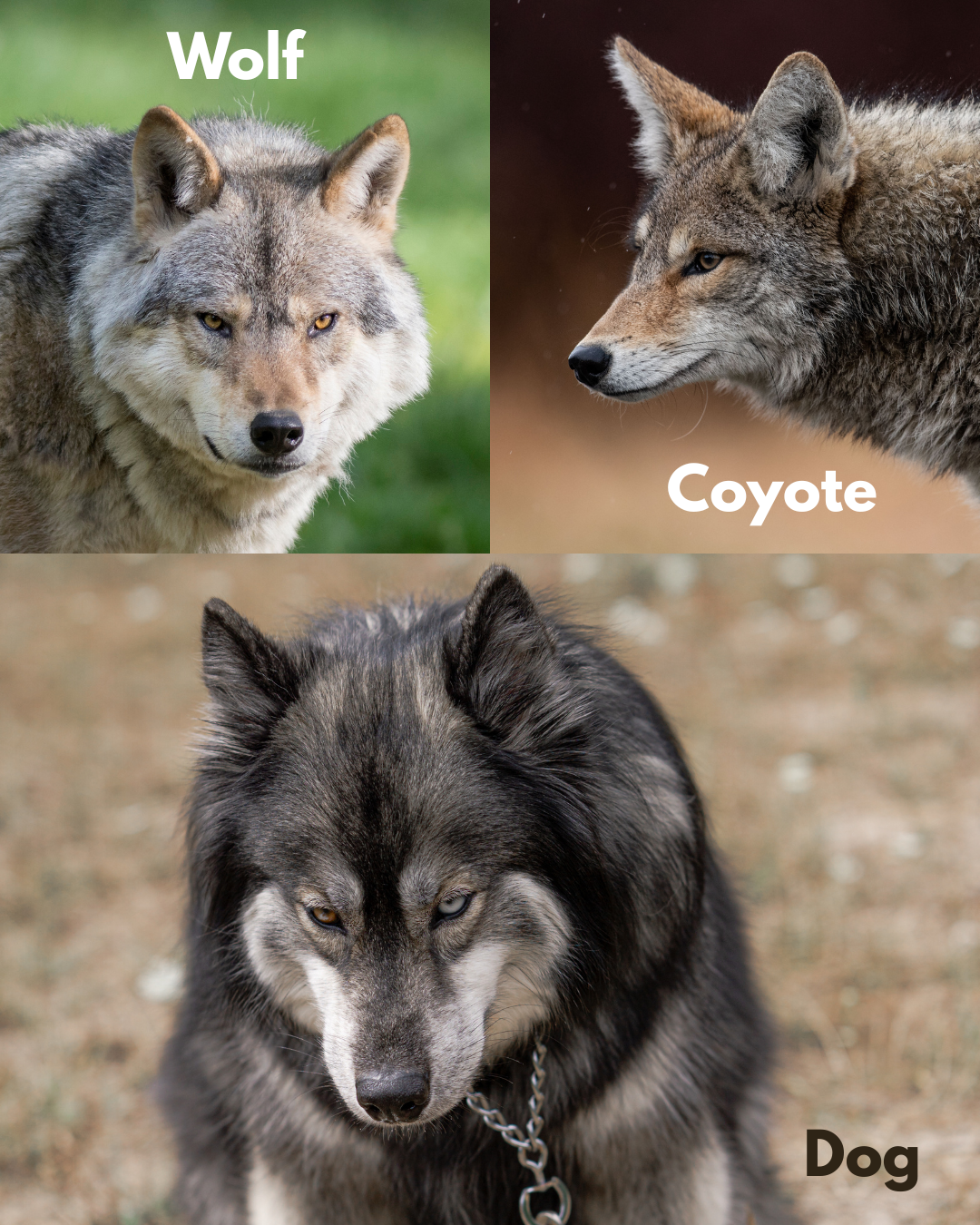
All the better to hear you with! It can be hard to distinguish the nuance between different canine ears, so this isn’t the most sure-fire way to ID the critter you’re looking at. However, in general, there’s a few things you can look for:
· Wild canines always have upright ears, unless they’ve been injured or damaged
· Wild canine ears have more hair inside them than domestic dogs. This helps keep them warm and pinpoint sounds more accurately.
· Coyotes have very large ears in proportion to their heads, with a much thinner muzzle than a wolf.
Nose
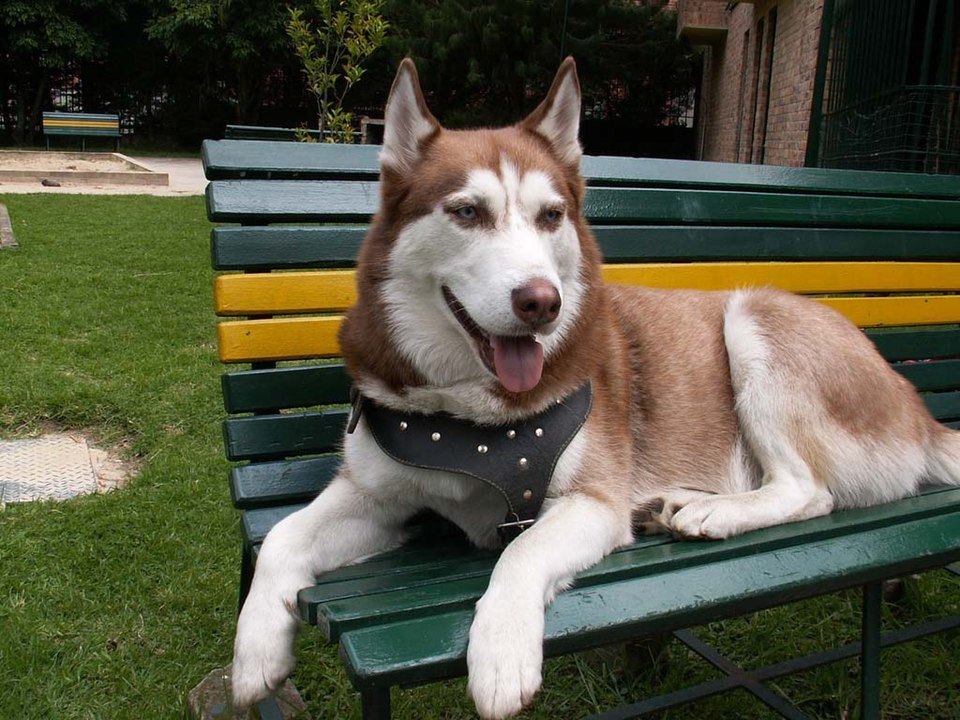
Brown Siberian husky with a brown nose. Image source: Biowk, CC BY-SA 2.5, via Wikimedia Commons
Wild canines (both coyotes and wolves) will always have black skin and noses, except in the extremely rare case of a genetic mutation such as albinism. Domestic dogs sometimes have brown or even pink noses, which is a trait that appears due to selective breeding.
Paws
Wolves have notably larger paws than domestic dogs or coyotes. When you see a wolf print, you’re sure to say or think, “That’s huge!”. When looking at prints, it’s helpful to note that dogs and coyotes have toe pads that are closer together, while wolf paws often splay out into more defined “toes”. Domestic dog and coyote prints are very easily confused, but there’s a few ways you can tell the difference. Here’s a diagram to help you determine which is which:
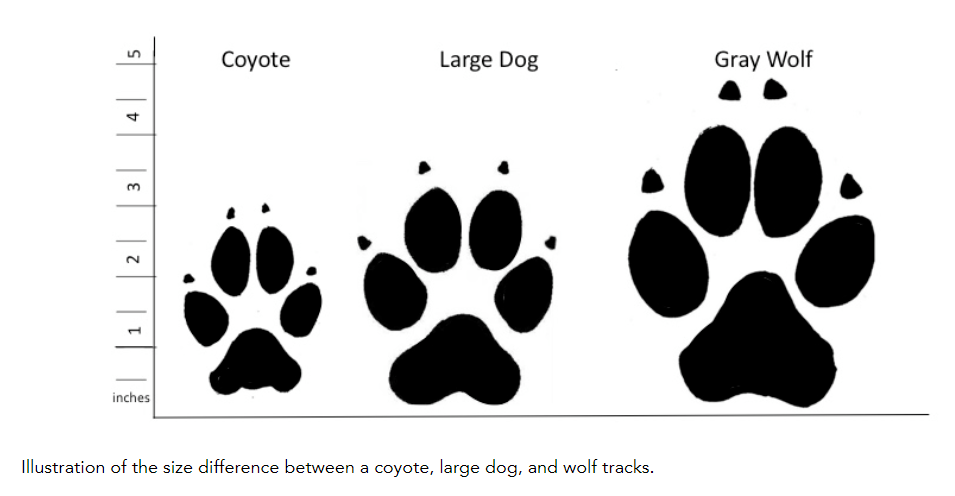
Image source: Coyote Tracks and Prints and How to Recognize Them, via https://floofmania.com/coyotes/coyote-tracks/. Original graphic credit goes to Illinois Department of Natural Resources and the National Great Rivers Research and Education Center.
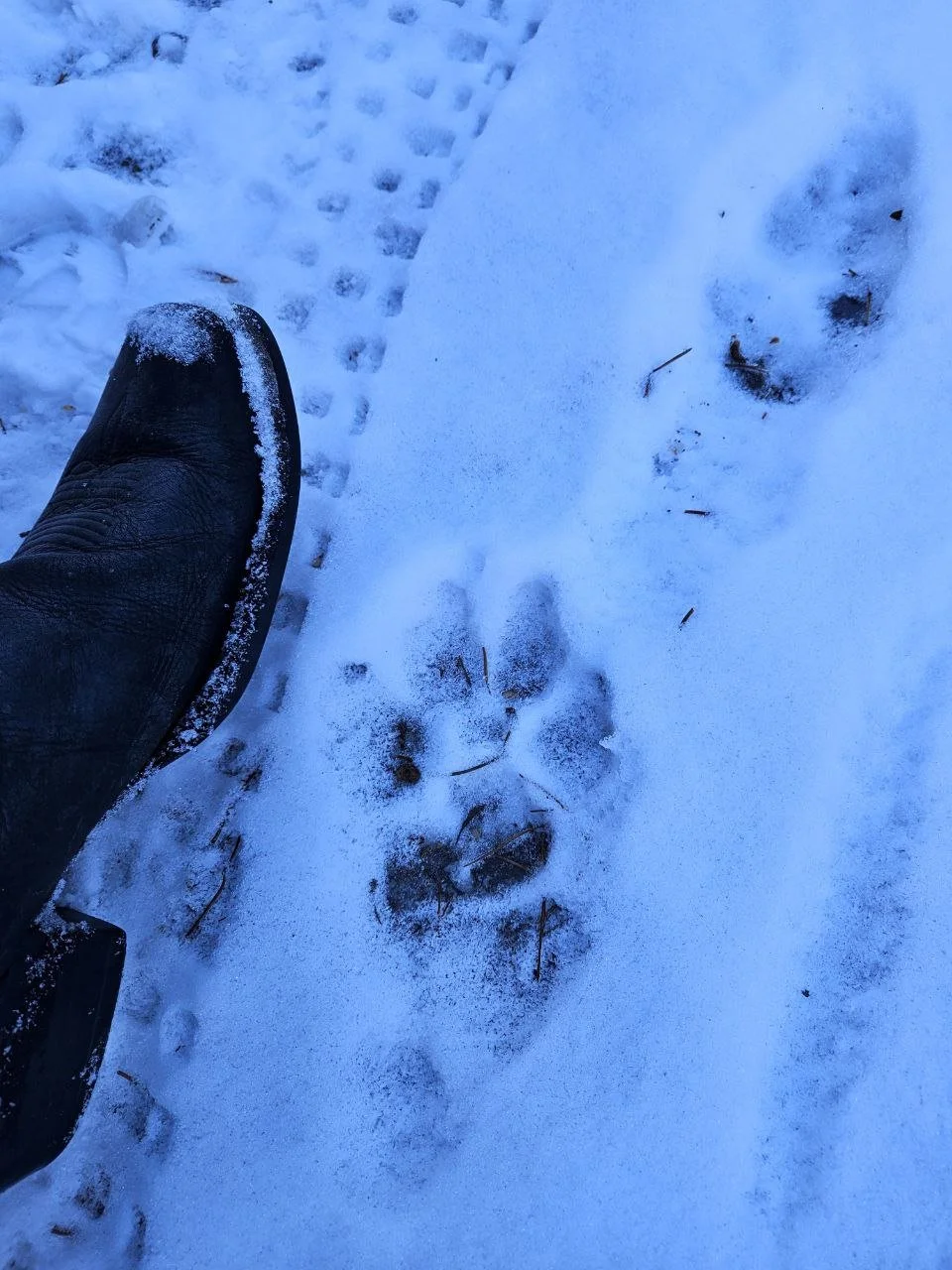
A wolf print next to a Size 12 men’s boot. Photo by EALT.
Coyote prints have space between the base pad and the two outer toe pads that you can draw the shape of an “X” in, whereas it’s harder to do in domestic dog prints. The other thing that tells coyote prints apart is their pattern. Dog prints have more of a zig-zag pattern, where coyote prints are more linear. Another big tell is the presence of shoe prints - naturally, most domestic dog prints are accompanied by human prints.
Tail
Wild canine tails can be distinguished from domestic dog tails by the presence of a curly tail. Domestic dogs have curly tails that arch over their backs, while their wild cousins do not.
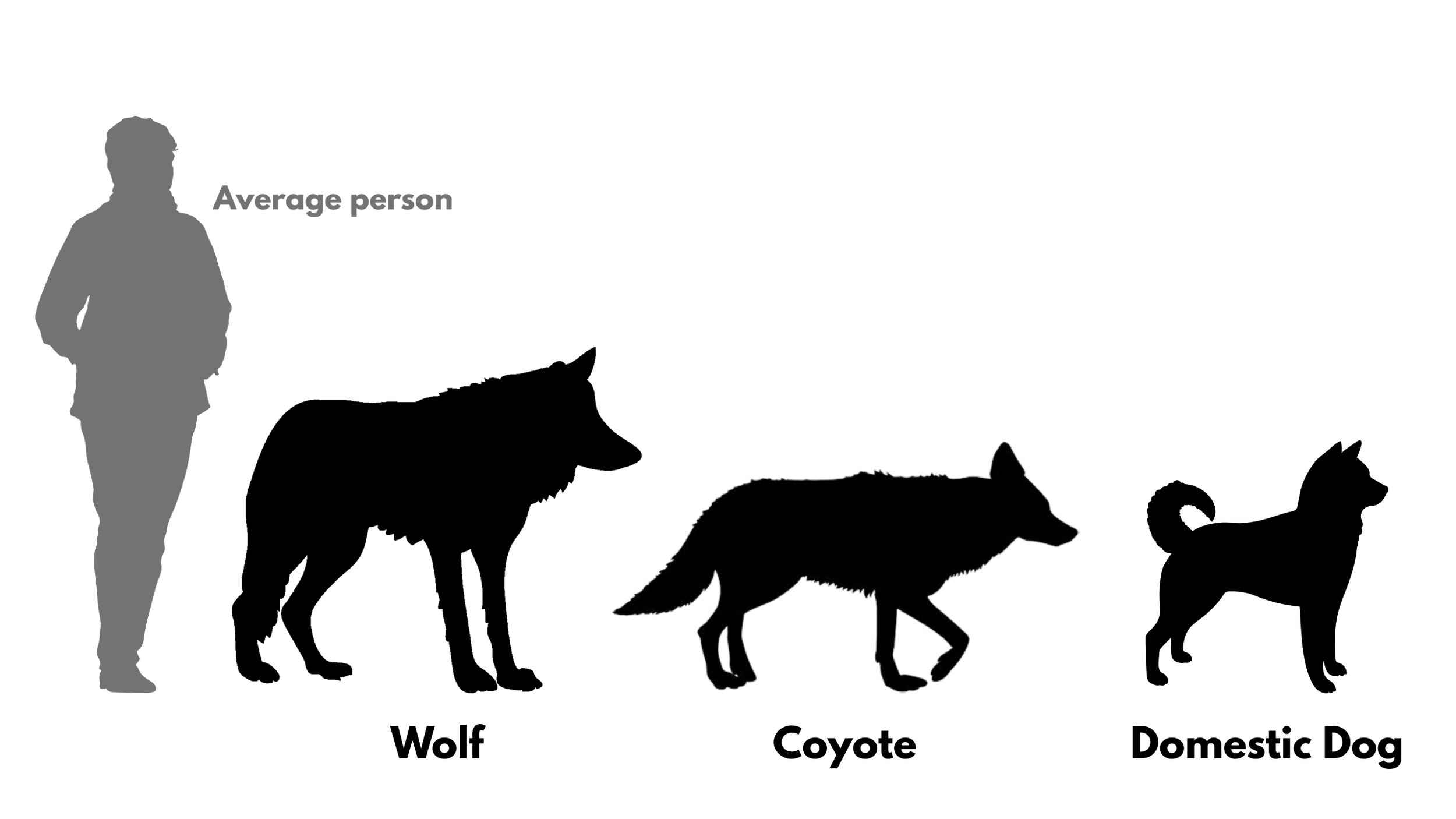
Silhouette comparison of each canine, in proportion to each other. Domestic dogs can vary significantly in size, depending on breed.
Body Build
One last trait that you can look for is the shape of the shoulders and legs. When you look at a domestic dog from the front, their shoulders are wide-set, and they have a defined “chest”. Wolves and coyotes have very narrow chests, meaning that from the front, their legs will be much closer together than a dog’s. This adaptation helps them with stealth when hunting, and in cold climates like ours, it also helps them move through deep snow more efficiently. Scroll through the images below to see the difference between them.
Behaviour
The most important part of what makes domestic dogs what they are is how they respond to humans. Dogs will generally be quite friendly towards humans, while their cousins are much more wary of us. Wolves will do their utmost to avoid encountering humans entirely, and while coyotes do share urban spaces with us due to the abundance of easy resources, they will also usually avoid human encounters if possible.
Hybrids
All of these are guidelines that can help you determine what kind of encounter of the canine kind you’ve had, but it’s also important to note that all three species mentioned can hybridize. Coywolves (coyote and wolf hybrids) have been noted in Eastern Canada. Coyotes used to be localized to the western prairies, but as the forests of the east were cleared, coyotes took advantage of this new territory and encountered wolves who may have been facing more pressure from human activities, leading to hybridization events. Coydogs can also occur, and evidence for their presence predates European colonization in North America.
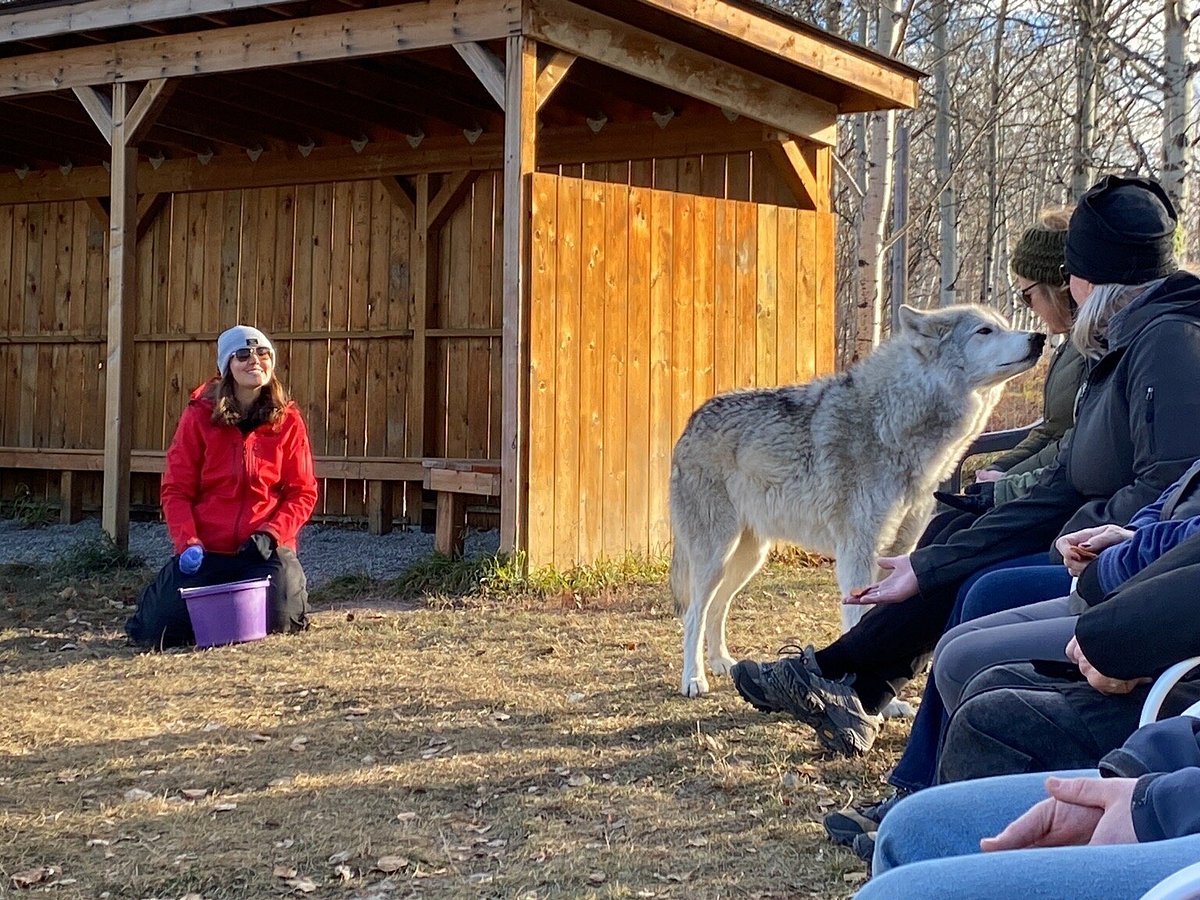
Visitors interact with a wolfdog at Yamnuska Wolfdog Sanctuary during one of their interactive tours. Image Credit: Tripadvisor
Wolfdogs (wolf and dog hybrids) are more common in this region, and these days, are almost always bred intentionally for domestic pets. Wolfdogs, while being a mix of both wild and domestic canine, present unique challenges to those who seek to own them, as they are not simply dogs that look a little bit wolfy. They are not easy to keep as pets, on average, and unfortunately face a very high rate of abandonment and euthanasia when enthusiastic owners don’t realize how specialized their needs are.
We hope that this blog has helped you establish a better understanding of the differences between Alberta canines! Canines hold a special place in human societies, both wild and domestic, and we’re fortunate to be able to see their diversity in the province. Wolves are the most sensitive to human disturbance, but our conservation lands do support them, highlighting the importance of conserving land in the Parkland region. If you’d like to help us, you can volunteer, donate, or simply tell a friend about what you’ve learned.
Thank you for reading our blog!
Sources:
Can a wolf have blue eyes? https://iere.org/can-a-wolf-have-blue-eyes/
How to Tell Dog & Coyote Tracks Apart https://articles.hepper.com/how-to-tell-dog-and-coyote-tracks-apart/
