
With summer proceeding at a rapid (albeit wet) pace, EALT staff has been hard at work, and as the days pass, we begin to wonder where the months have gone. In this Field Notes blog, we’ll update you on what’s been keeping us busy!
Starting with Snakes
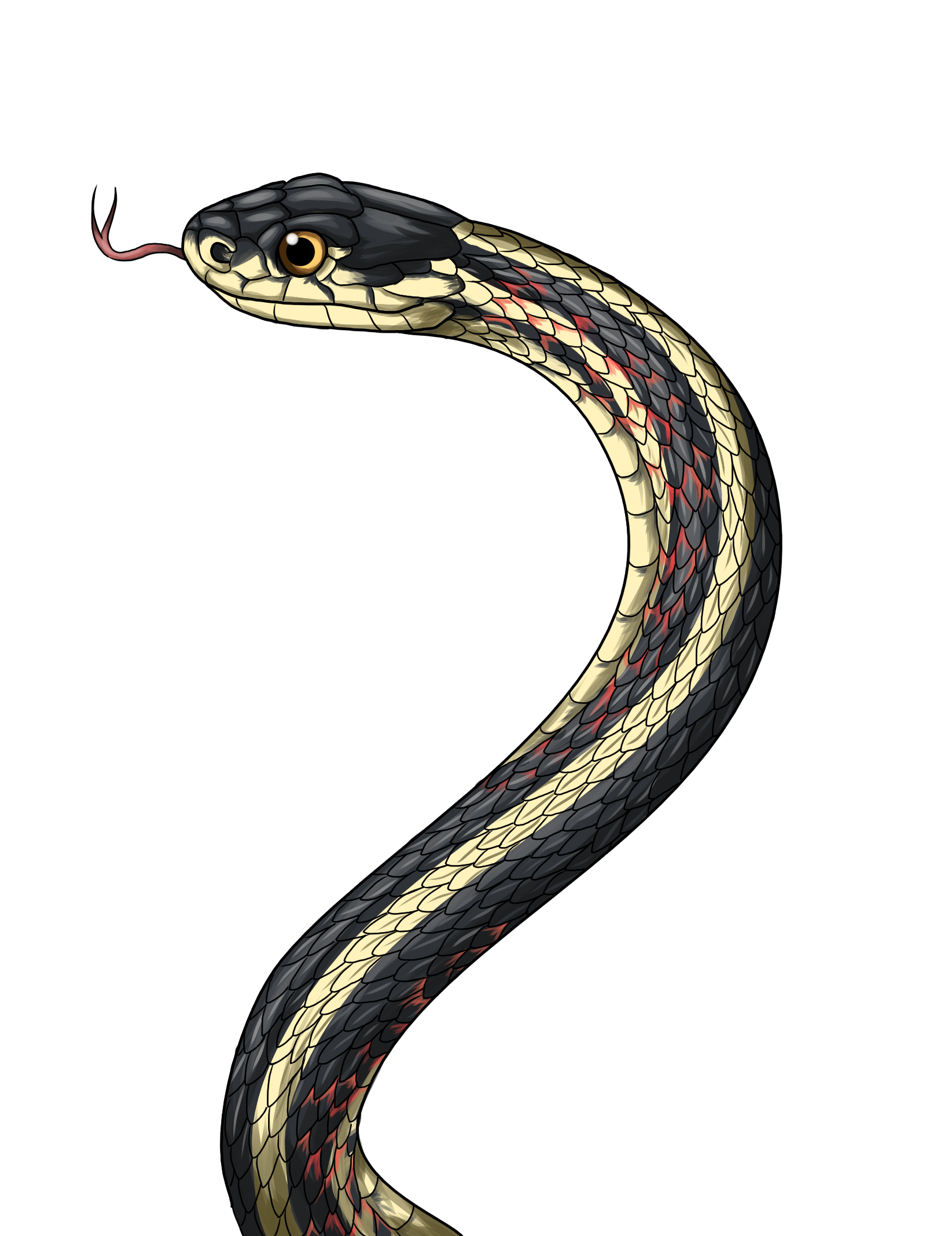
Illustration of a Red-sided garter snake.
Kicking off the season, our team went to check in on the Red-sided garter snakes we’ve been monitoring following three years of sustained relocation efforts. The project has overall gone well, and we have evidence that the snakes are adopting the constructed hibernaculum as their new winter home.
As the constructed hibernaculum becomes naturalized, EALT staff now must maintain the location, which includes cutting down tall vegetation in the summer so that sunning areas are maintained for the snakes, and so invasive plants don’t encroach on the disturbed area where the hibernaculum was installed. We will return throughout the season to maintain the area.
Welcoming Shekinah to the EALT Summer Team!
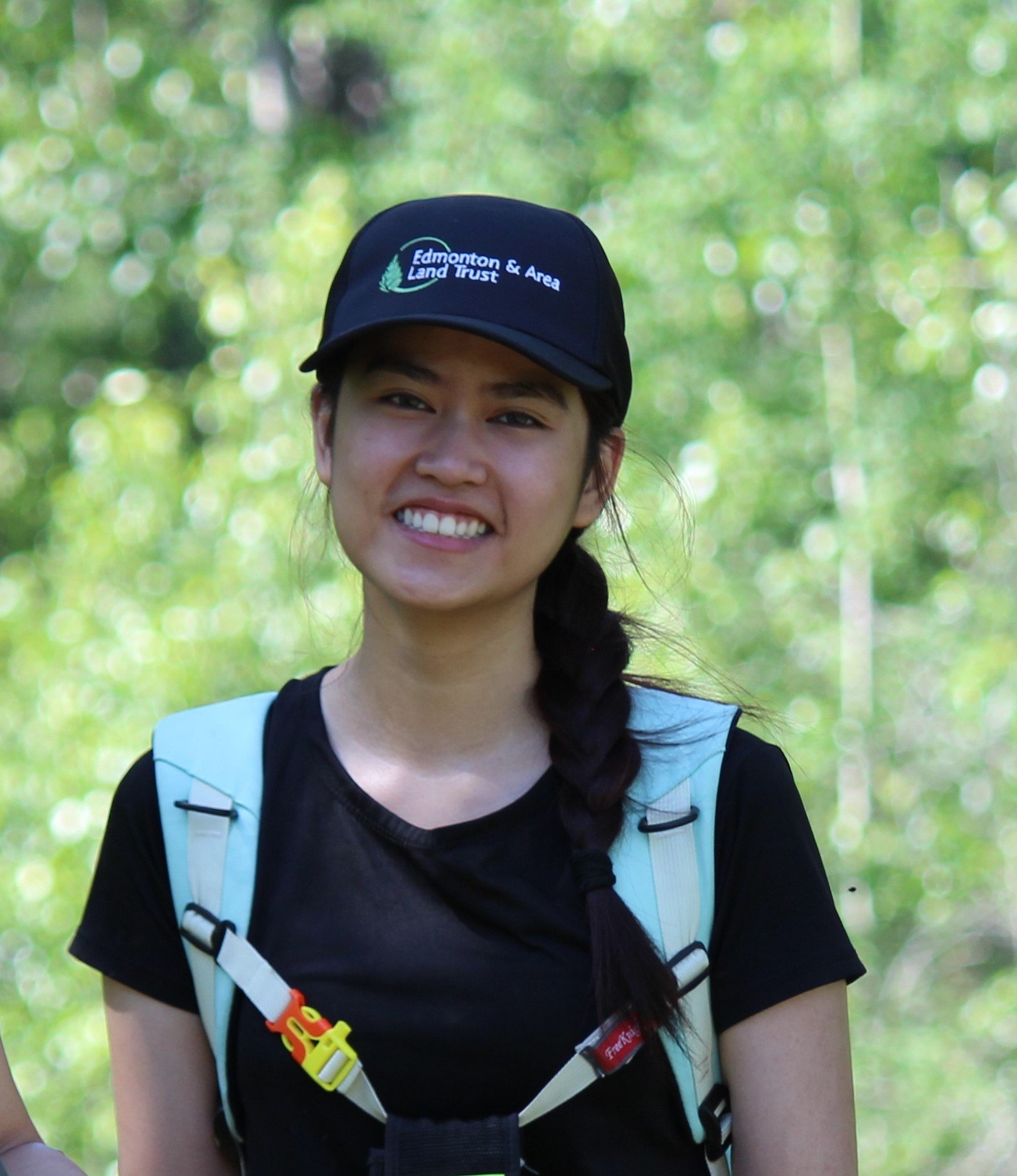
This spring, we were contacted by a student who is in the process of fulfilling requirements for her graduation and needed volunteer hours. As a result, Shekinah De Guzman has been joining us for our summer field season! Here’s a brief update from her:
“One of my favorite parts of working with EALT has been the opportunity to spend time in the field. As someone who is not originally from Edmonton, it has been a great experience exploring the different conservation lands and seeing the variety of landscapes and habitats they protect.
I have had the chance to take part in many field activities including installing wildlife cameras and acoustic recording units, amphibian monitoring, bat monitoring, invasive species management and habitat maintenance. These experiences have allowed me to learn more about local ecosystem firsthand while also developing practical field skills.
What I enjoy most about fieldwork is that every day is different and offers new opportunities to learn. Whether I am monitoring wildlife or managing invasive species, I get the chance to observe different wildlife species in their natural environment and explore conservation lands that many people never have the opportunity to visit.
While fieldwork can be physically demanding and sometimes unpredictable, it is incredibly rewarding to see the direct impact of conservation efforts. Knowing that the work I contribute to helps protect and sustain these ecosystems for the future makes every challenge worthwhile!”
Welcoming New Conservation Land Stewards
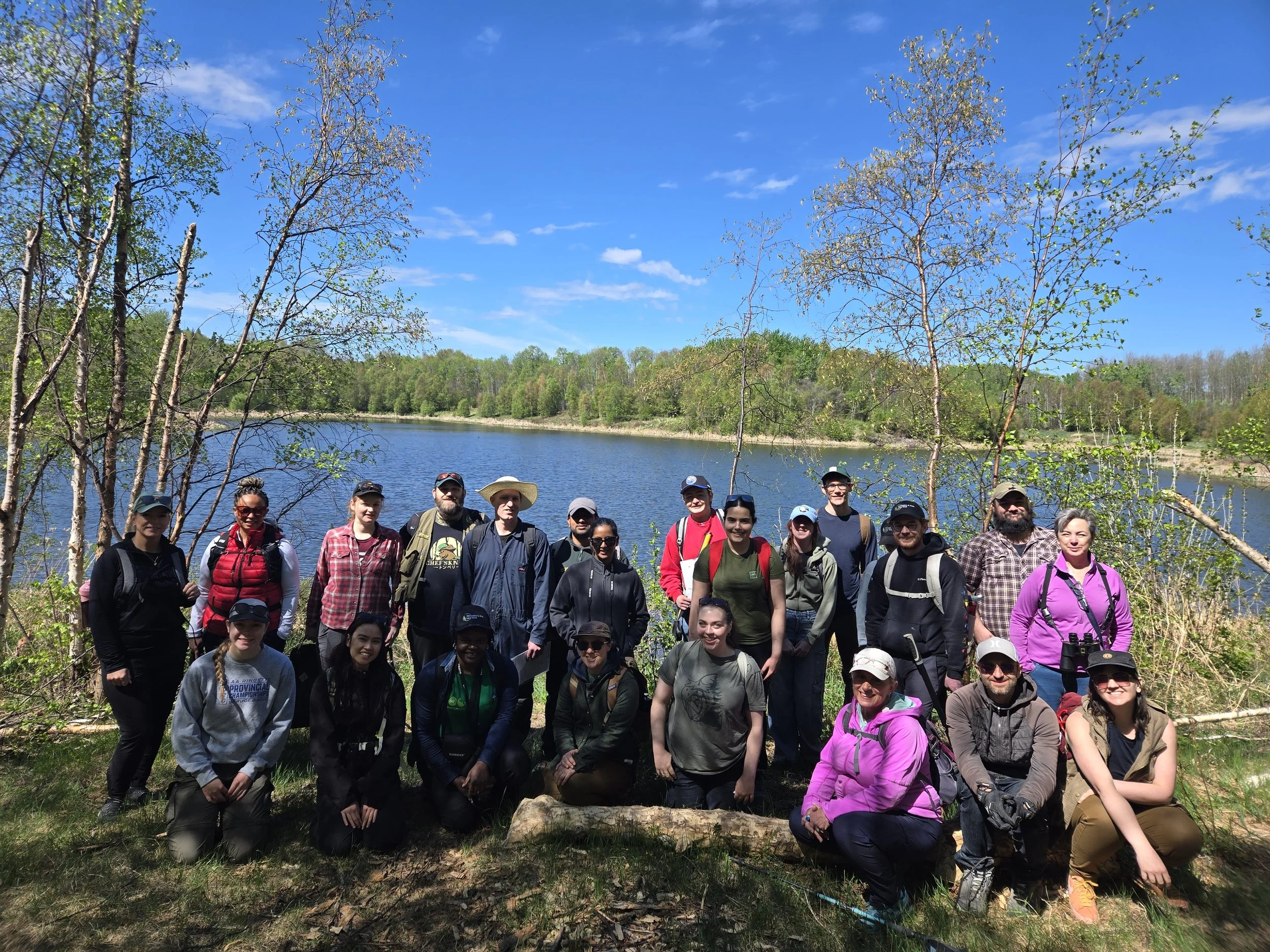
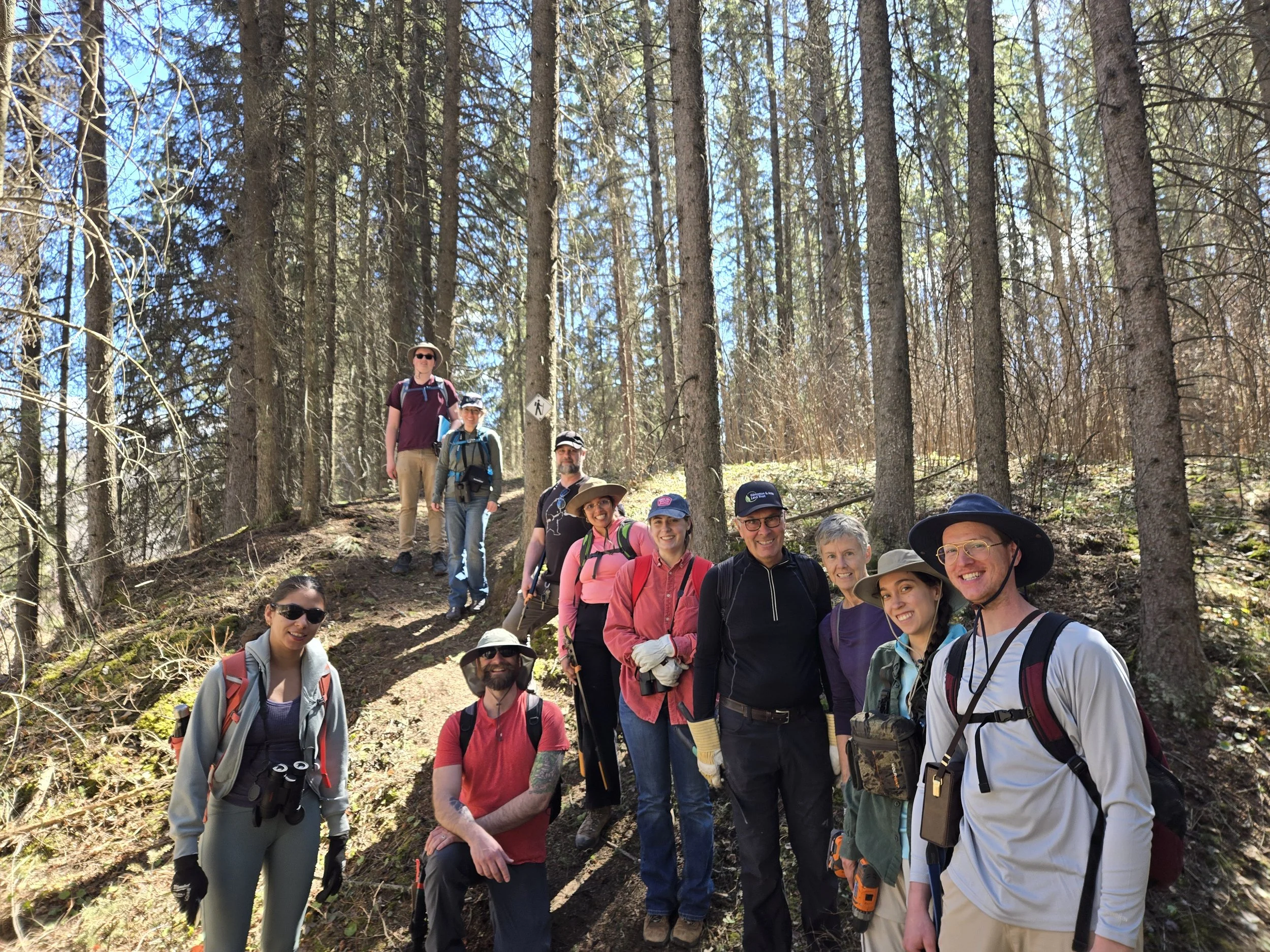
May is when we train the new Conservation Land Stewards (CLS), so the beginning of the season is typically busy with ensuring that our new volunteers understand their chosen conservation land, their tasks, and how the program works.
We welcomed a combined total of 70 new CLS volunteers for Coates, Pipestone Creek, Golden Ranches, Smith Blackburn Homestead, and maskihkîy meskanaw – Glory Hills this year. Each one of these volunteers must attend in-person training in order to participate in the program.
We are excited to have these volunteers on board and are looking forward to their reports. Say hello if you see them on the trails!
Preserving the Pollinator Garden
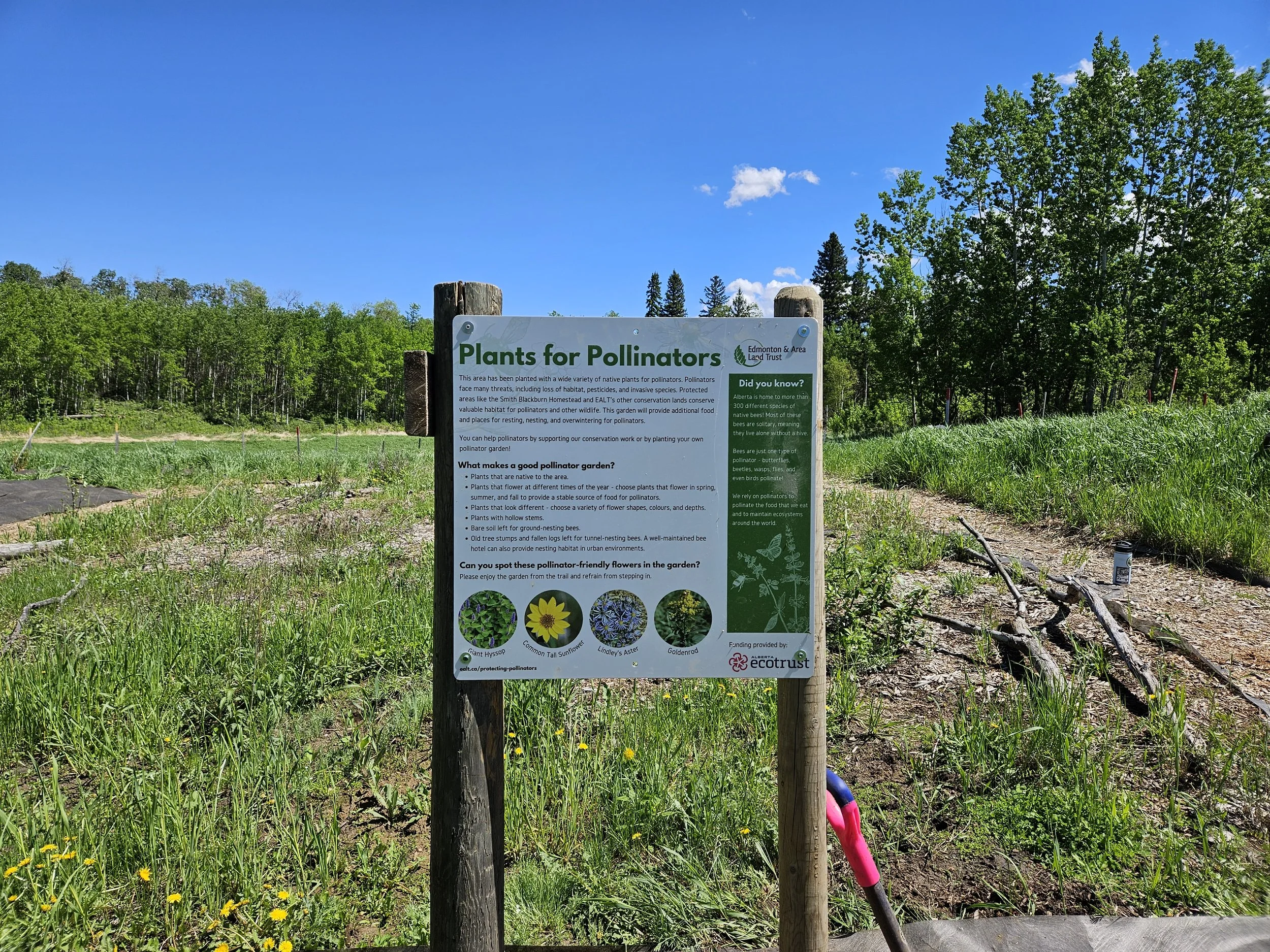
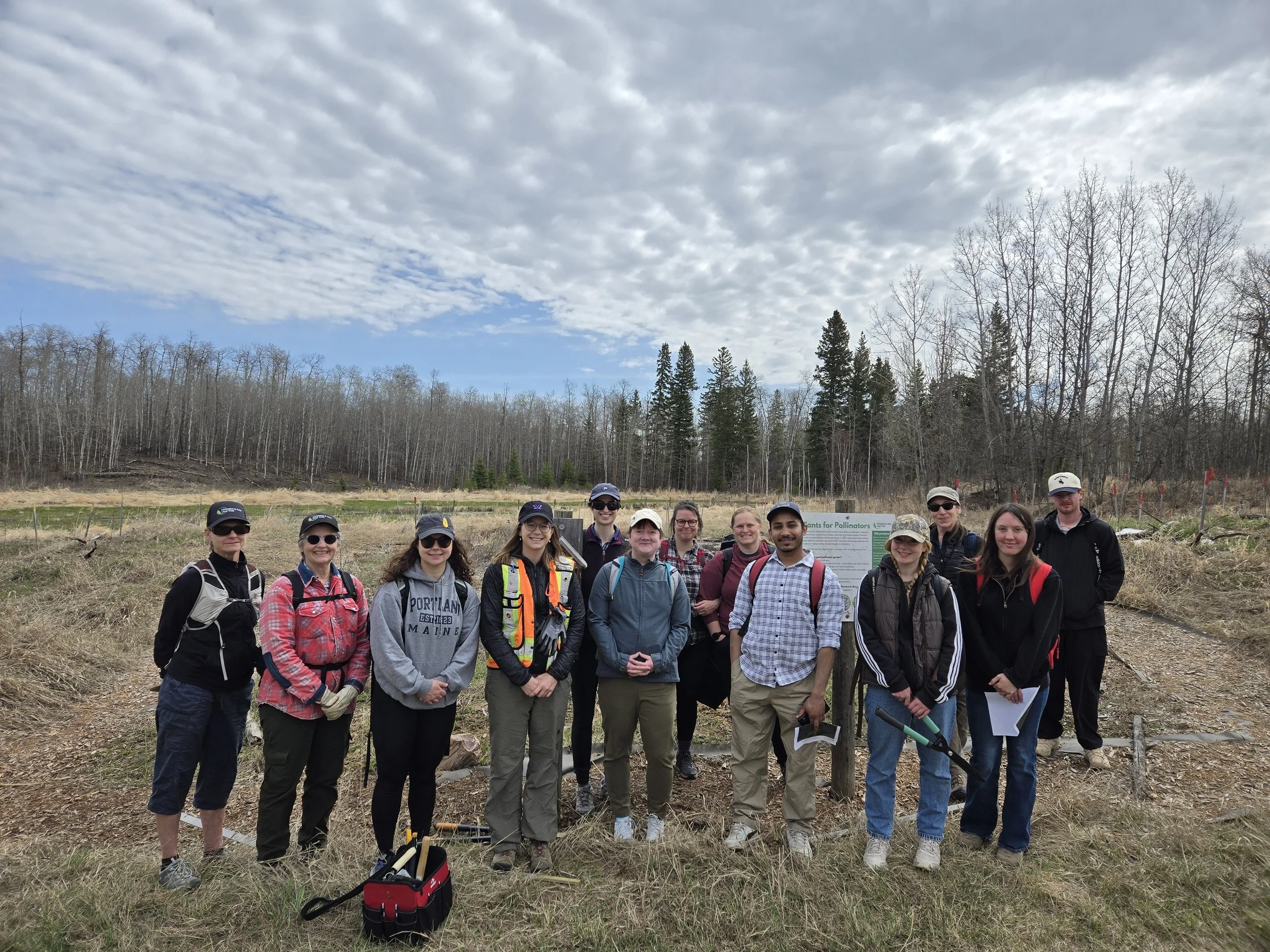
The newly re-installed interpretive sign at the Smith Blackburn Homestead that explains more about the Pollinator Garden project.
We have had several events this season focused on ensuring the continued health and success of the Pollinator Garden at Smith Blackburn Homestead. Last year, two of our interpretive signs were knocked down, likely by a large animal. You never quite know what compels an animal to tamper with human infrastructure, but what we have seen at many other lands is that they really enjoy using the edges and corners of signs for a good scratch! With volunteer help, we installed new posts in the ground that will hopefully be more resilient.
In addition to the signs, we augmented the shrubs we planted last year with measures to stop the aggressive grasses from stifling their growth. We placed cardboard around them at an early season event, and then landscaping fabric at a second event. Planted in 2021, the garden is under continued pressure from invasive plants, and will require upkeep in order to give the native plants their best chance. Thank you to the Alberta Native Plant Council for supporting care of the garden this year, including funds for more planting.
Thank you to all the volunteers who helped out at Smith Blackburn Homestead!
Citizen Science
After completing their online training modules, Citizen Science volunteers have been hard at work, completing Amphibian, Bat Box, and Field Ornithology surveys throughout the past few months. Although EALT staff don’t usually complete these surveys, we’ve also had the chance to help out this spring!
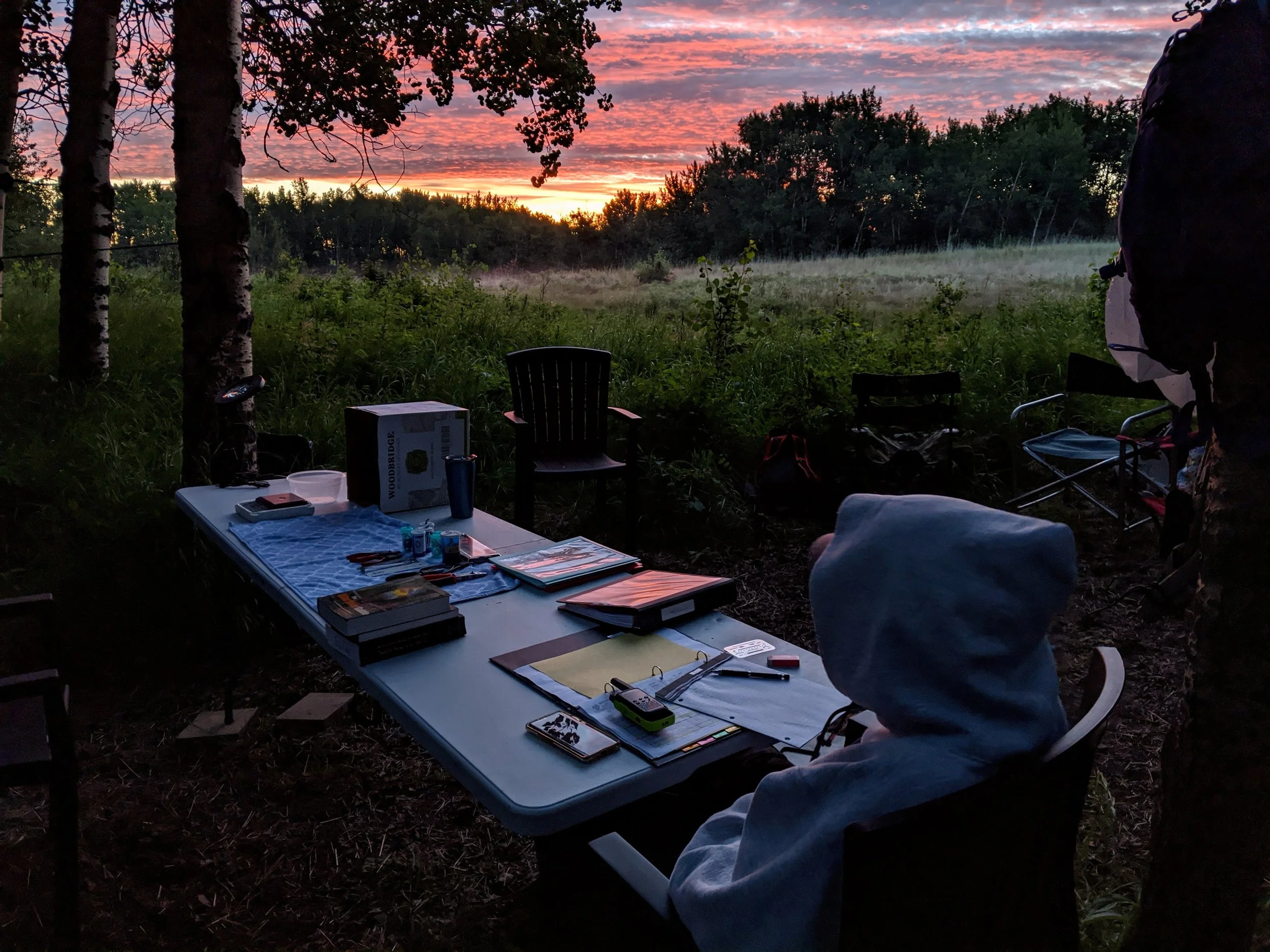
The Field Ornithology table at sunrise. Field Ornithology requires incredibly early mornings, often starting at 5:00 am.
During May and June, EALT staff assisted Cory from the Alberta Community Bat Program with additional bat surveys, including captures and examination, at Glory Hills and Pipestone Creek sites where established maternity colonies are present. Some bats were found to have some signs of White-nose Syndrome, but otherwise appear to be in good health.
Staff also assisted with bird banding as part of the Field Ornithology activities, providing training and support so that operations run smoothly. During the most recent session, a series of colourful bird were captured, including a Red-eyed Vireo, Purple Finch, and Rose-breasted Grosbeak!
EALT staff also completed a visual amphibian monitoring survey at Golden Ranches – an unusual amphibian call was flagged by a Citizen Science volunteer, but unfortunately, there are no confirmed sightings of new species here yet. Staff are considering adding further surveys next spring to investigate. Stay tuned!
Conservation Connections
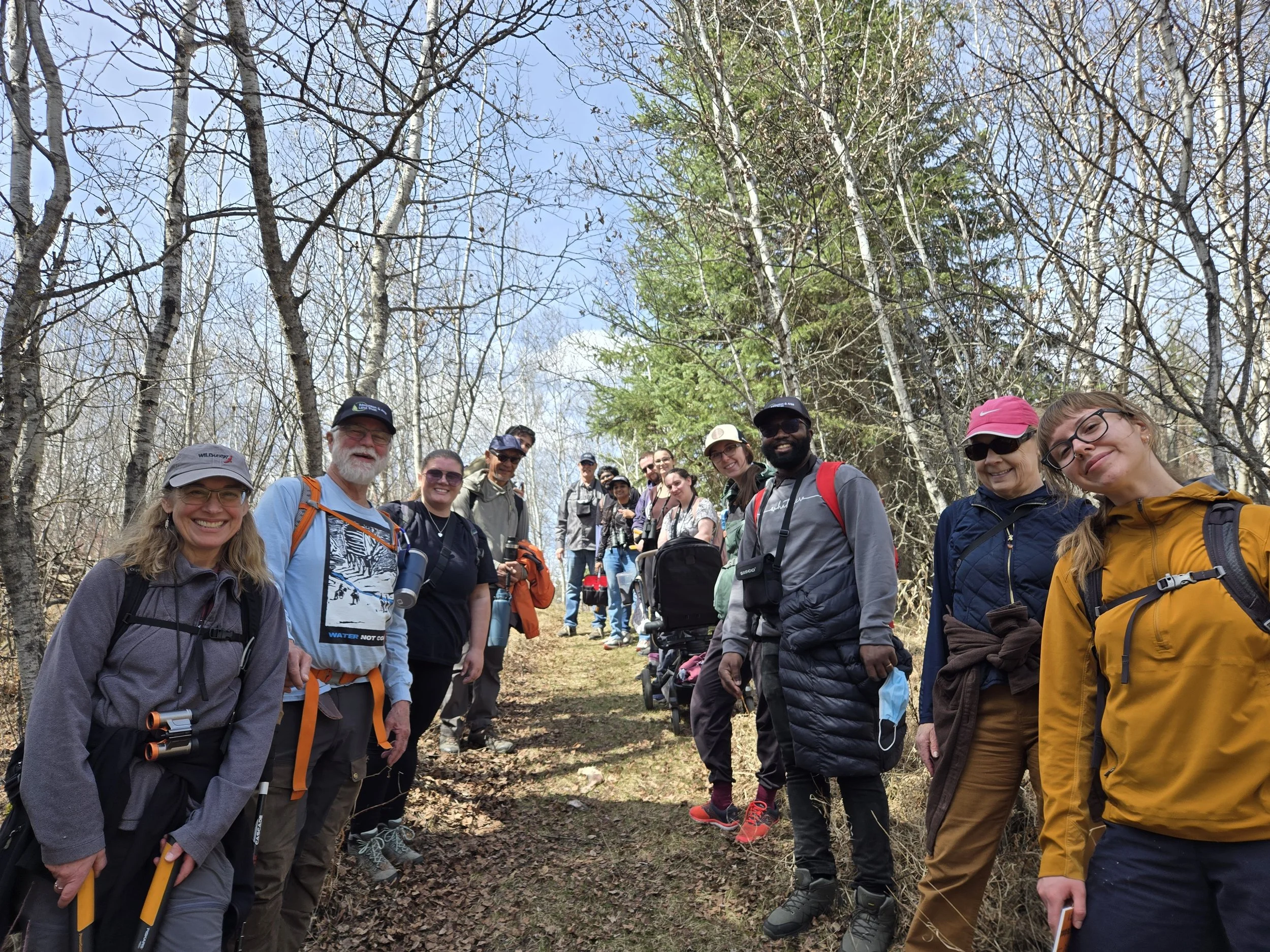
In June, we started our Conservation Connections series where we focus our attention on certain themes, flora, and fauna in order to connect better with the landscape. Our first event hosted was Connect to Birds. Staff walked with attendees throughout the trail system at Pipestone Creek Conservation Land. As we walked, we discussed birds and the dangers they face during migration, and what each person can do to help. We saw or heard a total of 37 species of birds, ranging from geese and ducks to warblers. Some of the highlights of the migratory birds sighted included a Turkey Vulture, Barn Swallow, and Baltimore Oriole.
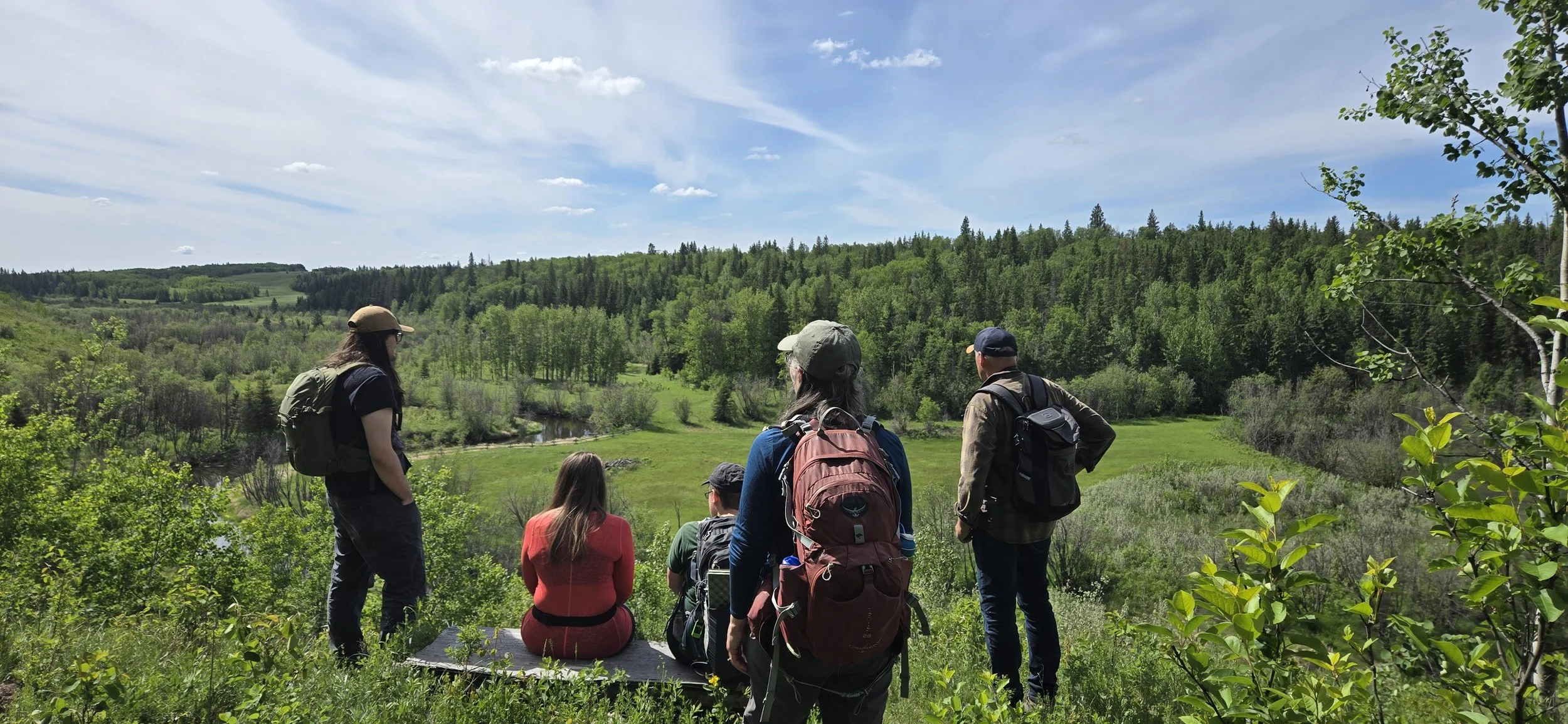
We chose Pipestone Creek for our first learning series event because it is a fantastic example of a corridor where wildlife concentrate and travel. Our EALT site borders a section of the creek with many willows that provide food and shelter for songbirds as they travel. Furthermore, Pipestone Creek itself, and the nearby Coal Lake, provide a great deal of habitat for many water loving birds.
Despite rescheduling once due to extensive rain, this event was a big success! We look forward to inviting you to our next Conservation Connections event. You can stay tuned on future event announcements by subscribing to our newsletter.
Indigenous Connections
As many of you will know, last year, we established and built a Medicine Garden at our new conservation site on the bank of the North Saskatchewan River. A lot of hard work was put in to making this dream a reality, and this year, we returned to the garden to find most of the plants still alive and thriving!
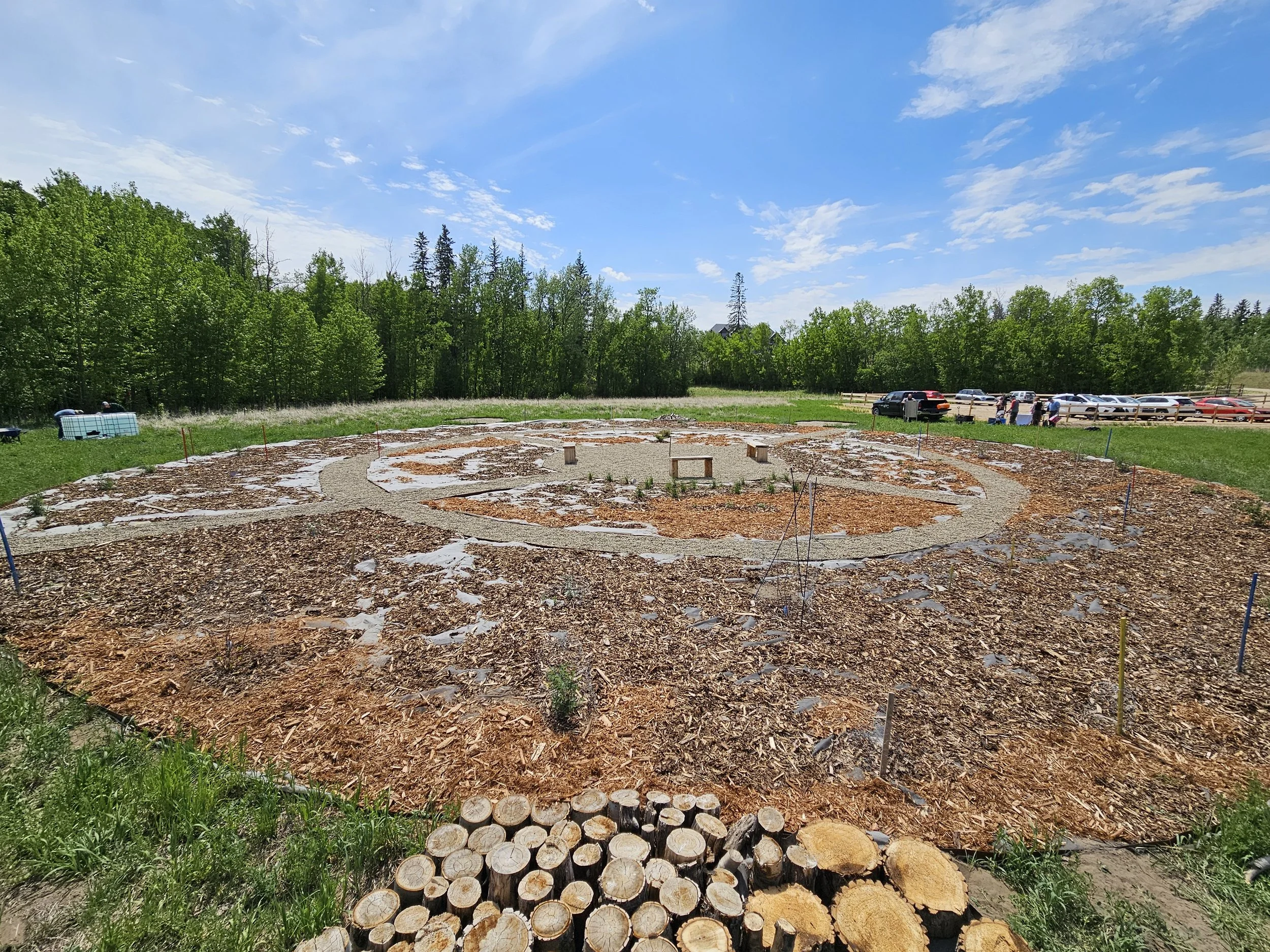
The medicine garden in spring 2026.
We finished off putting more cut deadfall logs into the head of the turtle, finishing the planned structure of the garden. As the summer proceeds, we will have more events to add more native plants, as well as to discourage uninvited plants from creeping in.
In addition to finishing the garden, we also hosted a pipe ceremony at the land with Papaschase First Nation in the garden. The property will not be open in the immediate future, but we’re getting closer to being able to do so. Stay tuned for that announcement!
That’s it for this Field Notes Blog! Thank you for reading, and for supporting our work. If you’d like to get involved, our Volunteer page is a great place to start. If you’d like to sign up for our newsletters to stay up to date on all things EALT, scroll down to the black footer below and enter your email.
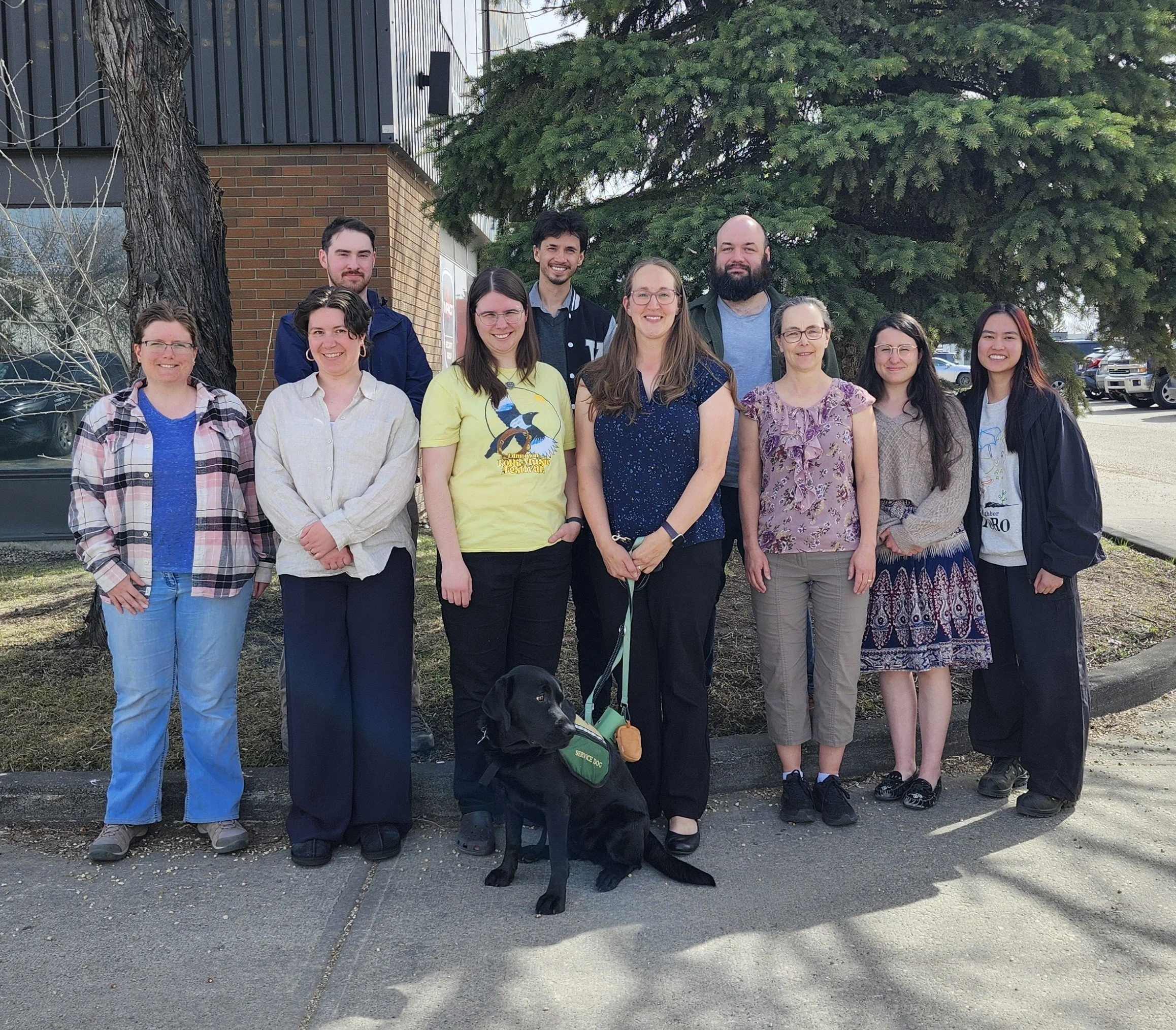
A picture of the 2026 EALT Summer team - plus service dog in training, Zelda!