When a new conservation land is secured by the Edmonton and Area Land Trust, once all the steps in the securement process steps are complete, the final thing we do is decide on a name for the land.
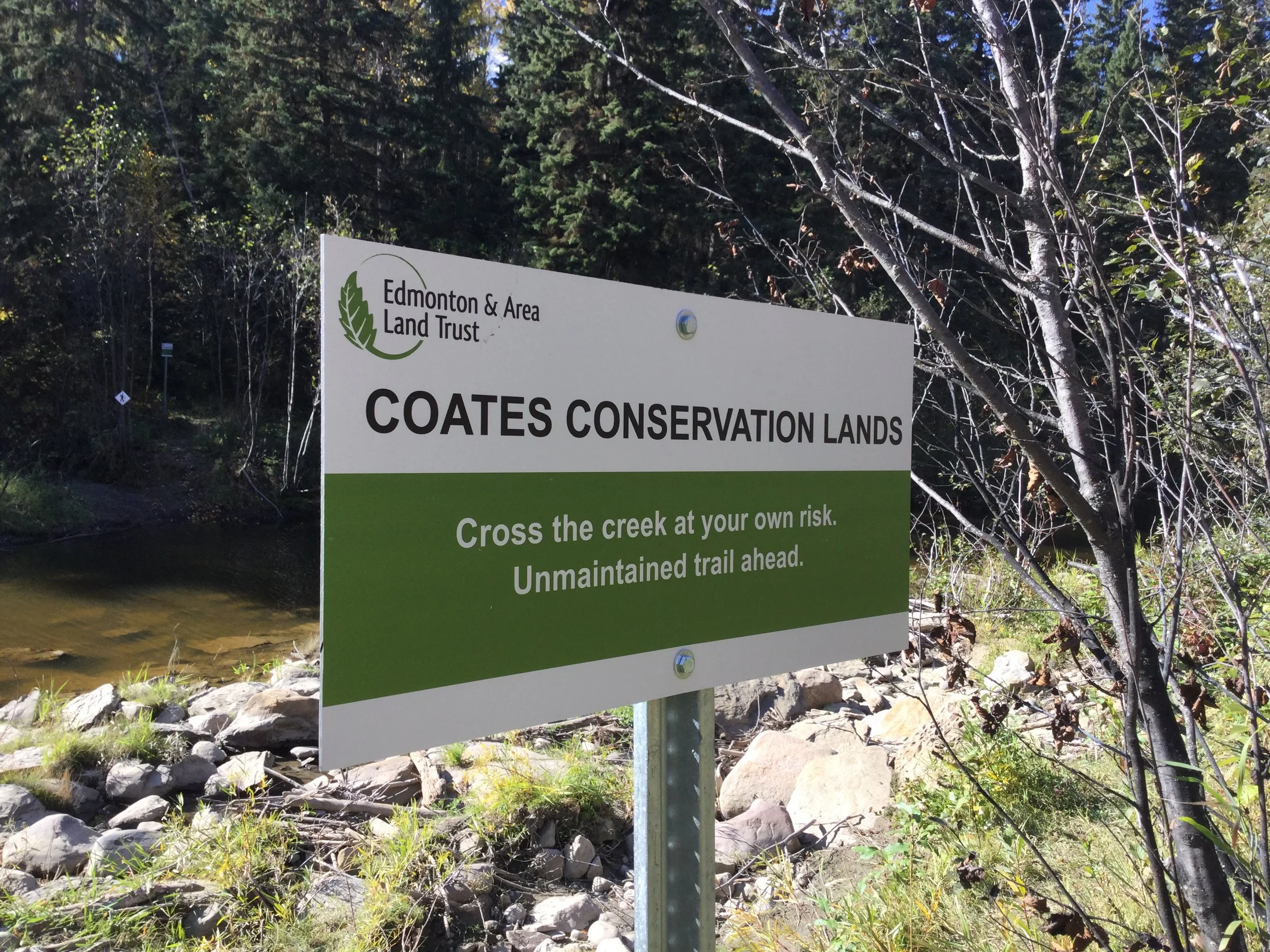
A boundary sign at Coates. Coates was named for the donor of the land, a story that you can read about on our blog from 2018 here.
Names are connections. Your name may reveal who you are related to, where you come from and other qualities and stories about you. Often, the first thing we do when we meet someone is ask for their name, and from this foundation we can build a relationship.
When we name a conservation land using one of the languages spoken by Indigenous peoples, we do so out of respect for their continued stewardship and relationship to the land. It is one small way to honour the foundational connection between people and place that has existed since time immemorial. It is also a reflection of our commitment to build relationships, share, and work with neighbouring Indigenous people, communities, organizations, and Nations.
The Importance of Language
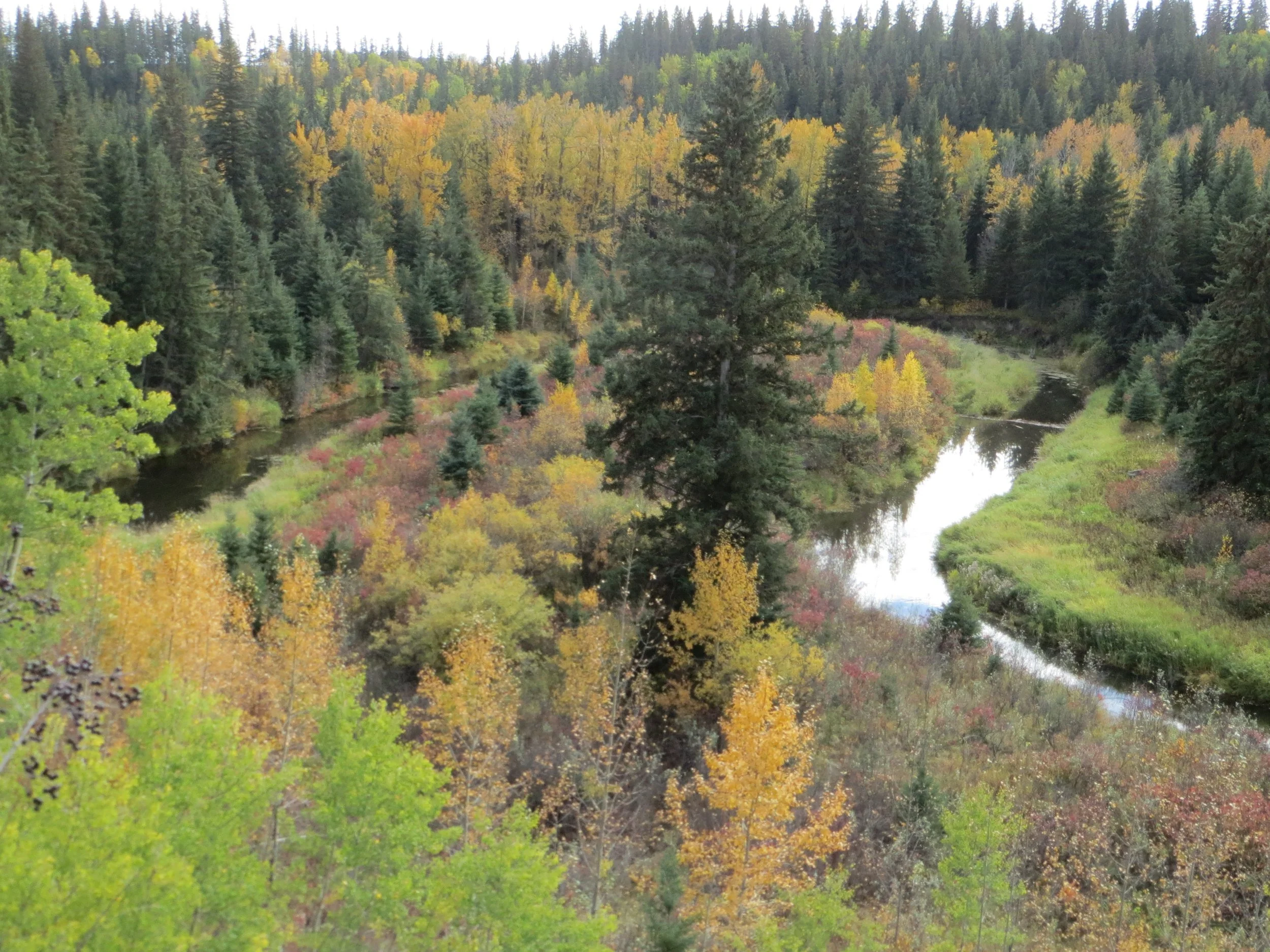
A lookout point at Pipestone Creek. Photo by Alex Nagy.
One of the Guiding Principles of the Office of the Commissioner of Indigenous Languages is that “Indigenous languages have and continue to contribute to the strength of Canada as a whole, including biodiversity and the richness of linguistic and cultural heritage”. Indigenous languages carry information that is essential to understanding ecological connections, based on generations upon generations of profound relationship with the land. As an organization dedicated to protecting nature, we have a responsibility to respect and support the connections between Indigenous languages and biodiversity. The more we work with Indigenous peoples and their languages in initiatives like naming projects, the better we will understand these connections and the better our conservation efforts will be.
Indigenous people are doing incredible work to revitalize and celebrate their languages, and we as Treaty People can support their efforts by following their lead and honouring their languages – and the meanings, stories, and connections that they carry – on the lands we steward.
How Names Are Chosen
EALT’s conservation lands receive names in a few different ways, such as being named by or in honour of a donor, or to recognize a distinct feature or species present on the land (e.g. Pipestone Creek, Sundew).
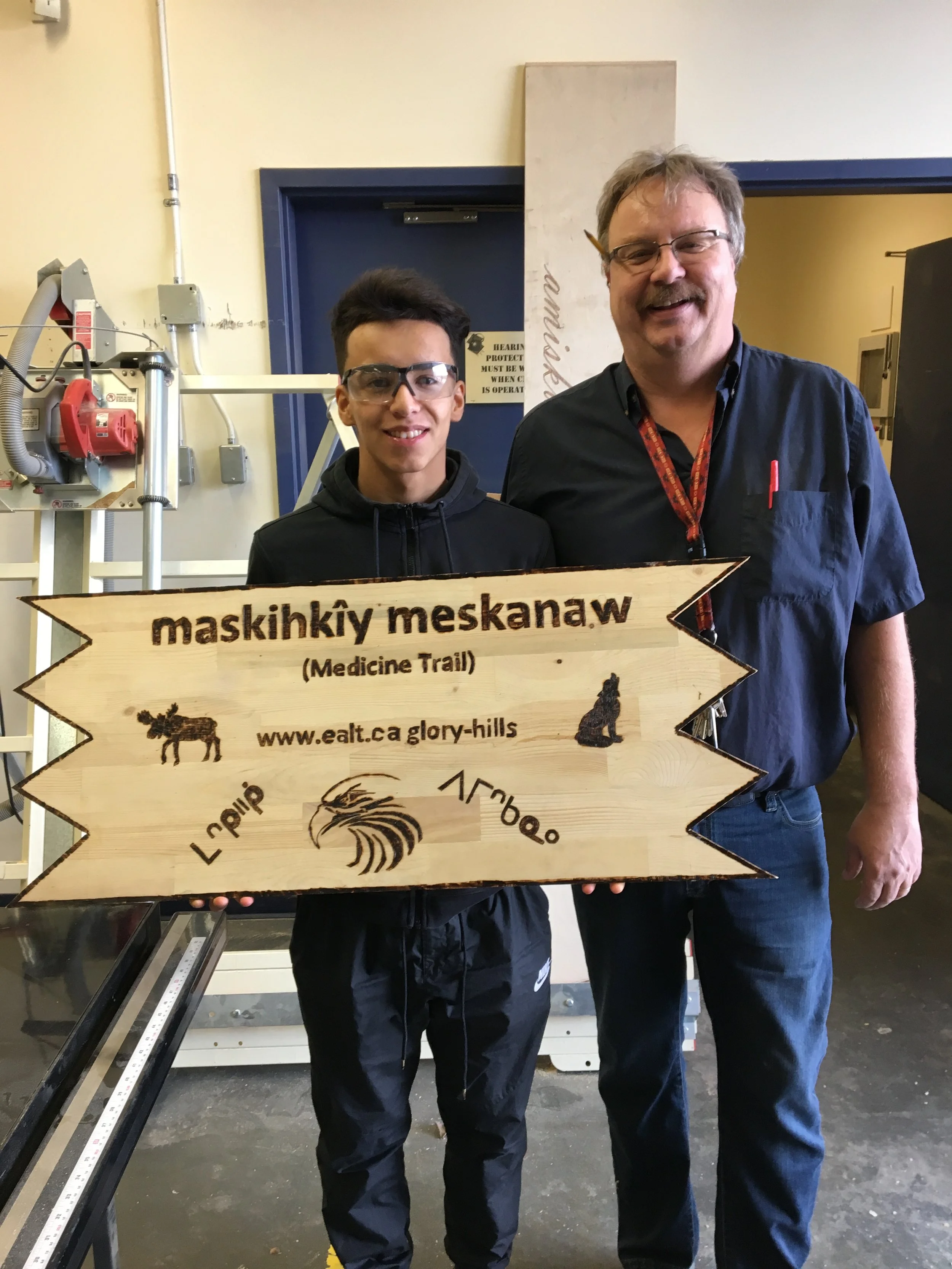
A photo showing the sign made for maskihkîy meskanaw - Glory Hills by students at amiskwaciy Academy.
maskihkîy meskanaw - Glory Hills was the first EALT conservation land to receive an Indigenous name, meaning “Medicine Trail” in Cree. This name was developed by amiskwaciy Academy.
We respectfully acknowledge that there are many Indigenous languages spoken historically and presently where we are located; the languages used in EALT’s conservation land names come from the relationships we have built, following protocol and consultation with Elders, Knowledge Keepers, and partnering Nations and organizations. Sometimes, this includes Ceremony.
Thank you for reading this special feature blog about the names we give to EALT conservation lands. We have some announcements on the horizon regarding new lands that are opening to the public soon, so make sure you stay up to date on all things EALT! Scroll to the bottom of this page to subscribe to our newsletters. You can also support us by volunteering, donating, or talking to someone in your life who may be interested in doing so.
Thank you to Leigha Rind for writing this special feature blog.